Electric VehiclesTechnical Deep Dive

France and Germany Propose Major Shift in EU Auto Emissions Policy

Published
EElectricBuzz Editorial Team
France and Germany Propose Major Shift in EU Auto Emissions Policy
3 min read427 wordsElectricBuzz Editorial Team

The Gist

“A new diplomatic agreement between Berlin and Paris seeks to soften the 2035 zero-emissions mandate while tightening regional manufacturing requirements.”

A New Diplomatic Pivot for European Automakers

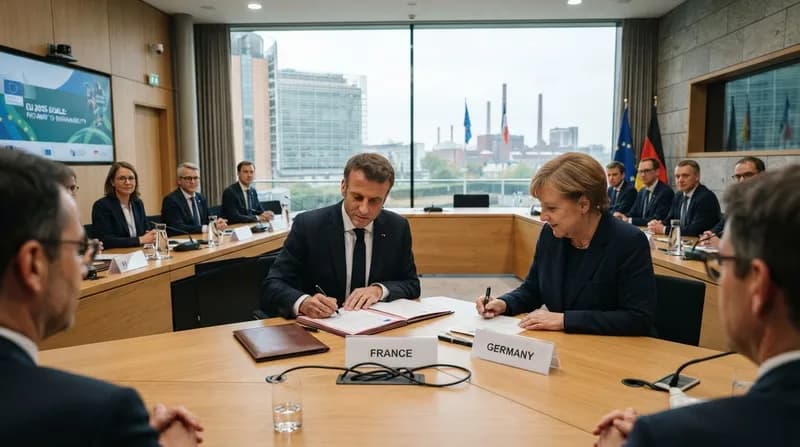
In a significant shift for the European Union's automotive landscape, Germany and France have drafted a preliminary agreement that proposes recalibrating the bloc's ambitious 2035 CO2 reduction targets. The proposed policy pivot suggests that rather than adhering to a strict 100 per cent reduction in fleet emissions for new vehicles, manufacturers would be required to achieve a 90 per cent reduction, with no requirement to offset the remaining 10 per cent through external measures. This development marks a pragmatic, albeit controversial, recalibration of the EU's 'Auto Package' as the continent navigates complex geopolitical and economic pressures.

The Trade-Off: Efficiency vs. Localization

The agreement emerges from a strategic compromise between German Chancellor Friedrich Merz and French President Emmanuel Macron. Historically, the two nations held divergent priorities regarding the transition to electric mobility. France has traditionally pushed for aggressive environmental standards, while Germany has focused on protecting its robust automotive manufacturing base. Under the terms of this new proposal, France has agreed to support the relaxation of fleet CO2 targets—a move historically favored by German industry leaders—in exchange for German support on the 'Industrial Accelerator Act' (IAA). This act intends to institute much stricter 'Made in Europe' requirements for automotive production, ensuring that state subsidies are tethered more tightly to domestic value creation.

Why It Matters

  • Regulatory Flexibility: By allowing a 10 per cent margin of residual emissions without offset requirements, the policy acknowledges the role of renewable, carbon-neutral fuels in the existing vehicle fleet.
  • Economic Protectionism: The push for a stronger link between public funding and European value creation signals a move toward protecting the regional supply chain against increasing global competition, particularly in the battery and EV hardware sectors.
  • Technological Pragmatism: Proponents argue the adjustment creates a necessary buffer, allowing automakers to navigate the difficult transition to full electrification without risking the stability of the European manufacturing sector.

Industry and Political Backlash

The proposal has not been met with universal acclaim. Environmental advocacy groups, including Transport and Environment (T&E), have characterized the potential policy softening as a 'historic mistake.' Critics argue that diluting the 2035 targets will inevitably slow the momentum behind electric vehicle adoption at a critical juncture. From the perspective of skeptics, including various European Parliament members, the lack of compensation mechanisms for the residual emissions makes the EU’s overarching climate objectives significantly harder—if not impossible—to achieve. As these discussions move from a preliminary agreement to broader EU negotiations, the debate highlights the ongoing tension between industrial preservation and the necessity of rapid decarbonization in the transport sector.
SPONSORED
The 5 Best Over-Ear ANC Headphones of 2026, Tested & Ranked
Editor's Pick Guide
92/100
Tech & Gadgets•12 min read

The 5 Best Over-Ear ANC Headphones of 2026, Tested & Ranked

We locked five over-ear ANC picks for 2026 — Sony WH-1000XM6, Bose QuietComfort Ultra 2, Soundcore Space One, Sennheiser Momentum 5, and Apple AirPods Max 2 — then stress-tested them on lab metrics, long-term owner truth, and live street prices.

Related Stories

Semantically matched articles, ranked by topic overlap and freshness.

The Great Pivot: How Chinese Automakers Are Reshaping the European EV Landscape
Electric Vehicles

The Great Pivot: How Chinese Automakers Are Reshaping the European EV Landscape

From localized engineering to range-extender experimentation, the Paris Motor Show reveals a maturing but polarized Chinese automotive strategy in Europe.

Living with the Rivian R2: Early Ownership Insights and Efficiency Realities
Electric Vehicles

Living with the Rivian R2: Early Ownership Insights and Efficiency Realities

Two months into ownership, the Rivian R2 proves to be a compelling daily driver, though real-world highway range offers a sobering lesson in physics for prospective buyers.

Tesla Gears Up for Massive Expansion of German Gigafactory
Electric Vehicles

Tesla Gears Up for Massive Expansion of German Gigafactory

Tesla is set to dramatically increase the footprint of its Grünheide plant, with plans for a sprawling new production hall aimed at pushing annual output toward one million vehicles.

Toyota Shakes Up China Operations Through Major GAC-FAW Stake Swap
Electric Vehicles

Toyota Shakes Up China Operations Through Major GAC-FAW Stake Swap

In a strategic realignment, GAC will acquire a 50% stake in FAW Toyota, paving the way for a more unified approach to EV production and market competition in China.

Rivian and Redwood Materials Forge Deeper Alliance in Battery Circularity
Electric Vehicles

Rivian and Redwood Materials Forge Deeper Alliance in Battery Circularity

A significant expansion in the partnership between Rivian and Redwood Materials aims to turn end-of-life EV batteries into stationary energy storage or recycled raw materials.

Mercedes-AMG Unleashes the GT SUV: An Electric Powerhouse With Record-Breaking Charging
Electric Vehicles

Mercedes-AMG Unleashes the GT SUV: An Electric Powerhouse With Record-Breaking Charging

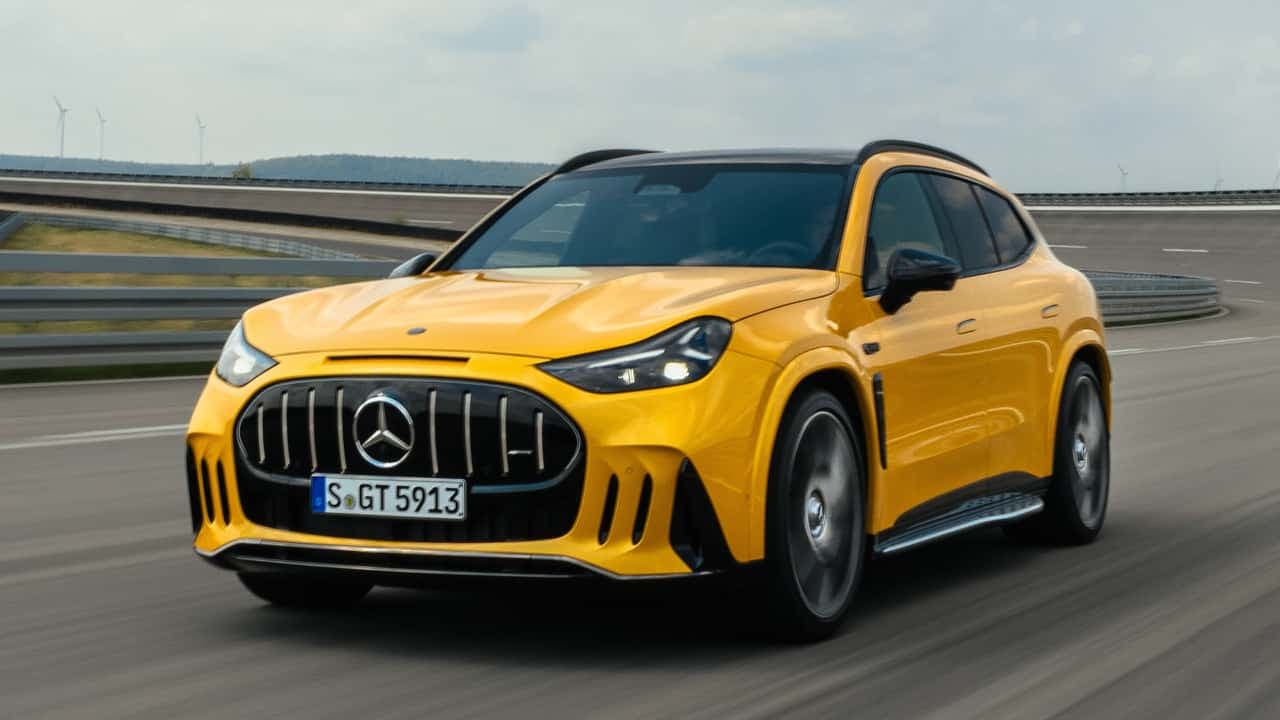
Mercedes-AMG has pulled the curtain back on its most potent electric SUV yet, featuring up to 1,153 horsepower and ultra-fast charging capabilities that push the boundaries of current EV technology.

Wallbox Scales Up Airport Electrification with Massive Montréal Installation
Electric Vehicles

Wallbox Scales Up Airport Electrification with Massive Montréal Installation

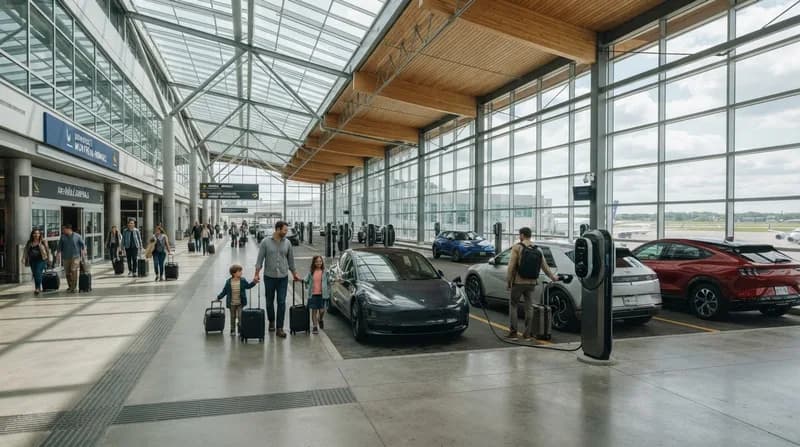
Montréal Metropolitan Airport is significantly expanding its EV capabilities, tapping Wallbox to deploy over 100 new charging points.

Volkswagen Initiates Major Battery Safety Recall Across Europe
Electric Vehicles

Volkswagen Initiates Major Battery Safety Recall Across Europe

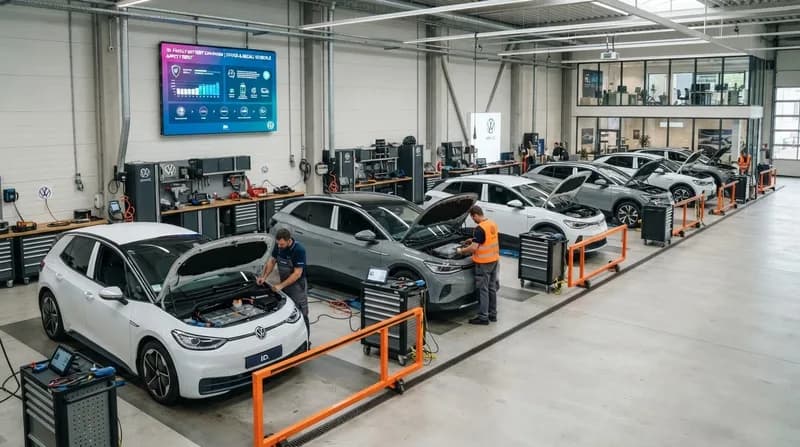
Volkswagen is responding to potential high-voltage battery cell defects by implementing charging restrictions and planning a large-scale safety recall for its popular ID. series electric vehicles.