Addressing Potential Battery Hazards
Volkswagen has announced a significant safety initiative across European markets to address potential production defects found in the high-voltage battery cells of its popular electric vehicle lineup. The recall, which is currently in the planning stages, stems from internal quality control audits that identified specific cells falling short of the company’s rigorous safety standards. Because these manufacturing inconsistencies could potentially lead to overheating—or in extreme, isolated cases, a fire risk—the automaker is taking proactive measures to ensure passenger safety.
As an immediate containment strategy, Volkswagen is deploying an over-the-air (OTA) software update to affected vehicles. This patch will automatically cap the maximum state-of-charge at 80 percent. While Volkswagen regularly offers a 'Battery Care Mode' for long-term health, this specific 80 percent limit is a mandatory safety intervention designed to reduce thermal stress on the suspect battery modules until a permanent technical resolution is finalized.
Scope and Impact of the European Recall
The scope of this action covers several key models within the ID. family, including the ID.3, ID.4, and ID.7, as well as the ID. Buzz and ID. Buzz Cargo. Additionally, several thousand Cupra Born units are expected to be included in the campaign. It is important to note that the issue appears to be tied to specific cell batches and suppliers rather than a systemic flaw in the vehicle architectures themselves; consequently, many vehicles—including current Skoda models—remain unaffected by this specific safety notice.
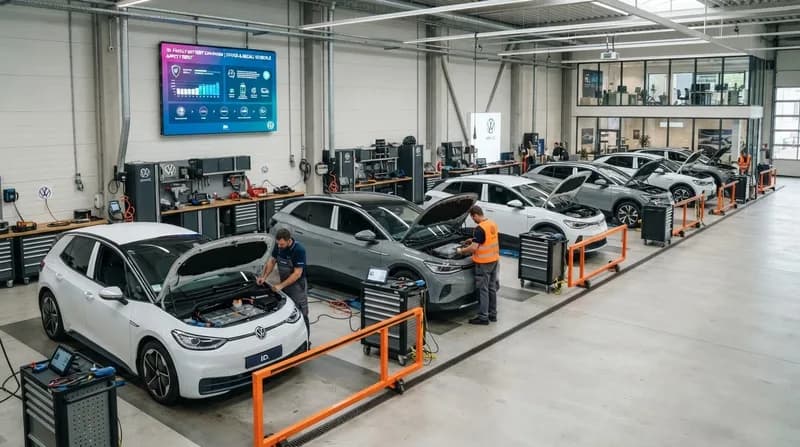
While the total number of vehicles registered in Europe within the 2023 to 2025 timeframe reaches roughly 660,000 units, the actual number of cars requiring hardware intervention is expected to be substantially lower once Volkswagen completes its audit of specific battery cell batches. The company is currently working to narrow down the affected VIN ranges based on battery supplier data and manufacturing logs. In the United Kingdom, the process is already underway, with owners being notified that workshops will eventually conduct physical inspections of the battery packs or specific modules to determine if replacements are necessary.
Why it Matters
- Safety Prioritization: By proactively limiting charge levels via OTA, VW is minimizing risk while navigating the logistics of a multi-market hardware recall.
- Supply Chain Complexity: The incident underscores the difficulty of managing battery cell quality across a vast network of suppliers and assembly plants.
- Regulatory Vigilance: While European authorities have not yet officially published the recall, the transition from internal quality check to public customer notification signals a significant, systematic effort to maintain consumer trust in the ID. brand.
International Context
This European action follows a separate, ongoing recall effort in the United States, where approximately 22,500 ID.4 units are being addressed due to similar concerns regarding thermal runaway risks at high charge states. While some US-based recalls have been linked specifically to misaligned electrodes in cells produced by SK Battery America, Volkswagen is currently analyzing whether the European cell issues share a root cause or are distinct manufacturing anomalies. As the investigation progresses, the manufacturer continues to urge all owners of potentially affected vehicles to monitor official communications for detailed instructions on the long-term repair process.