Scaling Sustainable Freight in Europe
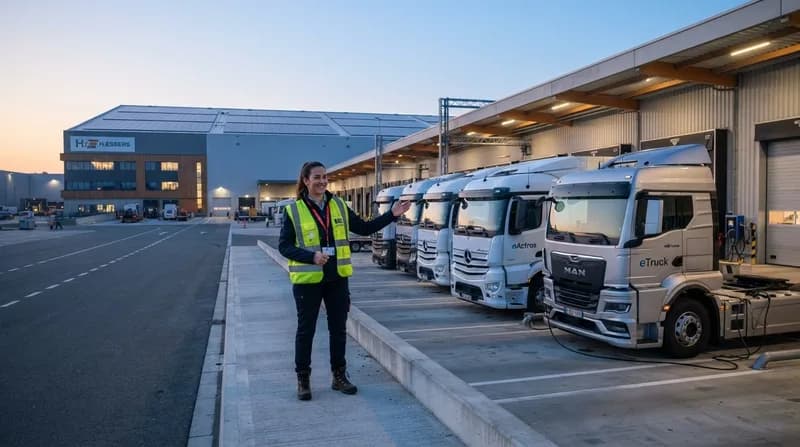
H.Essers, the prominent logistics firm headquartered in Genk, Belgium, has taken a significant stride toward its decarbonization goals by officially adding 20 new battery-electric trucks to its transport fleet. This strategic acquisition, split evenly between industry leaders MAN and Mercedes-Benz Trucks, brings the company’s total count of electric heavy-duty vehicles to 31. The new arrivals are slated for immediate deployment across Belgian operations, marking a pivotal moment in the company’s broader mission to slash greenhouse gas emissions by 42 percent before 2030.
This investment follows a rigorous pilot program conducted in 2025, where the firm stress-tested electric hardware from various manufacturers in real-world scenarios. The findings from this trial provided the operational confidence necessary to transition from experimental usage to large-scale fleet integration. By increasing its electric footprint, H.Essers is not only learning how to optimize range and charging cycles but is also establishing the logistical blueprint for future expansion across its pan-European network.
Technical Specifications and Performance
The newly commissioned fleet brings distinct capabilities to the H.Essers logistics chain, leveraging advancements in modern heavy-duty EV architecture. The Mercedes-Benz units are tailored for longer-haul segments, boasting an impressive operational range of 525 to 575 kilometers on a single charge. Conversely, the MAN fleet provides a versatile range of 400 to 450 kilometers, perfectly suited for the regional distribution loops that define much of the company’s current workload.
Both sets of vehicles feature robust DC fast-charging capabilities, allowing for a recharge cycle of approximately 90 minutes under optimal conditions. This rapid turnaround is essential for maintaining the tight scheduling requirements of the logistics industry, proving that electric heavy-duty transport is evolving into a practical, daily-use solution rather than a specialized niche.
Infrastructure and Future Outlook
Recognizing that a truck is only as effective as the grid supporting it, H.Essers is aggressively expanding its site-based infrastructure. The company is boosting its charging capacity at key locations in Genk and Bergen op Zoom to a total of 2.7 MW. Beyond the trucks themselves, the firm is implementing a proprietary energy ecosystem called 'Synchro Grid.' This software-driven platform manages energy production, storage, and consumption across the company's facilities, effectively turning their warehouses into flexible energy hubs.
- Fleet Goal: 200 electric trucks by 2030 (15% of total fleet).
- Sustainability Target: 42% reduction in fleet emissions by 2030.
- Integrated Tech: Synchro Grid ecosystem to balance warehouse and vehicle energy loads.
- Scope: Expansion currently focused in Belgium and the Netherlands, with plans to scale across Europe.
As Christopher Van den Daele, COO of Transport at H.Essers, noted, the path to sustainable logistics is multifaceted. By pairing electrification with synchromodal transport strategies and renewable energy integration, the company is positioning itself to meet the growing customer demand for carbon-neutral supply chain solutions while maintaining high operational efficiency.