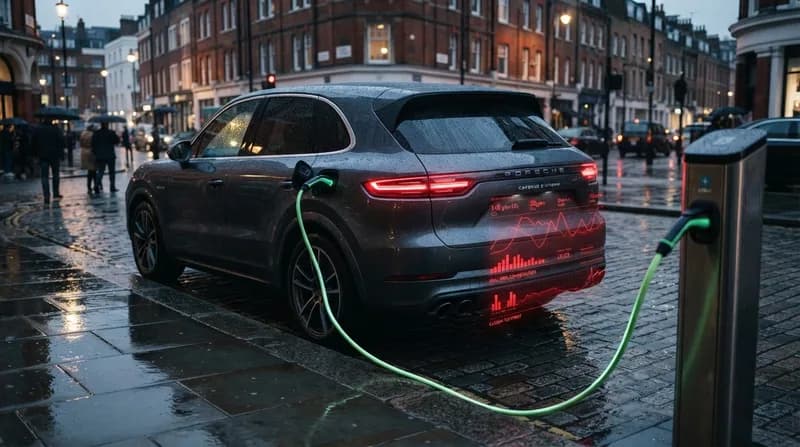
The Escalating Gap Between Lab and Road
The promise of the plug-in hybrid (PHEV) has long been positioned as the ultimate bridge technology—a way to enjoy the efficiency of pure electric driving for daily commutes while retaining the range of a combustion engine for long journeys. However, a damning new analysis from Transport & Environment (T&E) indicates that the environmental reality of these vehicles is far grimmer than manufacturer-provided figures suggest. In 2024, real-world CO2 emissions for plug-in hybrids were found to be six times higher than official ratings, an increase from the five-fold disparity reported just a year prior.
This discrepancy has tangible consequences, not only for global carbon targets but also for the pockets of the average consumer. T&E’s report suggests that drivers are paying an additional €680 in fuel costs annually compared to what the official consumption metrics promised. Furthermore, when compared to standard internal combustion engine vehicles or traditional hybrids, the real-world CO2 advantage of a plug-in hybrid is marginal—clocking in at only 14% cleaner, a stark contrast to the 83% reduction suggested by official type-approval testing.
The Anatomy of the Emissions Failure
The root cause of this inflated emissions data lies in the divergence between controlled laboratory environments and unpredictable real-world usage. A primary factor identified by the research is that the internal combustion engine is frequently engaged during periods where the vehicle is supposedly operating in pure electric mode—approximately one-third of all battery-driven kilometers involve the engine running. This behavior, coupled with the inherent weight penalty of carrying two powertrains simultaneously, forces the vehicle to consume more fuel than its design specifications imply.
These findings mirror recent reports from the International Council on Clean Transportation (ICCT), which evaluated data from eight million vehicles. Both organizations emphasize that the 'utility factor'—a regulatory metric meant to estimate the proportion of mileage driven on electricity versus gasoline—is failing to accurately reflect how owners actually operate their vehicles. As it stands, the current regulatory framework remains a point of intense friction between environmental advocates, manufacturers, and policy regulators.
Why it Matters
- Financial Impact: Real-world fuel consumption for PHEVs is significantly higher than marketed, costing owners hundreds of Euros in extra fuel annually.
- Policy Integrity: Inflated 'green' ratings allow manufacturers to meet fleet-wide CO2 targets more easily, potentially slowing the transition to full Battery Electric Vehicles (BEVs).
- Regulatory Lag: The 'utility factor' used by the EU to calculate emissions is currently insufficient, leading to a persistent underestimation of environmental impact.
- Consumer Trust: The gap creates a lack of transparency that may mislead buyers who believe they are making a significantly greener choice than they actually are.
The Push for Technical Accountability
In response to mounting criticism, the automotive industry is beginning to pivot toward more aggressive technical mandates. Industry groups like the VDA have proposed software solutions that would throttle the combustion engine's power if the vehicle remains uncharged for extended distances, effectively forcing owners to plug in their vehicles. While radical, such measures underscore the severity of the "charging gap" that keeps these vehicles tethered to their fossil-fuel engines.
Manufacturers are also attempting to outpace stricter regulations by increasing battery sizes and pure-electric ranges. For instance, recent technical updates to models like the Volkswagen Tiguan have seen electric range jump from 55 km to 119 km. While these advancements help mitigate the impact of corrected utility factor calculations, they remain a partial solution. As T&E points out, the climate effectiveness of a PHEV will always remain tethered to the human element: the actual frequency with which the driver chooses to plug the car in. Until real-world data is prioritized over test-bench perfection, the plug-in hybrid will likely remain a contentious piece of the automotive landscape.