A Major Shift in South Korean Infrastructure
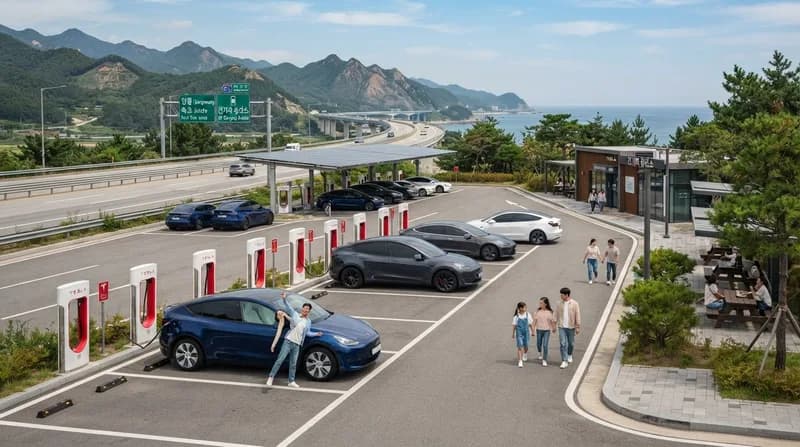
Tesla is significantly bolstering its presence in the South Korean electric vehicle ecosystem by securing a strategic contract with the Korea Expressway Corporation. The manufacturer is set to deploy new Supercharger stations across 21 highway rest areas, a move that signals a deeper integration of the Tesla charging network into the country's essential national infrastructure. This expansion targets high-traffic corridors near major hubs including Seoul, Yongin, Gangneung, Gyeongju, and Andong, effectively bridging key regions to facilitate seamless long-distance travel for EV owners.
This initiative represents a historic milestone for the company, as it marks the first time Tesla has successfully participated in and won a share of a government-organized highway charging program. Previously, the network operated largely as a proprietary system, but this development positions Tesla as a primary utility provider within the state-sanctioned charging roadmap. The project is part of a broader government strategy aiming to install 392 new charging points across 91 service areas nationwide. Under the terms of the agreement, Tesla will manage the installation, maintenance, and long-term operation of these sites for the next decade.
Why it Matters
- Strategic Expansion: Moving onto major highways addresses "range anxiety" for long-distance commuters in one of Asia’s fastest-growing EV markets.
- Market Legitimacy: Winning a government tender validates Tesla’s charging technology and operational reliability as a standard for the region.
- NACS Standardization: With local competitors like Chaevi also integrating NACS connectors, the industry is moving toward a more unified and accessible charging standard for all Korean EV drivers.
- Market Momentum: This infrastructure push follows a massive surge in local demand, with battery-electric vehicle sales in South Korea jumping 125% in early 2026.
Competitive Landscape and Future Outlook
The race to electrify South Korea's transit network is intensifying. While Tesla is making significant inroads, the Korea Expressway Corporation is also collaborating with other local players. For instance, the charging operator Chaevi has been contracted to install 131 fast-charging points across 29 service areas. Notably, a significant portion of these third-party units will feature NACS connectors, ensuring that the infrastructure remains compatible with the growing number of Tesla vehicles on the road without the need for cumbersome CCS1 adapters.
Tesla’s aggressive expansion comes at a pivotal time. With the Model Y maintaining strong popularity in the region and total vehicle deliveries hitting over 486,000 units globally in the third quarter of 2026, the company is doubling down on its infrastructure to support its massive fleet. While specific technical details—such as the exact number of stalls or the peak charging capacity of these new highway locations—remain under wraps, the industry expects these to be high-performance, fast-charging hubs designed to minimize dwell time during long-distance travel. As the sites transition from planning to construction, the partnership serves as a clear indication that Tesla’s charging hardware is becoming a cornerstone of South Korea's future mobility strategy.