The Performance Shift
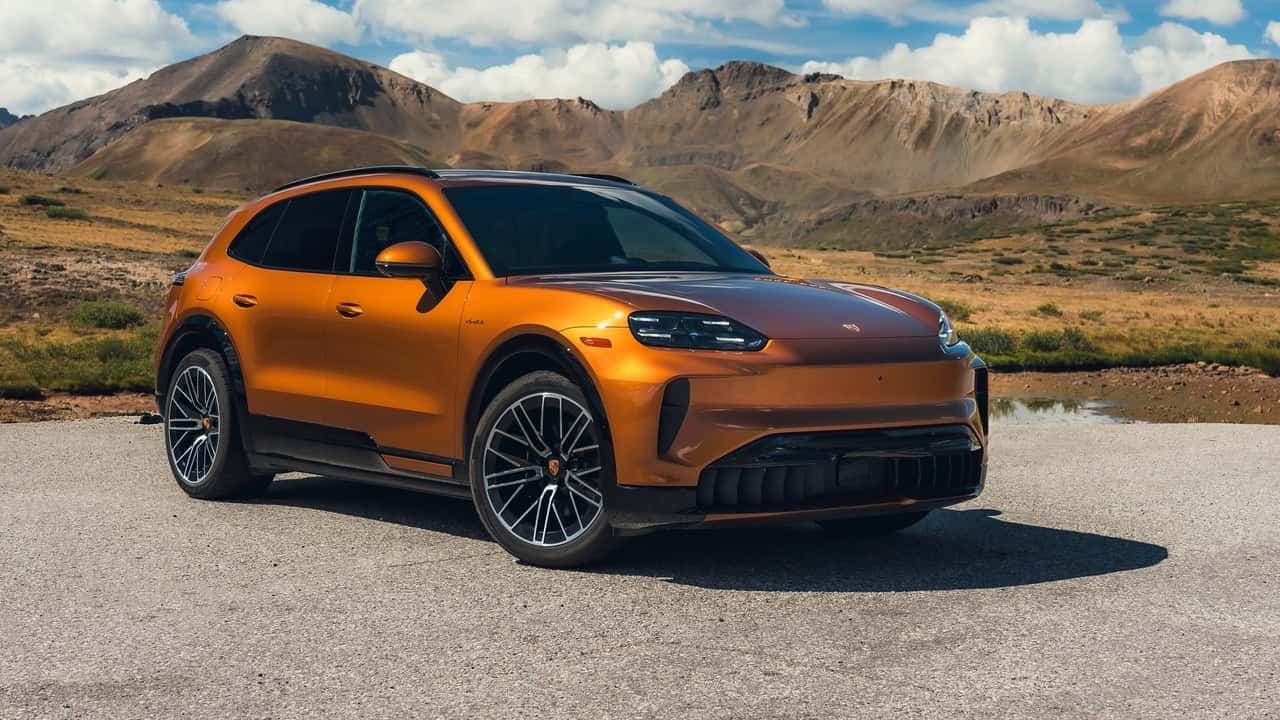
The automotive world has long debated the merits of internal combustion versus electric powertrains, but a recent head-to-head comparison between the Porsche Cayenne Electric and the Audi RS Q8 provides a definitive look at the current state of high-performance SUVs. While the Audi RS Q8 is widely regarded as a pinnacle of engineering—sharing much of its DNA with the Lamborghini Urus—it faced an uphill battle against the sheer force of Porsche’s latest battery-electric platform.
Equipped with a 4.0-liter twin-turbocharged V8, the Audi produces a formidable 631 horsepower and 627 lb-ft of torque. In any other context, these numbers, which propel the vehicle to 60 mph in roughly three seconds, would be the undisputed benchmark. However, the Porsche Cayenne Electric leverages a more advanced propulsion architecture that translates its 1,139 horsepower into near-instantaneous torque delivery, creating a performance gap that traditional combustion engines struggle to bridge.
The Track and Comfort Comparison
The disparity becomes most apparent when examining the data from track testing and ride quality assessments. During quarter-mile runs, the Audi managed a highly respectable 11.6-second pass at 162 mph. Conversely, the electric Porsche crossed the same finish line in a blistering 10 seconds at 170 mph. Perhaps more surprising is the Porsche's performance on a closed-circuit road course; despite carrying a weight penalty of approximately 600 pounds compared to the Audi’s 5,300-pound frame, the Cayenne utilized its advanced power delivery and torque vectoring to navigate corners with greater precision, finishing the circuit nearly five seconds faster.
Comfort, often the casualty of performance-focused vehicle tuning, was also analyzed using seismic instrumentation over rumble strips. Even in this category, the Porsche’s suspension calibration demonstrated superior compliance, effectively absorbing road surface irregularities better than the Audi. This suggests that the platform integration for the Cayenne allows for a wider range of operating modes, satisfying the need for both track-ready rigidity and grand-touring comfort.
Why it Matters
- Power Density: The Cayenne’s 1,139 horsepower demonstrates how electric motors can easily outperform even the most sophisticated V8 engines in terms of raw output.
- Handling Complexity: Demonstrating that a 5,900-pound EV can outperform a lighter combustion-powered peer on a track shows that chassis development and center-of-gravity management have reached a new maturity in the EV sector.
- Usability: The ability for a vehicle to be both faster in a straight line and more comfortable over bumps signals the versatility that electric platforms can offer to high-end luxury consumers.
Ultimately, while the Audi RS Q8 remains a masterpiece of traditional engineering, the Porsche Cayenne Electric represents a fundamental shift in the SUV hierarchy. As the industry moves further away from relying solely on displacement for speed, the Cayenne serves as a tangible example that the future of the performance SUV is undeniably electric.