The Reality of Interoperability
At the recent CharIN Testival & Conference Europe, the industry confronted a candid truth: as EV technology becomes more sophisticated, the simple act of plugging in a vehicle is becoming increasingly complex. During a live demonstration, a high-performance Mercedes-AMG vehicle failed to initiate a charging session on its first attempt, serving as a poignant reminder that even with advanced hardware, the bridge between vehicle and charger remains a significant point of failure. This gap between theoretical compatibility and real-world execution is the primary focus of CharIN’s ongoing test events.
For the average user, the expectation is simple: every plug should work with every car. However, behind the scenes, this requires a seamless handshake between software and hardware that is far from guaranteed. As CharIN CTO Michael Keller explained, the process acts as a form of digital speed dating. When adding layers like Plug & Charge, automated billing, and bidirectional flow, the margin for communication error widens, making the Testival a critical venue for manufacturers to iron out these friction points before their products reach the public.
The Evolution of ISO 15118-20
A primary highlight at the conference was the accelerating adoption of the ISO 15118-20 standard. This second-generation communication protocol is designed to handle the complex needs of modern electric mobility, including Megawatt Charging Systems (MCS) and vehicle-to-grid (V2G) integration. The July 2026 amendment (ISO 15118-20:2022/Amd 1:2026) has provided much-needed clarity for manufacturers, offering a standardized framework for security and grid-interactive services.
Despite the maturation of these standards, the transition from documentation to implementation remains uneven. While many companies are now testing the protocol, CharIN engineers noted that mechanical compatibility and locking mechanisms—especially regarding the MCS interface—still require refinement. The lesson is clear: a standard is merely a blueprint, and it is the rigorous, iterative testing of different implementations that ultimately ensures interoperability in the field.
Megawatt Charging and Heavy-Duty Logistics
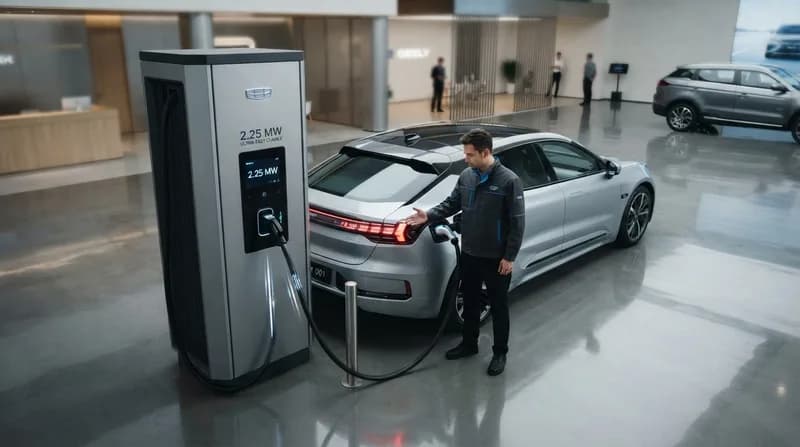
The event also showcased the growing readiness of the Megawatt Charging System (MCS) for commercial transport. With major players like Mercedes-Benz, MAN, and Volvo revealing heavy-duty trucks capable of taking in 700 to 1,000 kW, the hardware exists to revolutionize long-haul logistics. However, this level of power shifts the challenge from the vehicle itself to the broader infrastructure. Designing charging parks for these vehicles requires a complete rethinking of traffic flow, cable routing, and grid capacity.
The Broader Energy Context
Moving forward, the scope of the charging industry is expanding to include the electrical grid itself. Bidirectional energy flow, or V2G, represents the next frontier in utility management, allowing EV batteries to stabilize energy supply during peak demand. This adds a new layer of complexity to the charging ecosystem, as communication must now extend to energy management backends and grid-operator signals. As the industry advances, the focus is shifting away from merely chasing higher kilowatt ratings and toward creating a cohesive, standardized, and secure energy ecosystem where vehicles, chargers, and the power grid operate as a single, unified organism.