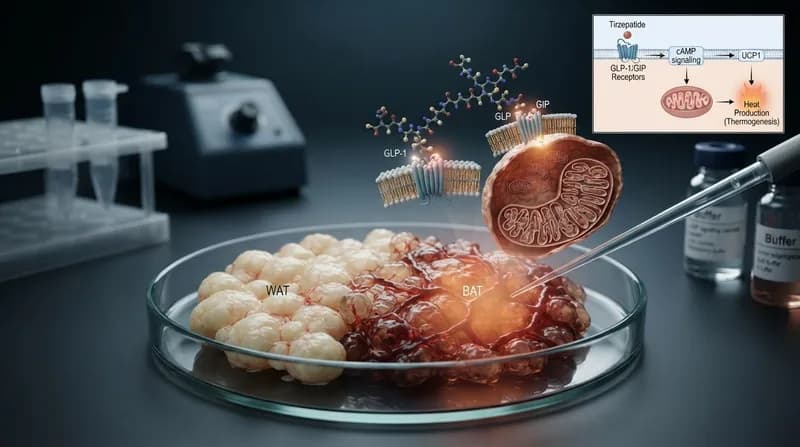
The Dual Action of Tirzepatide
For millions, the medications known as Mounjaro and Zepbound—collectively referred to by their generic name, tirzepatide—have become synonymous with effective weight management. While these drugs are already clinically proven to treat type 2 diabetes and obesity by targeting hormone receptors GIP and GLP-1, the precise biological mechanisms behind their success have remained a subject of intense scientific investigation. Recent research conducted at the University of Barcelona suggests that these medications may perform a feat previously unrecognized: the direct activation of brown adipose tissue.
Unlike white fat, which acts as the body's primary energy storage reservoir, brown adipose tissue behaves like a furnace, burning glucose and lipids to generate heat. This specialized metabolic function is central to energy expenditure. The research team, led by Marion Peyrou, sought to determine if tirzepatide’s benefits are solely linked to the reduced food intake that typically accompanies the drug’s use, or if there is a deeper, direct metabolic effect at play.
Isolating Metabolic Impact
To differentiate between the effects of appetite suppression and direct drug action, researchers utilized a mouse model fed a high-fat diet. By carefully controlling the caloric intake of the control group, scientists could effectively isolate the variables. The results indicated that mice treated with tirzepatide experienced a significant activation of brown fat, which was not observed in the control group even when their caloric intake was matched.
This activation not only bolsters the body’s ability to burn energy but also promotes the production of "batokines," signaling molecules secreted by brown fat that exert positive influences on the body's overall metabolism. By transforming brown fat into a more active state, the medication appears to lower blood glucose and lipid levels more comprehensively than would be expected from simple weight loss alone.
Why it Matters
- Beyond Hunger: The discovery implies that tirzepatide influences metabolism directly, rather than just acting as an appetite suppressant.
- Energy Expenditure: By turning on brown adipose tissue, the drug may help the body burn more calories naturally, assisting in weight maintenance.
- Cardiovascular Safety: Unlike previous attempts to activate brown fat, which often risked dangerous cardiovascular side effects, tirzepatide appears to offer potential heart-health benefits.
- Future Personalization: Understanding this mechanism could allow doctors to prescribe these medications based on a patient's unique metabolic profile, particularly for those with compromised energy expenditure.
Pathways to Personalized Medicine
The implications for future obesity treatments are profound. Historically, anti-obesity drugs have faced a difficult hurdle: finding a balance between efficacy and safety. Previous efforts to target brown fat often triggered unwanted cardiovascular reactions, but tirzepatide’s dual-receptor approach avoids these pitfalls. Researchers are optimistic that these findings could pave the way for more sophisticated, multi-targeted metabolic therapies.
However, the scientific community remains cautious. Because the study was performed in mice, further clinical trials are necessary to verify if the same metabolic switches are triggered in human subjects. Human physiology, including adipose distribution and complex metabolic feedback loops, differs significantly from that of rodents. As researchers transition toward human trials, the goal remains clear: to develop a new generation of personalized medicine that optimizes overall metabolic health rather than just focusing on the scale.