1. Cochlostoma komarnica
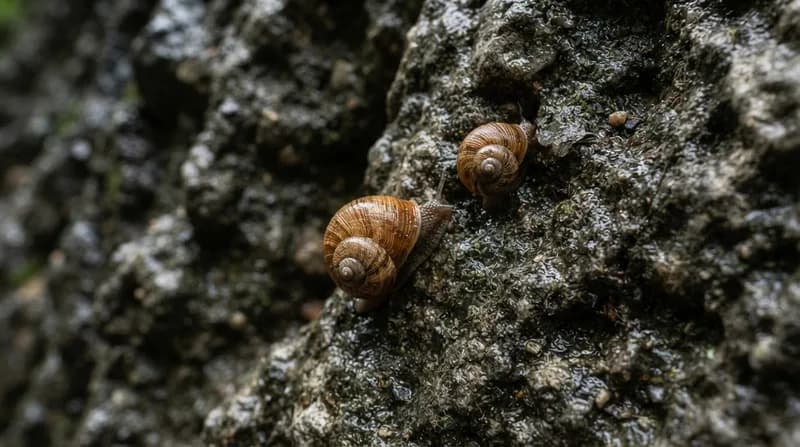
Discovered amidst the dramatic and ecologically sensitive landscapes of Montenegro, Cochlostoma komarnica is a testament to the fact that even well-traveled regions of Europe still harbor biological secrets. Measuring approximately 6 millimeters in length, this tiny land snail sports a distinctive cone-shaped shell that serves as a protective fortress. Unlike many common garden snails, these creatures reside on limestone rocks, grazing exclusively on the lichen and algae that cling to the stone surfaces.
Perhaps the most fascinating anatomical feature of this species is its unique "door." The snail carries a hardened, circular disk on its tail; when the animal feels threatened or faces harsh environmental conditions, it retreats into its shell and uses this disk to seal the opening completely. Furthermore, the creature lacks the characteristic eye stalks common to many gastropods, instead possessing eyes located on the sides of its head, an evolutionary adaptation that sets it apart from its more familiar relatives.
2. Cochlostoma dobrido
Sharing the same genus and many of its physical traits, Cochlostoma dobrido was identified during the same series of scientific expeditions organized by Taxon Expeditions. Found specifically in the high-altitude terrain of the Dobri Do Plateau within Durmitor National Park, this species represents another crucial piece of the puzzle in understanding the complex limestone ecosystems of the Balkans. Like its counterpart, it is small, resilient, and perfectly adapted to life in the crevices of the region's rugged mountain terrain.
The identification of these two species was not a simple matter of observation; it required a rigorous combination of field research and advanced genetic analysis. Because these snails are so small and occupy such specific micro-habitats, researchers had to perform detailed dissections and molecular testing within on-site field laboratories to confirm that they were indeed distinct from previously documented species. The resulting findings, published in the Biodiversity Data Journal, underscore the value of the collaborative efforts between international scientists, local students, and engaged citizen volunteers.
Why It Matters: Biodiversity vs. Development
The discovery of these snails has brought a renewed sense of urgency to the conservation status of the Komarnica Canyon. While the scientific community celebrates the addition of new species to the biological record, conservationists are sounding the alarm over a proposed hydropower dam and reservoir project. Critics argue that the flooding of the canyon would not only erase the habitat of these newly discovered snails but could potentially drive many other, as-yet-undocumented species toward extinction before they are ever identified.
The Montenegrin Ecologists Society (MES) is actively lobbying for the inclusion of the Komarnica Canyon into the existing UNESCO World Heritage protection zone of Durmitor. Their position is that the push for so-called "green" energy cannot be considered sustainable if it relies on the permanent destruction of unique, irreplaceable riverine ecosystems. For the researchers involved, these tiny snails have become a powerful symbol in the broader fight for the environmental preservation of the Balkans' pristine landscapes.