The Mechanics of Nerve Insulation
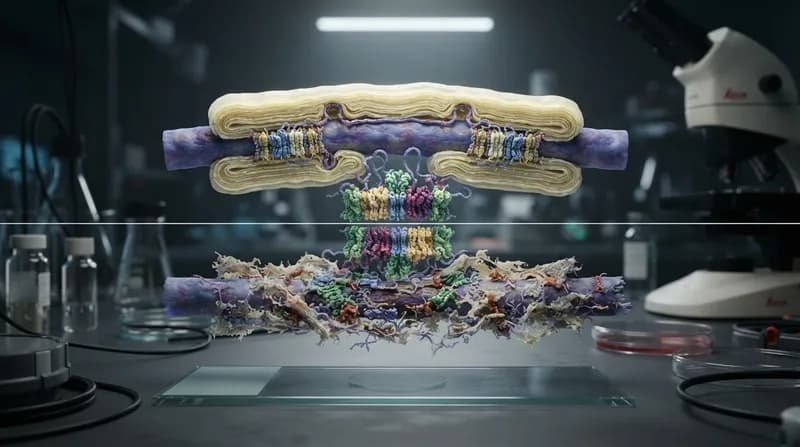
Our nervous system relies on a remarkably complex infrastructure of wiring, where the speed and accuracy of signaling are governed by a fatty substance called myelin. Acting much like the rubber insulation on a copper electrical wire, myelin sheaths wrap around axons—the fibers that transmit electrical impulses between neurons. For years, scientists have understood that the integrity of these sheaths is critical; when myelin degrades, as seen in conditions like multiple sclerosis, the resulting disruption in communication can lead to profound physical and cognitive impairment.
A recent study led by researchers at Upstate Medical University has finally unlocked a long-standing mystery: how do the cells responsible for creating this insulation, known as oligodendrocytes, determine how much myelin is needed for a specific nerve fiber? While it has long been observed that thicker nerve fibers generally require longer myelin segments, the biological mechanism for this scaling has remained elusive. The research, published in PLOS Biology, identifies a protein named Piezo1 as the critical sensor that bridges this gap.
The Role of Piezo1 in Myelin Development
The study reveals that oligodendrocytes utilize the Piezo1 protein to physically detect the diameter of the axons they are in the process of wrapping. By sensing the diameter, the cells receive a "cue" that dictates the precise length of the myelin sheath to be generated. This discovery effectively characterizes Piezo1 as a regulatory gateway that ensures the nervous system maintains its optimal signal conduction speed. The researchers found that this mechanism is particularly active during the developmental stage when the myelin sheath is first being extended and finalized.
Why It Matters
- Regenerative Potential: By understanding the protein-based triggers for myelin production, scientists may be able to develop therapies that encourage remyelination in damaged nervous systems.
- Neurological Insights: The findings provide a clearer picture of how the central nervous system achieves its high-precision architecture during early development.
- Clinical Targets: The identification of Piezo1 offers a tangible molecular target for researchers looking to treat demyelinating diseases where myelin loss significantly degrades patient quality of life.
Implications for Future Neurology
The implications of this discovery reach far beyond basic cell biology. As the research team at the Bechler lab suggests, identifying the specific protein responsible for coordinating myelin growth opens the door to potential medical interventions. If clinicians can learn to manipulate or supplement the function of Piezo1 or its downstream signaling pathways, it could pave the way for treatments that actively repair myelin damage. This shift from simply managing symptoms to actively promoting structural repair in the brain and spinal cord marks a promising evolution in the fight against chronic neurological conditions. By decoding the "construction manual" of the human nervous system, this research provides the necessary foundation to one day reverse the damage caused by degenerative nerve diseases.