The Mechanics of a Millennial Stress Test
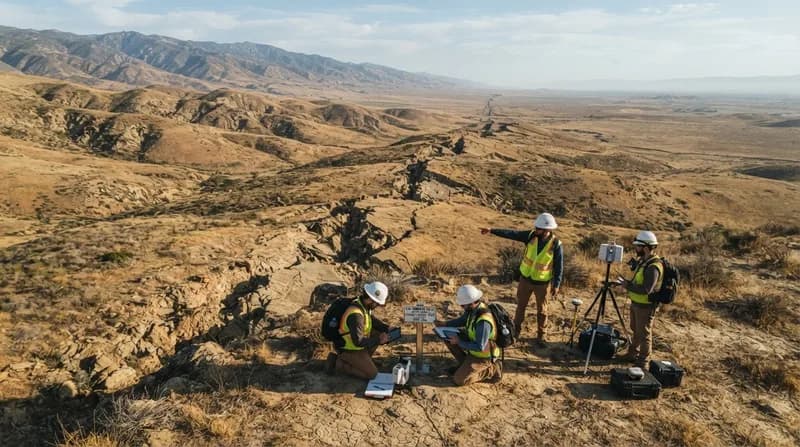
Southern California resides atop an intricate and volatile web of tectonic fault lines that have long been the subject of intense scientific scrutiny. Recent research spearheaded by Dr. Liliane Burkhard from the University of Bern has provided a sobering look into the state of the San Andreas and San Jacinto fault systems. By utilizing a sophisticated, four-dimensional earthquake cycle model, the team reconstructed 1,000 years of seismic activity. This model integrates diverse data points—including tree ring anomalies, historical accounts, and radiocarbon dating—to simulate how stress accumulates and dissipates throughout the crust over centuries.
The findings indicate that the Southern California region is currently under more tectonic strain than at any other time in the last millennium. By quantifying pressure in megapascals (MPa), the study highlights that specific segments of these fault systems have reached, and in some instances surpassed, peak stress levels recorded in the historical model. This research is vital for understanding how geological "quiet periods" are, in reality, active phases of energy accumulation that precede significant crustal ruptures.
Understanding the Cajon Pass 'Earthquake Gate'
At the center of this geological concern is the Cajon Pass, a junction identified by researchers as an "earthquake gate." This area acts as a complex intersection where the San Andreas and San Jacinto faults come into close proximity. The behavior of this gate is not static; it is highly dependent on the surrounding stress conditions. Historically, the pass has acted as a switch: in 1857, the magnitude 7.9 Fort Tejon earthquake was contained by the junction, whereas the 1812 Wrightwood event successfully bridged the two systems, resulting in a dual-fault rupture.
The current state of this gate is particularly concerning. The model shows that both the San Jacinto-Bernardino section and the Mojave South section of the San Andreas fault are carrying unusually high, and strikingly similar, levels of stress. When both systems are highly charged simultaneously, the likelihood of a rupture crossing the gate increases significantly. Such an event would be far more destructive than a single-fault tremor, as it would release energy across a vastly larger geographic footprint, encompassing major urban centers like Los Angeles, Riverside, and San Bernardino.
Why it Matters: Implications for Infrastructure
- Wider Impact Zones: A joint rupture across both fault systems would affect a significantly larger population, including the densely populated Coachella Valley and greater Los Angeles region.
- Critical Infrastructure Vulnerability: The Cajon Pass serves as a primary artery for rail lines, energy grids, and highways. Damage here could cripple emergency response and supply chains across the state.
- Hazard Assessment Framework: While the model does not predict an imminent quake, it provides a physics-based toolkit for urban planners and emergency management agencies to prepare for "worst-case" multisystem rupture scenarios.
Ultimately, the researchers underscore that this data is not a calendar-based prediction of a looming disaster. Instead, it serves as a critical diagnostic tool. By confirming that the system is "critically stressed," the study empowers geoscientists to refine emergency preparedness strategies and structural engineering standards to account for the plausible, albeit high-impact, scenario of a simultaneous, cross-fault earthquake.