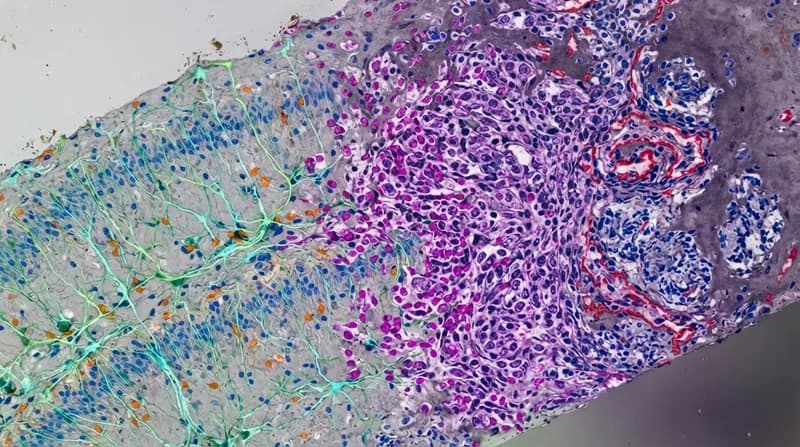
A New Frontier in Oncology
Glioblastoma has long remained one of the most formidable challenges in modern medicine. Its notorious heterogeneity—the way tumor cells differ drastically within the same patient—has historically thwarted efforts to develop a one-size-fits-all treatment. However, a groundbreaking study published in Neuron by researchers at the Icahn School of Medicine at Mount Sinai offers a fresh perspective, identifying a shared biological "blueprint" that many of these aggressive cancer cells rely on to thrive.
By mapping gene activity, the research team discovered that glioblastoma cells frequently mimic glial intermediate progenitor cells (gIPCs). These are immature cells typically found during the early stages of brain development, responsible for generating supporting cells and migrating through developing tissue. By effectively hijacking this developmental program, the tumor cells gain the ability to divide rapidly and infiltrate healthy brain matter with lethal efficiency.
The Role of POU3F3
The study highlights a critical transcription factor known as POU3F3 as the linchpin of this process. Transcription factors are the molecular switches that control gene expression, and in the case of glioblastoma, POU3F3 acts as a maintainer of this immature, stem-cell-like state. When the researchers lowered the levels of POU3F3 in laboratory-grown tumor cell models, the results were striking: the cancer cells became significantly less aggressive, showing a diminished capacity to proliferate and invade surrounding tissue.
Conversely, when POU3F3 activity was increased, the tumor cells reverted to an even more immature state, accelerating their growth and invasive capabilities. This clear cause-and-effect relationship positions POU3F3 as a primary target for future drug development. By disrupting this specific protein or the pathways it regulates, clinicians may eventually be able to strip glioblastoma cells of their most dangerous tools, effectively slowing the progression of the disease where traditional methods have failed.
Why it Matters: Bridging Development and Cancer
- Targeting the Core: Because this gIPC-like state is present across various genetic backgrounds and tumor regions, it offers a uniform target in a disease known for its chaotic diversity.
- Across the Lifecycle: The researchers confirmed that this molecular signature persists in both newly diagnosed and recurrent glioblastomas, suggesting that this weakness could be exploited at multiple stages of the clinical journey.
- Translational Potential: By leveraging existing knowledge of fetal brain development, the team has turned developmental biology into a roadmap for oncology, offering a new rationale for pharmaceutical research.
While this discovery remains in the preclinical phase, the findings represent a major step forward. The next phase of research will focus on whether blocking POU3F3 can be achieved safely in human subjects without interfering with the functions of healthy brain cells. If successful, this approach could offer the first meaningful shift in glioblastoma treatment in years, moving beyond genetic diversity to hit the shared machinery that keeps these deadly tumors alive.