A Paradigm Shift in Neuroscience
For over 150 years, the scientific community has adhered to a textbook understanding of the brain that separates the regions responsible for understanding speech from those that produce it. This rigid division, based on the observations of Carl Wernicke in the 1870s, has long struggled to explain why patients with damage to the posterior temporal lobe often suffer from impairments in both listening and talking. A groundbreaking study from the University of California, San Francisco (UCSF), led by Dr. Edward Chang, has finally dismantled this long-standing separation, revealing a unified mechanism at the heart of human language.
By utilizing high-resolution brain-mapping techniques, the research team identified a specific area known as the left posterior superior temporal gyrus (lpSTG). This region is not merely a center for auditory comprehension; it serves as a generative hub where the brain constructs a sophisticated blueprint for the words we intend to speak. This internal plan includes essential structural data, such as word length, syllable count, and phonetic frequency, which is finalized milliseconds before physical articulation occurs.
The Anatomy of Language
The discovery hinges on the observation that the brain processes incoming and outgoing speech in remarkably close proximity within the lpSTG. Researchers found that neurons tasked with hearing speech coexist—and sometimes overlap—with those that encode the production blueprint. This functional density provides a compelling explanation for how infants bridge the gap between mimicking the sounds they hear and learning to produce those words themselves.
Dr. Matthew Leonard, a co-lead author of the study, notes that the team’s ability to observe the brain at a millisecond scale allowed them to resolve the paradox that baffled neurologists for generations. By confirming that the lpSTG is active roughly a quarter-second before a person speaks, the researchers have effectively rewritten the map of linguistic motor planning. This finding clarifies that the process of speech is a highly fluid, intertwined loop rather than a linear sequence of distinct cognitive events.
Why It Matters: Clinical Implications
The implications of this research extend far beyond academic theory, offering a promising path forward for clinical neurology and biotechnology:
- Precision Neurosurgery: Mapping these specific neuron populations allows surgeons to identify critical speech areas more accurately, significantly reducing the risk of permanent linguistic impairment during procedures.
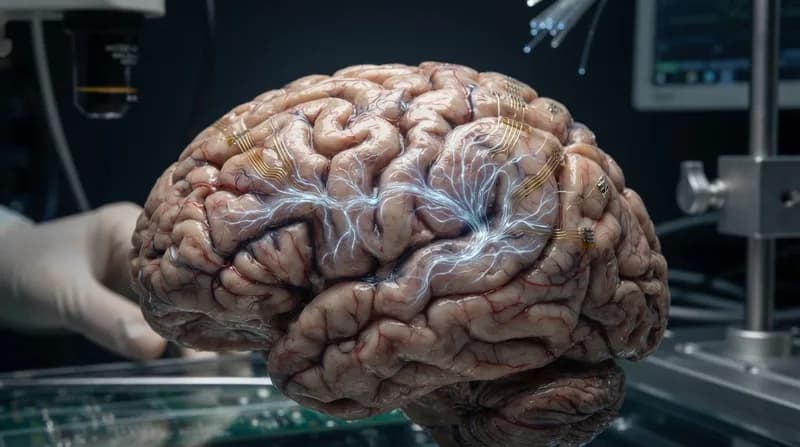
- Next-Generation Brain-Computer Interfaces (BCIs): Current BCIs typically rely on motor cortex signals, which may be unavailable in patients with localized trauma. Because the lpSTG acts as an earlier stage in the speech pipeline, it represents a new, robust target for decoding intended communication.
- Bilingual Conversation Support: The dual nature of the lpSTG—handling both auditory intake and generative output—could allow future BCIs to support real-time, back-and-forth interaction, a feature currently missing from most speech-restoration devices.
As the scientific community continues to refine these findings, the path to restoring speech for patients with severe paralysis or neurological injury appears clearer than ever. By targeting the brain's internal blueprint rather than just the outward motor commands, researchers are unlocking a new dimension of human-machine interaction that could restore one of our most fundamental human abilities.