The Cosmic Laboratory
A collaborative team of researchers, led by the University of Bath in the UK, has unveiled a groundbreaking series of computer simulations known as the MEGATRON project. This initiative aims to solve one of the most profound mysteries in astrophysics: how the very first stars emerged from the darkness of the early Universe to transform it into the chemically rich environment we inhabit today. By simulating the birth, life, and violent end of these primeval stars, the researchers are mapping how the first essential elements—including carbon, oxygen, and iron—were seeded across the cosmos.
The project represents a major milestone in computational science, combining advanced cosmological modeling with intricate details of radiation and galaxy evolution. By moving beyond simplified models, which often fail to account for the complex interactions between starlight and surrounding gas, the MEGATRON simulations provide a high-resolution look at the feedback loops that governed the infancy of the universe. This allows the team to track gas movement and chemical evolution over billions of years, providing a clearer picture of how galaxies like our own Milky Way eventually took shape.
Bridging Ancient Relics and Modern Observations
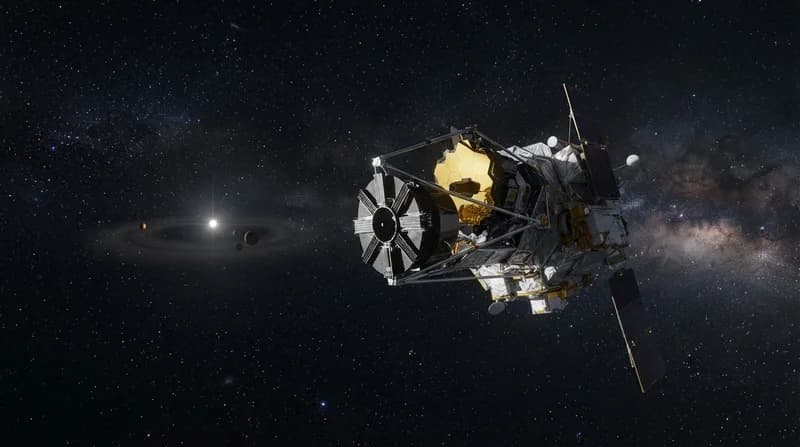
One of the unique strengths of the MEGATRON project is its ability to serve as a bridge between two distinct windows into the past. On one side, the team leverages direct imagery from the James Webb Space Telescope (JWST), which captures the faint, distant light of galaxies as they existed shortly after the Big Bang. On the other side, the team analyzes "stellar archaeology"—the chemical signatures embedded in the oldest stars still residing in our galactic neighborhood today. These ancient stars act as biological-like fossils, preserving the chemical fingerprints of the first stellar generations.
By comparing their simulated models against both these datasets, the researchers can test various theories about the early universe with unprecedented accuracy. The results suggest that earlier, less detailed models significantly underestimated the impact of stellar radiation on the gas surrounding young galaxies. These new simulations reveal that such radiation is a critical architect of galaxy structure, influencing everything from star formation rates to the dispersion of heavy elements into the interstellar medium.
Future Scaling and Computational Might
The scale of the MEGATRON project is as immense as its subject matter. Utilizing 40 million processor hours on the UK’s national supercomputing infrastructure—a feat of engineering equivalent to running five million modern laptops simultaneously for an entire year—the research team is already working on even more advanced iterations. These upcoming simulations promise higher resolution and more robust physical models, which will be essential as astronomical surveys continue to produce increasingly precise data on the ancient stars orbiting within our own galaxy.
This multi-year effort, which began in 2023 and is slated to run through 2030, highlights the necessity of coupling theoretical physics with high-performance computing. As the team continues to integrate findings from the Open Journal of Astrophysics, they are moving closer to a comprehensive, unified theory of cosmic evolution. By decoding how the first stars created the raw materials for planets and life, the MEGATRON project is not just rewriting textbooks—it is providing a foundational physical framework for understanding our own origins in the vast, expanding narrative of the cosmos.