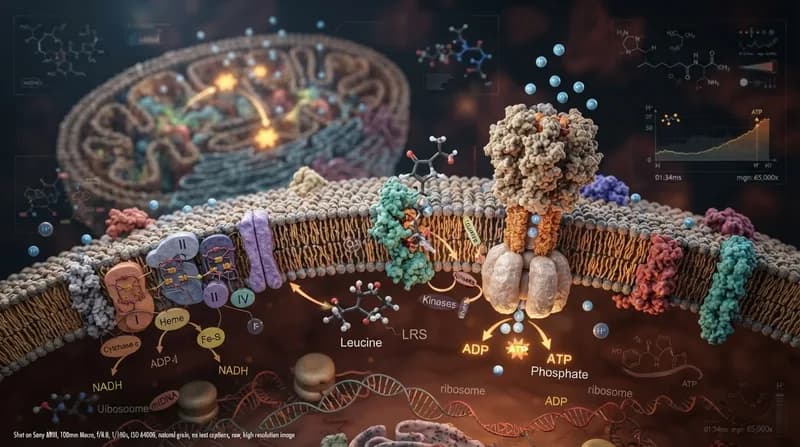
The Metabolic Power of Leucine
For decades, the amino acid leucine has been synonymous with muscle protein synthesis—the go-to supplement for athletes looking to build mass. However, groundbreaking research from the University of Cologne suggests that leucine's role in human biology is far more complex and fundamental than previously understood. Scientists have identified that this essential amino acid acts as a precision signaling molecule, directly influencing how our cells produce energy.
Mitochondria, the organelles responsible for generating the chemical energy required for all life functions, do not operate at a fixed capacity. They are dynamic, adjusting their metabolic pace to match nutrient availability and energy demand. The research team, led by Professor Dr. Thorsten Hoppe, has uncovered that leucine serves as a key regulator in this adaptability, specifically by preserving the integrity of mitochondrial proteins that would otherwise be flagged for destruction.
The Mechanism: Protecting the Powerhouse
At the heart of this discovery is a sophisticated quality-control system within the cell. Cells naturally possess mechanisms to monitor their internal hardware; if a protein is damaged or misfolded, it is targeted for degradation to prevent cellular dysfunction. A critical player in this cleanup crew is a protein known as SEL1L. Under normal conditions, SEL1L identifies and clears out proteins located on the outer surface of the mitochondria.
The study reveals that leucine effectively inhibits the activity of SEL1L. When leucine levels are sufficient, this "brake" on SEL1L allows essential proteins to remain anchored to the mitochondria. These proteins are vital for transporting nutrients into the mitochondrial core, where they are converted into ATP, the cell's fuel. By preventing the premature breakdown of these transport proteins, leucine ensures that mitochondria can operate at peak efficiency during times of nutrient abundance.
Why It Matters
- Metabolic Insights: This discovery bridges the gap between dietary intake and cellular signaling, explaining how specific nutrients tell the body to ramp up energy production.
- Potential Therapeutic Targets: Understanding the SEL1L-leucine axis offers a new roadmap for addressing metabolic disorders where energy production is impaired.
- Cancer Research: Because cancer cells hijack metabolic pathways to survive and proliferate, targeting these leucine-dependent mechanisms could eventually lead to new strategies for slowing tumor growth.
- Quality Control Balance: Researchers warn that while boosting energy is beneficial, the cellular cleanup process managed by SEL1L is essential for preventing the accumulation of toxic, damaged proteins, suggesting that future clinical applications must be carefully calibrated.
Broader Implications for Health and Disease
To validate their findings, the researchers utilized Caenorhabditis elegans, a model organism that shares critical cellular pathways with more complex mammals. Disruption of leucine metabolism in these worms not only impaired mitochondrial efficiency but also resulted in significant fertility challenges, underscoring the deep connection between energy metabolism and reproductive health. Further investigation into human lung cancer cells indicated that certain metabolic mutations might allow tumors to exploit this leucine-dependent energy preservation to gain a survival advantage.
This research highlights a shift in nutritional science: nutrients are not merely building blocks or raw fuel; they are active information-carriers that dictate the operational status of our cellular infrastructure. By mapping the interaction between leucine and mitochondrial protein quality control, the study provides a new lens through which scientists can view metabolic disease and the aging process. As the research moves forward, the focus will likely turn toward how manipulating these pathways can be achieved without compromising the cell's long-term housekeeping and health, providing a delicate balance for potential future therapies.