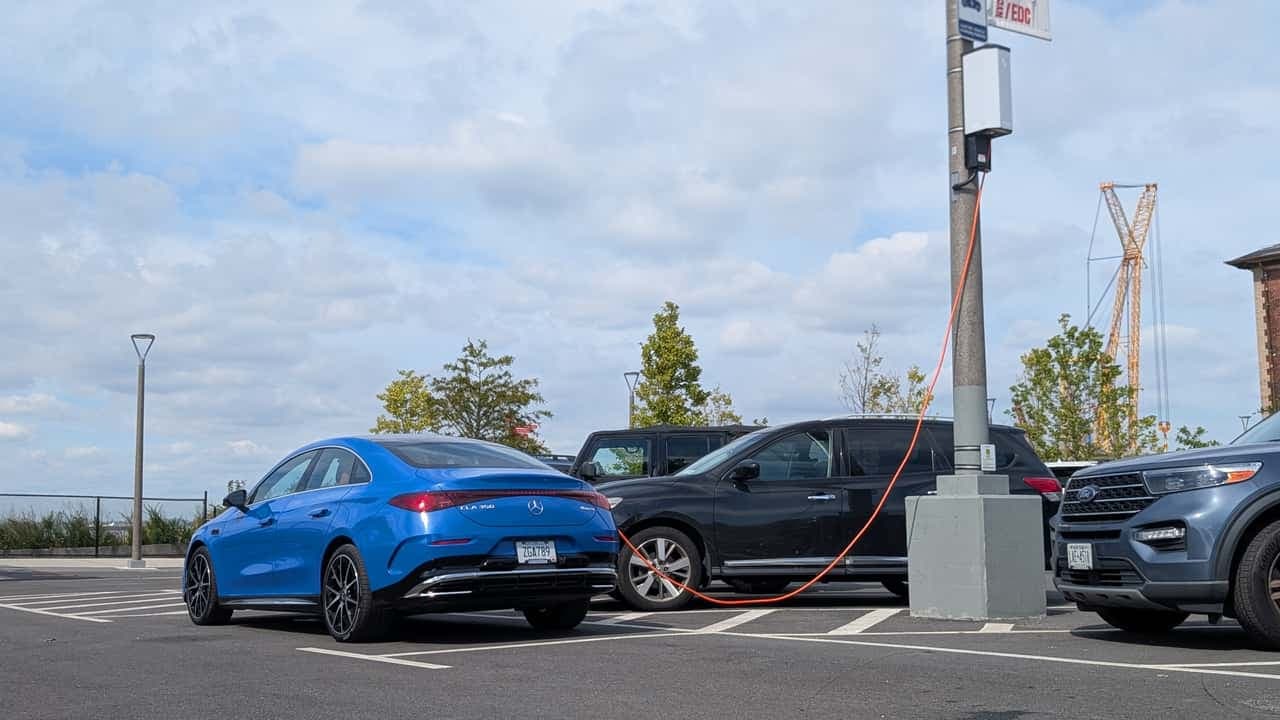
The Curbside Charging Challenge
For residents of dense metropolitan areas like New York City, the transition to electric vehicles remains a logistical hurdle. Unlike suburban owners with private garages and dedicated home charging setups, city dwellers often face a scarcity of convenient plug-in locations. While fast-charging networks continue to expand, they are frequently plagued by high real-estate costs, lengthy permitting timelines, and physical site constraints. The reality is that many city drivers do not require high-speed DC charging for daily commutes; they simply need a reliable way to trickle-charge their vehicles while the car is parked for extended periods.
This gap in the market is where innovators like Voltpost are stepping in. The startup is pioneering an approach that utilizes existing urban furniture—specifically lampposts—to deliver Level 2 charging. By bypassing the need for intensive sidewalk trenching and massive construction, this model offers a path to mass deployment that aligns with the realities of aging city grids.
The Voltpost Air Experience
The Voltpost Air system is designed for minimal footprint and maximum durability. Mounted roughly ten feet above the sidewalk, the hardware remains protected from potential vandalism and urban flooding. During operational trials in Brooklyn, the system demonstrated remarkable ease of use. A user scans a QR code to initiate the session, causing an integrated cable to extend from the pole toward the vehicle’s charging port. Upon completion, the cable automatically retracts into the housing, effectively eliminating the common issue of charging cords cluttering public walkways.
Technically, the unit is quite capable for its intended purpose. It provides a standard Level 2 output, supporting up to 9.6 kilowatts at 240 volts and 40 amps. In practical terms, this allows a typical EV to gain roughly 30 miles of range per hour of charging—more than enough to cover the daily driving needs of an average city resident. The charger is compatible with both J1772 and the North American Charging Standard (NACS/J3400), ensuring broad accessibility for nearly all EV models on the market today.
Why it Matters: Efficiency and Infrastructure
- Reduced Construction Costs: By leveraging existing electrical capacity and pole locations, the project can reduce overall deployment costs by as much as 70% compared to traditional charging stations.
- Seamless Integration: The system avoids splitting power with the streetlight itself, instead pulling from spare grid capacity, which ensures the streetlights remain functional and fully powered.
- Public Accessibility: Retractable cables solve the major nuisance of tripping hazards, maintaining clean, accessible sidewalks for pedestrians.
- Durability: Engineered to withstand extreme weather, the hardware is rated for operation between -22 and 122 degrees Fahrenheit.
The Future of Urban Mobility
The broader goal for companies like Voltpost is to scale these installations across North America. With pilot programs already established in cities like Chicago, Detroit, and across New York State, the focus is now shifting toward long-term reliability and real-world maintenance. As more cities look to improve their EV infrastructure, the reliance on street-level utility poles—a strategy already successfully employed in cities like London—seems increasingly inevitable for the North American market. As the city continues to add thousands of new EV registrations annually, these unobtrusive, low-cost charging solutions could prove to be the linchpin in accelerating urban electrification.