Scaling Sustainable Logistics
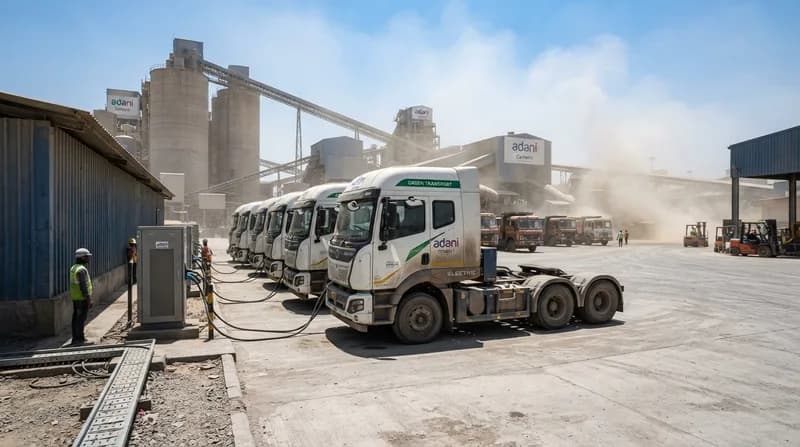
In a major push toward industrial decarbonization, Adani Cement, a subsidiary of the Adani Group, has officially initiated a massive transition to heavy-duty electric transport. The company has announced a phased deployment of 410 electric trucks, a move designed to overhaul how it moves clinker and cement—historically some of the most carbon-intensive components of the construction industry. The first batch has already been commissioned at the Sanghi plant in Gujarat, with the entire fleet expected to be fully operational by March 2027.
This initiative represents a significant pivot for Indian logistics. By leveraging electric heavy-duty vehicles, Adani aims to insulate its operations from the volatility of global diesel prices. According to the company, the economic case for electrification is strengthening; over the last decade, diesel costs in India have surged by 60 percent, while the costs of lithium-ion battery packs and solar power generation have plummeted by 70 percent and 47 percent, respectively.
The Fleet: Sany 55-Tonne Electric Trucks
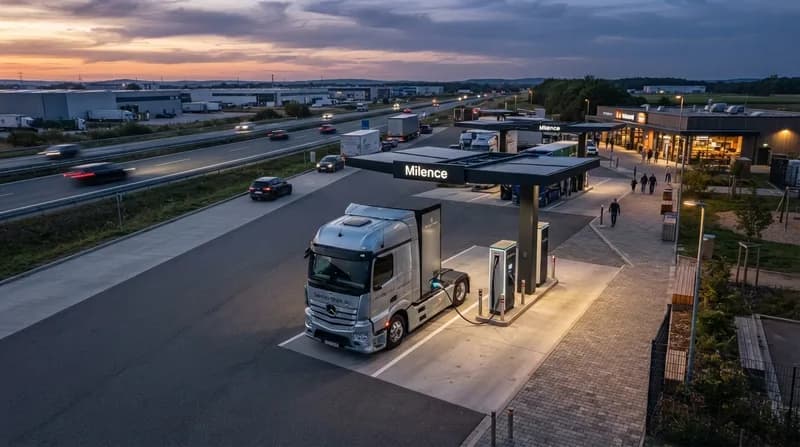
The backbone of this new fleet consists of heavy-duty electric trucks manufactured by Sany. These 55-tonne vehicles are being deployed to handle the strenuous task of industrial material transport. Based on initial specifications, the fleet utilizes two high-roof variants: the 5538E and the 5550E. Both models feature a 4x2 drivetrain layout and deliver a robust 360 kW of power, designed specifically to meet the high torque demands of industrial logistics.
The 5538E model is equipped with a 282 kWh battery pack, offering a practical range of 189 km and supporting charging speeds up to 240 kW. For longer hauls or more intensive routes, the 5550E variant steps up to a larger 376 kWh battery pack, which allows for a range of 245 km and faster charging at up to 360 kW. These specs illustrate a maturing market where electric heavy-duty transport is becoming a viable, daily-use solution for industrial giants.
Why It Matters
- Environmental Impact: Each diesel truck currently emits approximately 737.5 grams of CO2 per kilometer. By moving to electric, Adani estimates a reduction of 25,000 tonnes of CO2 emissions annually.
- Economic Resilience: Replacing diesel fuel with electricity is projected to save the company 11 million liters of diesel annually, providing a massive buffer against fuel price spikes.
- Ambitious Roadmap: This 410-truck deployment is merely the beginning. Adani Cement has already set a target to expand its fleet to over 2,000 electric vehicles by 2030, with the goal of shifting 10 percent of its total road freight to electric power.
Ultimately, this rollout proves that heavy-duty electrification is no longer a niche experimental phase but a core strategic pillar for global infrastructure businesses. As Vinod Bahety, CEO of the Cement Business at Adani Group, noted, this transition is the embodiment of "smart sustainability"—a strategy that simultaneously benefits the environment, the local community, and the company's long-term balance sheet.