The Strategic Evolution of the ID. Tiguan
Volkswagen has officially pulled the covers off its latest electric contender, the ID. Tiguan. Set to hit the market in early 2027, this vehicle serves as a pivotal successor to the popular ID.4 and ID.5 models. By adopting the iconic Tiguan nomenclature, Volkswagen is signaling a clear attempt to marry its most successful combustion-engine brand identity with its growing fleet of battery-electric vehicles. The move is designed to provide consumers with a familiar touchpoint as the brand accelerates its transition toward full electrification, built on the robust MEB+ platform.
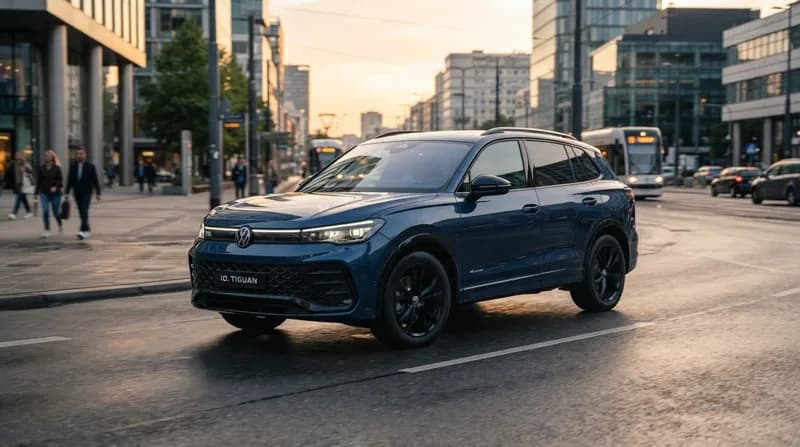
The ID. Tiguan showcases a departure from the softer, crossover-style curves of its predecessors. Following the new 'Pure Positive' design language, the vehicle features a more muscular, upright stance that provides a premium visual presence. Measuring 4.62 meters in length and 1.86 meters in width, the vehicle projects the authority of a larger class of SUV, while the return of classic loop-style door handles suggests a nod to traditional ergonomics and aesthetic longevity.
Technical Specifications and Performance
Volkswagen is offering the ID. Tiguan in three distinct performance configurations to cater to a variety of driving needs. At the entry level, a rear-wheel-drive variant offers 140 kW of power paired with a 58-kWh LFP battery, targeting a WLTP range of approximately 450 kilometers. For those seeking greater range and performance, the 210 kW rear-wheel-drive model utilizes a 77-kWh NMC battery, extending the range to an impressive 600 kilometers. The flagship offering is the 220 kW all-wheel-drive 4MOTION model, which also houses the 77-kWh battery and delivers a brisk 0–100 km/h acceleration time of just 6.3 seconds.
Beyond raw performance, the vehicle is built for practicality. It boasts a towing capacity of up to 2,000 kg for the 77-kWh versions, making it a viable option for families with caravans. The interior is equally well-considered, offering 534 liters of cargo space in the boot supplemented by a 32-liter front trunk (frunk), providing versatile storage solutions for daily use and longer road trips.
Interior Innovation and Driver-Focused Technology
Volkswagen has taken a significant leap forward in cabin technology, addressing common feedback regarding its previous digital interfaces. The new cockpit features a 10-inch driver display and a large 15-inch central infotainment screen. Perhaps most notably, the ID. Tiguan introduces a 12-inch passenger-side display. Utilizing privacy screen technology similar to that found in premium laptops, the display allows passengers to enjoy entertainment or gaming without obstructing the driver's view or causing glare.
- Physical Controls Return: In a reversal of previous design trends, Volkswagen has reintroduced physical buttons for key functions and a tactile dial for volume control.
- Advanced Connectivity: The center console houses dual Qi2 inductive charging pads to keep mobile devices powered throughout the journey.
- Enhanced Charging Ecosystem: The vehicle supports bidirectional charging, including V2L (Vehicle-to-Load), V2H (Vehicle-to-Home), and V2G (Vehicle-to-Grid) integration for smarter energy management.
Why it Matters
The transition of the Tiguan badge to an all-electric platform represents a major milestone in Volkswagen’s 'Electric for All' strategy. By combining the emotional resonance of a legacy nameplate with the technological advancements of the MEB+ platform, Volkswagen is attempting to lower the barrier to entry for mainstream buyers. While fast-charging speeds—peaking at 165 kW for the 77-kWh battery—may not break industry records, the inclusion of V2G and V2H capabilities positions the ID. Tiguan as a forward-thinking appliance that contributes to a larger home energy ecosystem, rather than just a simple mode of transportation.