The Heliosphere’s Galactic Vulnerability
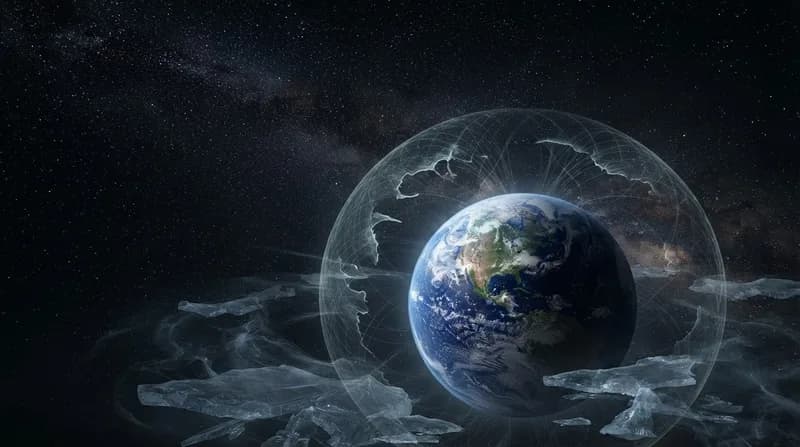
For billions of years, Earth has been cocooned within the heliosphere, a massive protective bubble generated by the solar wind that wards off harsh interstellar radiation. However, recent findings from the NASA-funded SHIELD center suggest this shield is far more dynamic and potentially fragile than previously believed. By creating complex computer simulations, researchers reconstructed the Sun’s 4.6-billion-year journey through the Milky Way, revealing that our solar system has repeatedly drifted through dense, cold clouds of gas and dust.
These interstellar encounters, which likely occurred roughly 2 to 3 million, 6 to 7 million, and 13 to 14 million years ago, may have exerted enough pressure on the heliosphere to compress it significantly. In some models, the bubble contracted so severely that it fell inside Earth’s orbit, leaving our planet entirely exposed to the interstellar medium. This collapse coincides with geological markers—such as specific interstellar dust particles trapped in deep-sea sediments and Antarctic ice—that suggest Earth’s climate underwent drastic changes during these exact intervals, potentially contributing to the onset of ancient ice ages.
Solving the Faint Young Sun Paradox
While the heliosphere study looks at our planet's recent vulnerability, a separate investigation tackles the mystery of the “Faint Young Sun.” Roughly three billion years ago, the Sun produced significantly less energy—only about 70% of its current output—which theoretically should have left Earth a frozen, inhospitable wasteland. Yet, the geological record confirms that liquid water existed during that era, indicating a paradox that has long puzzled climatologists.
New research suggests the answer lies in the volatile temperament of our young star. By observing younger stars elsewhere in the galaxy, scientists have confirmed that infant stars frequently unleash massive solar superflares. If the early Sun behaved similarly, these high-energy particle streams would have bombarded Earth’s primitive atmosphere, triggering chemical reactions that synthesized nitrous oxide. Because nitrous oxide is a potent greenhouse gas, it could have trapped enough heat to keep the planet above freezing. Further, the study implies that these specific environmental conditions—cool but not frozen—may have been the perfect laboratory for the prebiotic chemistry that allowed life to eventually emerge.
Why It Matters
- Climate Insights: Understanding past heliospheric interactions provides a new lens through which scientists can interpret long-term climate fluctuations and terrestrial ice ages.
- Habitability Criteria: These findings redefine what makes a star system habitable, suggesting that a star's magnetic activity and galactic path are as crucial as its distance from a planet.
- Digital Twin Advancements: The development of a "digital twin" of the heliosphere by the SHIELD center marks a leap forward in heliophysics, allowing for predictive modeling of how our protective bubble interacts with interstellar environments.
These two lines of research underscore a fundamental truth: Earth does not exist in a vacuum. From the violent superflares of its infancy to its perilous passage through the cold clouds of the Milky Way, our planet’s history is inextricably linked to the changing behavior of the Sun. Moving forward, these discoveries will help astronomers refine their search for habitable worlds, looking beyond simple planetary position to consider the broader, more complex cosmic environment that stars and their planets must navigate together.