A Major Milestone for European EV Supply Chains
CATL has reached a pivotal juncture in its European expansion strategy, officially commencing test production of battery cells at its manufacturing hub in Debrecen, Hungary. This development follows a period of intense scrutiny and logistical setbacks that previously forced major European automakers—including Mercedes-Benz—to pivot toward shipping cells directly from China to maintain their assembly lines. The commencement of these test runs indicates that the facility has finally satisfied the complex web of regulatory and operational requirements necessary to begin the delicate process of manufacturing high-capacity lithium-ion cells.
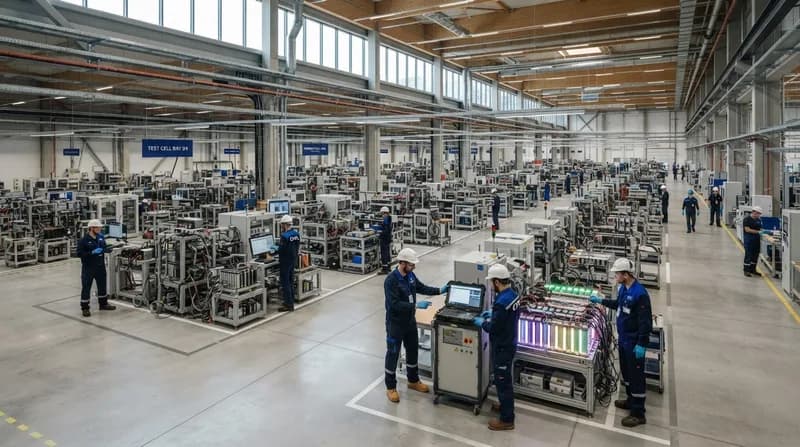
The test phase is designed to be an exhaustive validation period. During this time, the company will focus on optimizing manufacturing machinery and refining automated processes across the plant's first two production lines. While CATL is a global leader in battery manufacturing, commissioning a gigafactory of this scale is a months-long endeavor. Industry analysts anticipate that while the facility is now technically active, the transition to full-scale, high-yield mass production will remain a deliberate, incremental process.
The Stakes for European Automakers
The Debrecen plant represents a massive commitment from CATL, with a total investment package valued at 7.34 billion euros. Once operating at its design capacity of 100 GWh per year, the facility will serve as the company's largest production footprint outside of China. Its strategic importance cannot be overstated, as it is positioned to provide a localized, reliable stream of battery cells to heavyweights like Mercedes-Benz and BMW, the latter of which has also established a massive dedicated EV production site within Debrecen.
For these manufacturers, the plant’s success is a critical buffer against the supply chain vulnerabilities that disrupted vehicle production throughout 2026. The ability to source batteries domestically in Europe significantly reduces logistics costs and carbon footprints, while offering a safeguard against the geopolitical tensions that have complicated transcontinental shipping routes.
Why It Matters: Navigating Political and Environmental Headwinds
- Regulatory Scrutiny: The project has faced substantial local opposition, including concerns regarding water usage and noise.
- Safety Compliance: Recent challenges involved addressing non-compliant wastewater discharge and workplace health reports regarding nickel exposure.
- Political Shifts: Following a change in Hungary’s leadership, the government has imposed stricter environmental oversight on the battery sector, requiring companies like CATL to maintain higher standards of operational transparency.
- Supply Chain Stability: Local production is essential to solving the "battery gap" that previously caused halts in production at European car factories.
Looking ahead, CATL maintains that it has addressed all previous deficiencies and cleared the necessary environmental hurdles to move forward. As the company works through this trial period, the automotive industry will be watching closely to see if the Debrecen plant can finally reach the output levels needed to power the next generation of European electric vehicles.