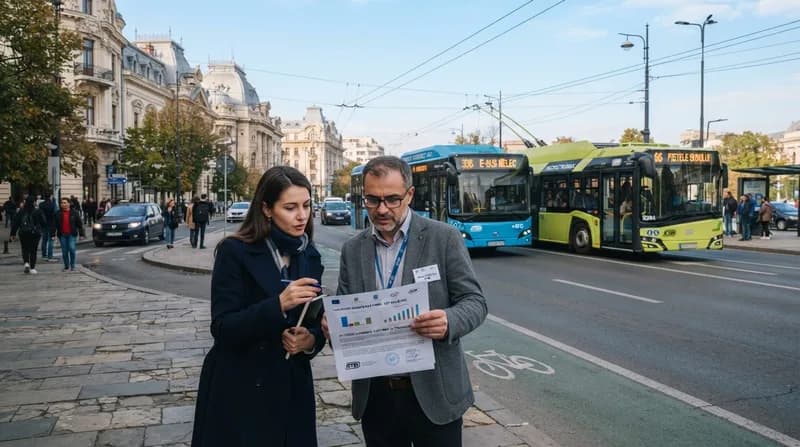
A Major Leap in Urban Mobility
Bucharest is poised to undergo a significant transformation in its public transit sector. The city has officially secured €87.44 million in non-repayable funding from the European Union’s Modernisation Fund, a move designed to accelerate the city's transition toward sustainable urban mobility. The initiative, confirmed by Mayor Ciprian Ciucu, marks a critical investment in the Societății de Transport București (STB) network, effectively phasing out aging, high-emission vehicle stock in favor of clean, battery-electric technology.
The Procurement Roadmap
The funding will facilitate a comprehensive fleet renewal, focusing on three specific categories of public transport vehicles to replace outdated infrastructure:
- Battery-Electric Buses: The procurement includes 40 new e-buses. The fleet will be split between 20 units measuring 12 meters in length and 20 units measuring 10 meters, intended to replace current Mercedes-Benz Citaro models operating on Euro-3 diesel engines.
- New Trolleybuses: 45 modern trolleybuses are on the order list to replace the older, less efficient Astra-Ikarus models that have served the city for years.
- Tram Upgrades: The project also covers the acquisition of 10 new tram units, which will take over routes currently served by aging V3A(M) vehicles.
Strategic Infrastructure Development
A successful transition to an electric-first public transit system requires more than just new vehicles; it demands a robust charging ecosystem. Mayor Ciucu emphasized that the development of new charging infrastructure is currently a top priority. The city plans to install 100 new charging stations, ensuring that the arriving electric buses can be integrated into the existing transit grid immediately upon delivery. This proactive approach aims to prevent the bottlenecks often associated with fleet electrification, such as charging downtime and grid strain.
Why it Matters
For a city the size of Bucharest, the retirement of Euro-3 diesel buses is a substantial victory for air quality and public health. By securing this grant, the city minimizes the financial burden on its taxpayers, as the funding covers the vast majority of the procurement costs, with the city only responsible for VAT payments. This project reinforces the broader European trend of utilizing the Modernisation Fund to bridge the gap between legacy transport systems and the demands of a low-carbon future, setting a template for other municipalities across Eastern Europe.
Outlook
Bucharest is not new to this journey, having already integrated 22 Yutong U12 battery-trolleybuses into its streets earlier this year. These vehicles have demonstrated the viability of hybrid-trolley technology, capable of covering up to 20 kilometers off-wire. With previous deliveries of Solaris Trollino 12 trolleybuses and a separate contract for 100 Karsan electric buses, the city is rapidly building a diversified, high-tech transit network that promises cleaner air and a more efficient commuting experience for its citizens.