A Record-Breaking Shift Toward Electric Mobility
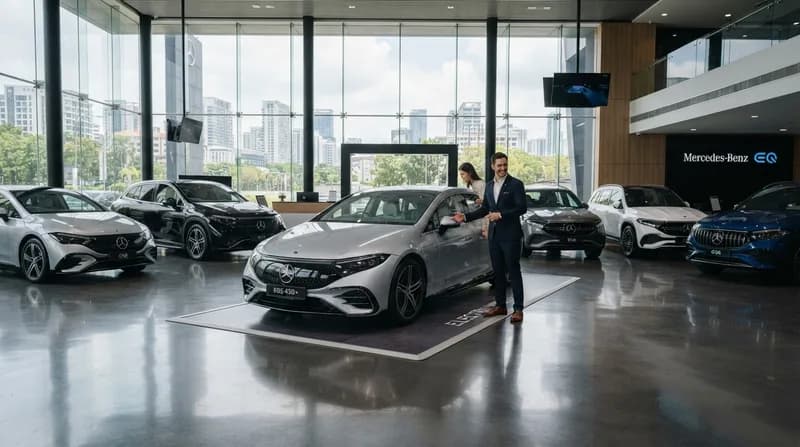
Mercedes-Benz Group has reached a significant milestone in its electrification journey, reporting that one in every six new Mercedes passenger cars delivered worldwide is now fully electric. During the third quarter of 2026, the company delivered 78,100 battery-electric vehicles (BEVs), marking a robust 52 percent increase compared to the same period in the previous year. This surge illustrates a clear acceleration in consumer adoption, with the BEV share in the passenger car segment climbing to 16.8 percent, a substantial leap from the 9.6 percent recorded in the second quarter of 2025.
When factoring in plug-in hybrids, the electrified portfolio—which Mercedes identifies as 'xEV'—now accounts for a full 25 percent of the company's global passenger car sales. This trend is anchored by strong demand for core models such as the electric CLA, the electric GLC, and the GLB, which have seen such high interest that order books are currently extending well into 2027. To accommodate this demand, the manufacturer has moved its production facilities in Bremen, Rastatt, and Kecskemét to full three-shift schedules.
Europe as the Engine of Growth
While global markets vary, Europe remains the primary stronghold for Mercedes-Benz's electric expansion. The region saw a massive 78 percent year-over-year increase in BEV deliveries. Impressively, nearly one out of every three Mercedes-Benz vehicles sold in Europe is now fully electric. This momentum is supported by the ongoing rollout of the electric C-Class, which is expected to become a major volume driver as deliveries scale throughout the upcoming quarters.
The company notes that despite an 8 percent decline in total global passenger car sales—largely due to a difficult 31 percent drop in the Chinese market—performance outside of China remains positive. Sales in Europe grew by 5 percent, while North American markets saw a 4 percent increase. Germany in particular remains a bright spot, contributing a 13 percent uptick in sales, reinforcing the importance of the European domestic market in the transition to electric.
Strategic Outlook and Tech Integration
Beyond the raw delivery numbers, Mercedes-Benz is banking on technological integration to maintain its competitive edge. The company is preparing to roll out an AI-powered cockpit experience and advanced driver assistance systems across its entire vehicle lineup in the coming months. These digital enhancements are designed to complement the hardware advancements seen in the newest electric SUV variants, such as the recently launched electric GLC L in China and the locally produced GLE L.
Why it Matters
- Supply Chain Resilience: The fact that key electric models are sold out in Europe through the end of the year highlights that demand is currently outstripping production capacity, signaling a healthy market appetite for premium EVs.
- Market Diversification: While the 31 percent decline in China presents a significant challenge, the growth in Germany, Europe, and North America suggests that Mercedes is successfully mitigating regional volatility through a balanced, multi-market strategy.
- Technological Pivot: The move to integrate AI-powered cockpits across the range suggests that Mercedes views the 'software-defined vehicle' as a critical pillar for maintaining brand loyalty as the industry shifts away from traditional combustion engines.