Revolutionizing Battery Longevity
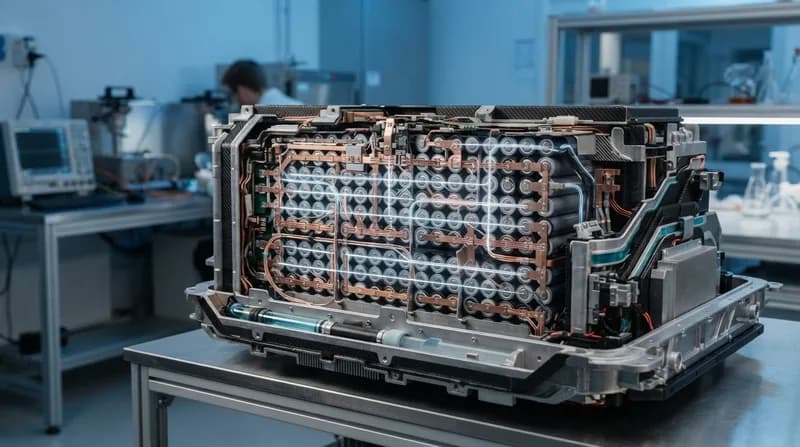
The electric vehicle industry has long grappled with a fundamental limitation: battery packs are only as strong as their weakest cell. Because cells within a large battery pack age at different rates, a single failing unit can throttle the performance of the entire system. A groundbreaking study from Sweden’s Chalmers University of Technology suggests a way out of this cycle: reconfigurable battery packs that use intelligent switching to physically bypass underperforming cells.
By integrating advanced control systems and switches into the pack's architecture, the battery management system can isolate degraded cells while allowing the rest of the pack to function normally. Simulations conducted by the research team indicate that this approach could extend the operational lifespan of high-voltage vehicle batteries by more than 20 percent. This potential is particularly game-changing for heavy-duty electric trucks and long-range passenger cars, which typically rely on massive, complex battery strings connected in series.
Why it Matters
- Extended Service Life: In an 80-kWh battery scenario, the technology suggests a lifespan increase of over a year, significantly delaying the need for costly pack replacements.
- Economic Efficiency: While the added electronics increase manufacturing costs, the extended life and improved residual value of the battery pack are projected to provide a net positive return on investment.
- Streamlined Manufacturing: Current production standards require rigorous and expensive cell-matching processes to ensure consistency. Reconfigurable architecture is more tolerant of variance, potentially lowering production bottlenecks.
- Second-Life Versatility: Because individual weak cells can be bypassed, packs retired from automotive duty could be more effectively repurposed for stationary energy storage, avoiding total system failure.
The Path Toward Commercial Integration
While the concept is still in the research and prototyping phase, its implications for the EV supply chain are significant. The study, published in Nature Communications in collaboration with partners from Scania and PHINIA, highlights that while controlling every single cell might represent the theoretical performance ceiling, practical implementation will likely involve managing groups of cells. This tiered approach strikes a balance between technical complexity and real-world durability.
This research builds upon a growing trend at Chalmers to solve the battery aging puzzle. Earlier this year, the university showcased an AI-driven charging protocol aimed at boosting longevity, but the reconfigurable pack strategy takes the solution directly to the hardware level. By shifting from static, rigid battery designs to dynamic, adaptable systems, manufacturers may finally be able to extract the maximum possible utility from every kilowatt-hour of energy stored on board, ultimately driving down the total cost of ownership for future electric mobility.