The Challenge of Hypopituitarism
The human pituitary gland, often referred to as the master gland, is the command center for the endocrine system. It regulates essential functions including growth, metabolism, and the body's physiological response to stress. When this gland is damaged—a condition known as hypopituitarism—the body fails to produce sufficient adrenocorticotropic hormone (ACTH). Without ACTH, the adrenal glands cannot produce cortisol, a life-sustaining hormone that regulates blood pressure and blood sugar. Currently, patients with this condition rely on daily oral medications, which struggle to replicate the complex, fluctuating hormonal needs of the human body, leaving patients at constant risk of health crises.
The Potential of Stem-Cell Organoids
A team of researchers at Nagoya University in Japan has developed a potential alternative: transplanting laboratory-grown pituitary tissue. By utilizing human stem cells, the team engineered three-dimensional organoids designed to function as miniature pituitary glands. These organoids are programmed to produce ACTH, effectively mimicking the natural endocrine output of a healthy gland. By transplanting this tissue directly into the body, researchers hope to provide a more dynamic and responsive treatment than current synthetic pills.
Validation Through Animal Models
The research, published in the journal Stem Cell Research & Therapy, employed a two-stage validation process. Initially, the organoids were transplanted into mice with surgically removed pituitary glands. The results were highly promising; the transplanted tissue produced stable levels of ACTH for over six months, leading to significantly extended lifespans for the mice. Crucially, the team monitored the subjects closely for safety, confirming that the transplanted cells remained localized and did not lead to tumor formation or irregular cell growth.
Milestone: The Primate Trial
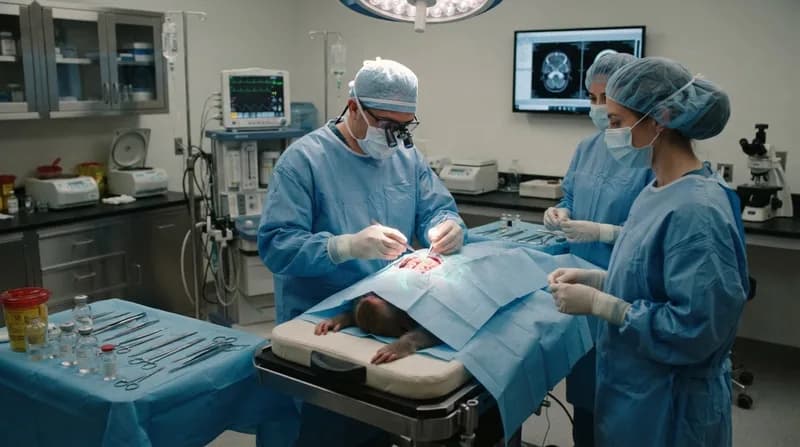
Building on the success of the murine model, the researchers advanced to testing the technique in a macaque monkey. Given the anatomical and physiological similarities between primates and humans, this stage was a critical test of viability. By employing immunosuppressive drugs—similar to those used in human insulin-cell transplant procedures for diabetes—the team successfully facilitated the engraftment of the human tissue. The monkey showed a measurable increase in ACTH and cortisol levels, which effectively mitigated the rapid weight loss typically associated with hormone deficiency. Follow-up examinations conducted three months after the initial procedure confirmed that the transplanted cells were still present, demonstrating the long-term potential for bio-engineered endocrine replacement.
Why It Matters
- Dynamic Regulation: Unlike static daily pills, live tissue transplants could respond naturally to the body's internal stressors.
- Safety Protocols: The study explicitly monitored for stray cell migration to vital organs like the lungs and liver, finding no evidence of harmful metastasis.
- Future Trajectory: This proof-of-concept establishes a foundation for human clinical trials, focusing on refined immunosuppression strategies and long-term tissue survival.
Next Steps in Clinical Development
While the initial primate results are a major breakthrough, the research team is already looking toward the next phase of development. Future studies are expected to refine the methods of immune suppression to better accommodate cross-species transplants and extend the functional lifespan of the organoids. By proving that lab-grown pituitary cells can integrate and perform physiologically vital roles, this study paves the way for regenerative medicine to move beyond simple tissue repair and into the complex world of hormonal management.