A Masterclass in Biological Detective Work
The world of taxonomy often operates like a high-stakes investigation, and a recent breakthrough from the University of Sydney has proven that even the most well-documented creatures can hold profound secrets. Researchers conducting a deep-dive analysis of the Australian stick insect genus Anchiale have fundamentally altered our understanding of these master camouflagers. By integrating cutting-edge DNA sequencing with traditional museum specimen analysis, field research, and thousands of crowd-sourced observations from platforms like iNaturalist, the team revealed that insects previously classified under just two labels actually encompass five distinct species.
This study serves as a poignant reminder that biodiversity is not always found in remote, untouched corners of the globe. Instead, it is frequently hidden in plain sight, camouflaged by the very traits that make these insects so fascinating. By disentangling this complex web of species, scientists are now better equipped to understand the ecological roles these insects play in Australia’s diverse habitats, ranging from the tropical north to the coastal reaches of New South Wales.
The Enigma of the Lidded Egg
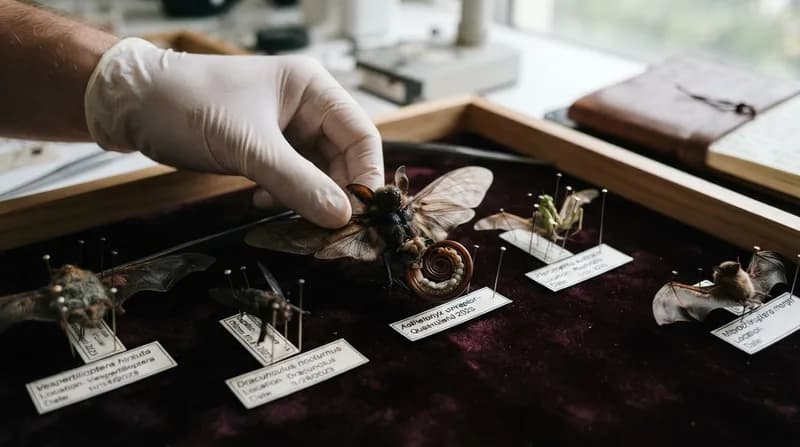
One of the most remarkable discoveries of this research is Anchiale mabiensis, a newly described species found within the critically endangered Mabi rainforest on the Atherton Tablelands. While its physical presence is notable, its reproductive biology is truly extraordinary. The species produces eggs featuring a unique, structural lid—a biological adaptation that has never been recorded in the broader stick insect group, the Phasmatodea.
The existence of this 'lidded' egg suggests a specialized evolutionary pathway that researchers are only beginning to decipher. This discovery not only adds a new branch to the stick insect family tree but also highlights the importance of protecting micro-habitats like the Mabi rainforest. If a creature as large and physically apparent as a giant stick insect could harbor such unique physiological traits without scientific recognition, it raises significant questions about what other evolutionary wonders may be lost if these ecosystems continue to dwindle.
Refining the Identity of a Local Icon
Perhaps the most surprising element of the study was the realization that a large stick insect frequently encountered by both researchers and enthusiasts had been misidentified for decades. Through rigorous genetic testing and comparative morphology, the team formally reclassified this familiar insect as Anchiale robusta. By correcting this record, the study provides a vital foundation for future ecological monitoring and conservation efforts.
This correction is more than just academic. Distinguishing between closely related species has significant implications for forestry and agriculture. Certain species within this genus have been known to cause localized population booms that strip trees of their foliage. By accurately identifying which specific species are responsible for these impacts, land managers can develop more nuanced, sustainable strategies to manage forest health without defaulting to broad-spectrum interventions.
Why It Matters
- Biodiversity Documentation: The discovery proves that even heavily studied regions still hold undocumented species.
- Ecological Management: Precise species identification allows for more targeted management of agricultural and forestry pests.
- Evolutionary Insight: The discovery of unique morphological traits, like lidded eggs, provides new clues into the evolutionary history of the Phasmatodea order.
- Conservation Priority: Identifying endemic species like Anchiale mabiensis highlights the critical need to preserve threatened ecosystems.