A Pre-Existing Gut Vulnerability
For millions of families, a simple peanut butter sandwich is a source of constant anxiety, representing a life-threatening risk due to severe food allergies. While the mechanics of allergic reactions have long been studied, the root cause of why some individuals develop these sensitivities while others do not has remained elusive. A groundbreaking study from the University of North Carolina (UNC) School of Medicine, published in Cellular and Molecular Gastroenterology and Hepatology, suggests that the groundwork for a peanut allergy may be laid within the gut lining long before the first interaction with a peanut occurs.
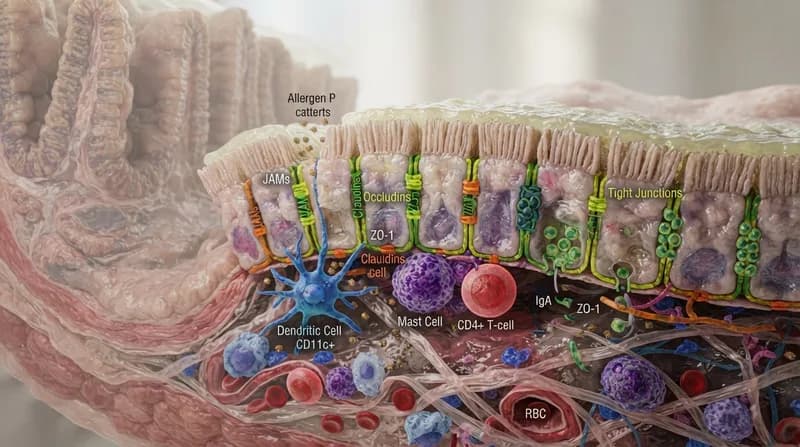
By constructing a high-resolution cell-by-cell map of the small intestinal lining using single-cell RNA sequencing, the research team discovered a significant defect in Paneth cells—specialized sentinels responsible for maintaining the gut’s defensive barrier. In allergy-susceptible models, these cells were found to be critically deficient in lysozyme 1 (Lyz1), an enzyme essential for regulating the local microbiome. This is not merely a localized issue; the study suggests that the gut epithelium functions as a primary driver of allergy rather than a passive bystander, with these structural and functional changes present in subjects that had never encountered a peanut allergen.
The Chain Reaction of Immune Dysfunction
The absence of the Lyz1 protein triggers a cascade of physiological shifts that prime the immune system for an allergic response. When lysozyme is missing, the gut microbiome composition shifts, leading to an enrichment of specific bacteria like Ruminococcus and Akkermansia that promote allergic immune skewing. This environmental shift within the gut contributes to a weakened barrier, increased permeability, and a distinct remodeling of epithelial cell populations.
The study’s analysis revealed several key changes in the gut landscape of susceptible subjects, including:
- Depletion of Interferon-responsive enterocytes: A reduction in these cells suggests an impaired ability for the gut to conduct antiviral and immune surveillance.
- Goblet and Tuft Cell Expansion: A rise in tuft cells, which are known to initiate type 2 allergic immune responses, coupled with the expansion of mucus-secreting goblet cells, points to an immune system already on high alert.
- Secretory Dysfunction: Electron microscopy showed that Paneth cells were under significant cellular stress, with dysmorphic granules indicating they were failing to perform their protective duties effectively.
Why it Matters
This discovery changes the paradigm of allergy research by identifying the gut's health as the frontline of defense against food hypersensitivity. Currently, peanut allergy management is limited to strict avoidance and emergency care for anaphylaxis. Understanding the epithelial and microbial triggers of susceptibility provides a new target for medical intervention. By identifying high-risk individuals before symptoms manifest, or by developing strategies to restore lysozyme levels and stabilize the gut microbiome, clinicians may eventually be able to prevent the development of life-threatening allergies entirely.
The research team is now looking to expand their findings into larger pediatric cohorts. By utilizing human intestinal organoids, they hope to determine if correcting these specific molecular and microbial deficiencies can successfully restore healthy barrier function, offering hope for a future where peanut allergies can be mitigated at their source.