The Double-Edged Sword of Antibody Diversification
In the complex world of human immunology, the body performs a high-stakes balancing act every day. To create a robust defense against ever-evolving pathogens, our B cells must produce an incredibly vast library of antibodies. To achieve this, the immune system uses a specialized, powerful mutagenic enzyme called activation-induced cytidine deaminase (AID). This enzyme works by intentionally introducing mutations into the DNA of antibody genes. While this process is vital for building immunity, it is inherently perilous; if this enzyme were to act indiscriminately, it could trigger chromosomal rearrangements and genomic instability, potentially leading to B-cell lymphomas and other blood cancers.
For over two decades, the precise mechanism behind how the immune system manages this inherent danger—targeting the right genes while protecting the rest of the genome—has remained a fundamental mystery. A breakthrough study published in the journal Nature by researchers at the Montreal Clinical Research Institute (IRCM), led by Université de Montréal professor Javier Di Noia, has finally provided the answer, revealing a sophisticated system of genomic "gatekeepers."
The Role of MLLT1 and MLLT3
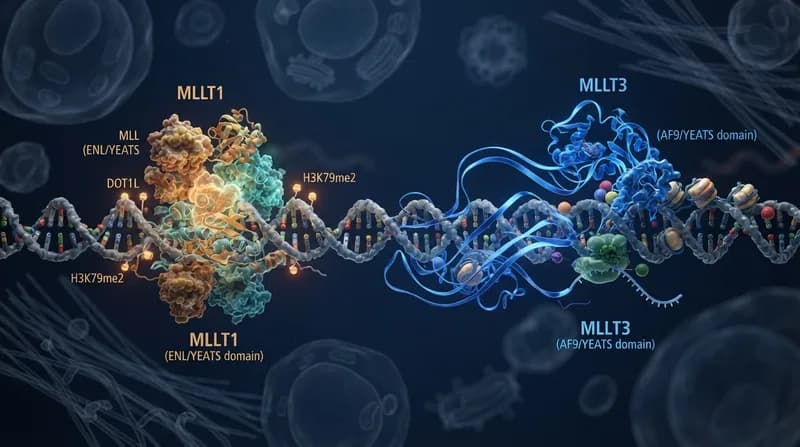
The research team identified two specific proteins, MLLT1 and MLLT3, as the orchestrators of this process. These proteins function as specialized "histone readers," scanning the genome and identifying specific chemical tags wrapped around the DNA. Once they locate these specific markers, the proteins concentrate AID within a highly localized area, forming microscopic "condensates" or molecular compartments. By gathering the enzyme into these tiny pockets, the cell significantly increases the efficiency of the mutation process where it is needed most.
The impact of these proteins on the process was verified when researchers observed that the removal of MLLT1 and MLLT3 caused antibody diversification to plummet, even when the AID enzyme and the target DNA were still present. This confirms that these proteins are not just facilitators but are strictly required to create the local conditions necessary for the enzyme to function safely. This discovery explains how evolution has managed to integrate such a potentially destructive enzyme into our biological systems without broad, genome-wide catastrophic damage.
Implications for Oncology and Therapy
The implications of this study extend well beyond basic immunology. By mapping the exact mechanism that triggers these targeted mutations, researchers have gained a new conceptual framework for understanding the origins of certain lymphomas and leukemias. Because MLLT1 and MLLT3 play such a crucial role in directing AID, they are now being viewed as prime therapeutic targets for oncology.
In experimental models, researchers found that inhibiting these two proteins successfully reduced not only the desired antibody mutations but also the dangerous chromosomal translocations associated with tumor progression. Since inhibitors for MLLT1 are already currently in clinical development for other forms of leukemia, the prospect of repurposing these drugs to treat AID-driven cancers is a promising frontier. This breakthrough could pave the way for novel strategies to slow disease progression or prevent the emergence of treatment-resistant cancer cells in patients with B-cell-derived malignancies.