Electric VehiclesTechnical Deep Dive

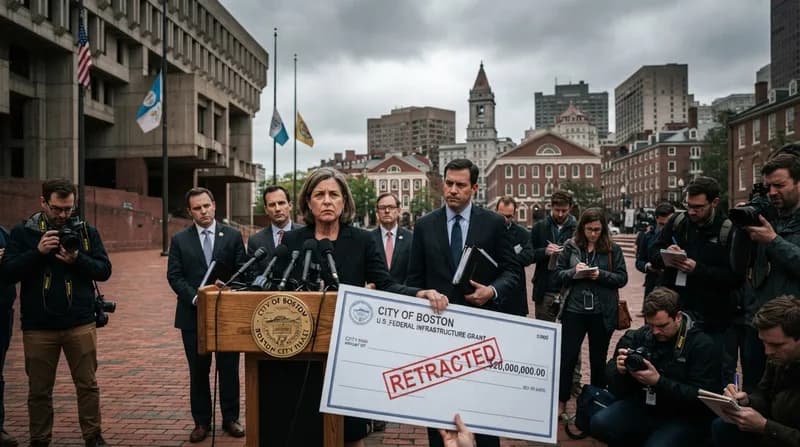
Boston Challenges Federal Grant Cancellation in High-Stakes Legal Showdown

Published
EElectricBuzz Editorial Team
Boston Challenges Federal Grant Cancellation in High-Stakes Legal Showdown
3 min read481 wordsElectricBuzz Editorial Team

The Gist

“The city of Boston is taking the Trump administration to court over the rescinding of a $20 million infrastructure grant, citing ideological bias against EV charging components.”

The Roxbury Resilient Corridors Conflict

The city of Boston has officially launched a legal battle against the U.S. Department of Transportation, following the administration’s decision to cancel a $20 million federal infrastructure grant. The funds, originally awarded in 2022 under the Rebuilding American Infrastructure with Sustainability and Equity (RAISE) program, were earmarked for the 'Roxbury Resilient Corridors' project. This comprehensive urban development scheme aimed to modernize transit across three critical streets in the Roxbury neighborhood, focusing on road safety, pedestrian accessibility, and the expansion of bus service infrastructure.

While the project was wide-ranging, the Department of Transportation ultimately chose to scrap the funding in September 2025. The administration cited a fundamental conflict with its current policy priorities, specifically targeting the inclusion of electric vehicle charging stations within the development plan. City officials noted that the charging components represented a negligible fraction of the total budget—less than one percent—yet the federal government remained unmoved even after Boston offered to remove those specific elements from the scope of work entirely.

Why it Matters: Legal and Policy Implications

The lawsuit, filed in the U.S. District Court for the District of Massachusetts, alleges that the Department of Transportation exceeded its legal authority when it rescinded the grant. Boston’s legal team argues that the move violates the Administrative Procedure Act and breaches constitutional separation-of-powers principles. Beyond the immediate financial impact on the Roxbury district, the case serves as a broader test of federal overreach in municipal infrastructure planning.

  • Policy Conflict: The administration views EV infrastructure as inconsistent with its current priorities, leading to active friction with cities reliant on federal transit grants.
  • Administrative Overreach: Boston is challenging whether a federal agency has the legal standing to revoke already-awarded, competitive grant funds based on shifting political mandates.
  • Safety and Sustainability: The Roxbury project was specifically designed to tackle high rates of traffic-related injuries and fatalities, making the loss of funding a major blow to public safety efforts in the area.

A Pattern of Federal Litigation

Boston is not navigating this legal landscape alone. This case mirrors a similar dispute involving Albuquerque, which also filed a lawsuit after the Department of Transportation withdrew an $11.5 million grant for an urban trail system that the administration deemed incompatible with its focus on traditional vehicular transit. These developments follow a volatile period for federal infrastructure funding, where billions of dollars in NEVI (National Electric Vehicle Infrastructure) program funds were frozen before being released under strict, revised requirements.

As these cases move through the court system, they highlight a growing trend where municipal governments are turning to the judiciary to protect long-term transit investments from federal policy reversals. With a prior court ruling already having prohibited the department from withholding NEVI funds, the outcome of the Boston litigation could establish a vital precedent for how cities navigate the intersection of local infrastructure needs and federal political agendas in the coming years.

SPONSORED
The 5 Best Over-Ear ANC Headphones of 2026, Tested & Ranked
Editor's Pick Guide
92/100
Tech & Gadgets•12 min read

The 5 Best Over-Ear ANC Headphones of 2026, Tested & Ranked

We locked five over-ear ANC picks for 2026 — Sony WH-1000XM6, Bose QuietComfort Ultra 2, Soundcore Space One, Sennheiser Momentum 5, and Apple AirPods Max 2 — then stress-tested them on lab metrics, long-term owner truth, and live street prices.

Related Stories

Semantically matched articles, ranked by topic overlap and freshness.

Lexus Unveils the 2027 TZ: Pricing, Performance, and a Surprising Strategy
Electric Vehicles

Lexus Unveils the 2027 TZ: Pricing, Performance, and a Surprising Strategy

Lexus has opened the door on its first three-row electric SUV, balancing a competitive starting price with a nuanced approach to battery and performance tiers.

Quantron Plots Ambitious Chinese Expansion with 2,000-Truck Deal
Electric Vehicles

Quantron Plots Ambitious Chinese Expansion with 2,000-Truck Deal

Following a strategic restructuring, the Quantron brand is staging a major comeback by partnering with local Chinese giants to deploy autonomous, zero-emission commercial fleets.

EVgo Bets Big on Future-Proofing with Massive 750 kW Charging Stalls
Electric Vehicles

EVgo Bets Big on Future-Proofing with Massive 750 kW Charging Stalls

EVgo is leveling up its national infrastructure, moving beyond current charging limits with new, ultra-fast 750 kW hardware designed to slash wait times.

Momenta to Power Next-Gen Peugeot and Jeep Driver Assistance Systems
Electric Vehicles

Momenta to Power Next-Gen Peugeot and Jeep Driver Assistance Systems

A new strategic partnership will bring advanced autonomous driving software, including potential Level 3 capabilities, to global electrified Peugeot and Jeep lineups starting in 2027.

General Motors Finalizes Production Plans for Breakthrough LMR Battery Cells
Electric Vehicles

General Motors Finalizes Production Plans for Breakthrough LMR Battery Cells

General Motors has identified its Spring Hill, Tennessee facility as the future home for its next-generation lithium-manganese-rich battery mass production, promising a leap in range for large electric vehicles.

Boeing’s Starliner Path to Recovery: Targeting 2028 for Crewed Operations
Electric Vehicles

Boeing’s Starliner Path to Recovery: Targeting 2028 for Crewed Operations

Despite a turbulent development history, NASA and Boeing are doubling down on the Starliner program with a revised roadmap for uncrewed cargo flights and eventual human spaceflight.

New Federal Fuel Economy Rollback Signals Major Shift in U.S. Automotive Policy
Electric Vehicles

New Federal Fuel Economy Rollback Signals Major Shift in U.S. Automotive Policy

The NHTSA has finalized significantly relaxed fuel economy standards, a move projected to increase U.S. gasoline consumption by billions of gallons by 2050.

Tesla’s European FSD Ambitions Hit Regulatory Speed Bump
Electric Vehicles

Tesla’s European FSD Ambitions Hit Regulatory Speed Bump

A crucial vote on the widespread adoption of Tesla's Full Self-Driving (Supervised) software in the EU has been pushed back, leaving the company's regional rollout in a state of limbo.