Electric VehiclesTechnical Deep Dive

BMW Group’s Electrification Strategy Hits a Major Geographic Crossroads

Published
EElectricBuzz Editorial Team
BMW Group’s Electrification Strategy Hits a Major Geographic Crossroads
3 min read547 wordsElectricBuzz Editorial Team

The Gist

“While over a quarter of BMW, Mini, and Rolls-Royce vehicles sold globally now feature a plug, the company faces a stark divide between its European success and the current U.S. adoption slump.”

A Global Snapshot of BMW Group’s Electrified Sales

The latest earnings data from the BMW Group—the parent company behind BMW, Mini, and Rolls-Royce—reveals a significant milestone in the automotive industry's shift toward sustainability. In the third quarter of 2026, the company reported that 20% of its global vehicle sales were comprised of all-electric models. When factoring in the growing influence of plug-in hybrid (PHEV) offerings, that figure climbs to 27.4%, signaling that more than a quarter of the group’s total sales volume now relies on some form of external charging capability.

Looking at the year-to-date performance from January through September, the trend remains consistent, with all-electric vehicles (EVs) accounting for 18.4% of total sales. While these metrics demonstrate a deep commitment to electrification, the road ahead is not without its hurdles. Interestingly, the report highlights a slight year-over-year decline in total unit sales for both EVs and PHEVs, indicating that while the share of the portfolio is growing, the overall market environment remains volatile.

The European Lead and Regional Disparities

Perhaps the most compelling narrative within the BMW Group's data is the massive disparity in regional adoption rates. Europe currently serves as the powerhouse for the company’s electric ambitions, with nearly 35% of all vehicles sold on the continent being fully electric. When PHEVs are included, that number swells to a staggering 46.9%, illustrating that European consumers are far ahead of the global curve in transitioning away from traditional combustion engines.

Conversely, the United States remains a challenging landscape for the group. In the U.S. market, EVs represented a mere 4.7% of total sales during the third quarter. Even when combined with plug-in hybrids, the electrified portion of the American portfolio only reached 11.4%. This performance places the U.S. at the bottom of the group’s regional list, a trend attributed to a combination of policy uncertainty and a more limited regional product lineup, with several compact electric models that are popular in Europe currently unavailable to American buyers.

Contextualizing the Shift: Why It Matters

  • Strategic Market Reliance: The heavy reliance on European sales highlights a geographic concentration risk. As global policy shifts, BMW’s ability to pivot its supply chain and product availability toward regions with high consumer appetite will be critical to maintaining its market share.
  • The Role of Hybrids: Plug-in hybrids are acting as a necessary bridge for the company. In regions where EV infrastructure is lagging, such as the United States, PHEVs are providing a vital stopgap that keeps customers within the brand's ecosystem while navigating the transition to pure electric power.
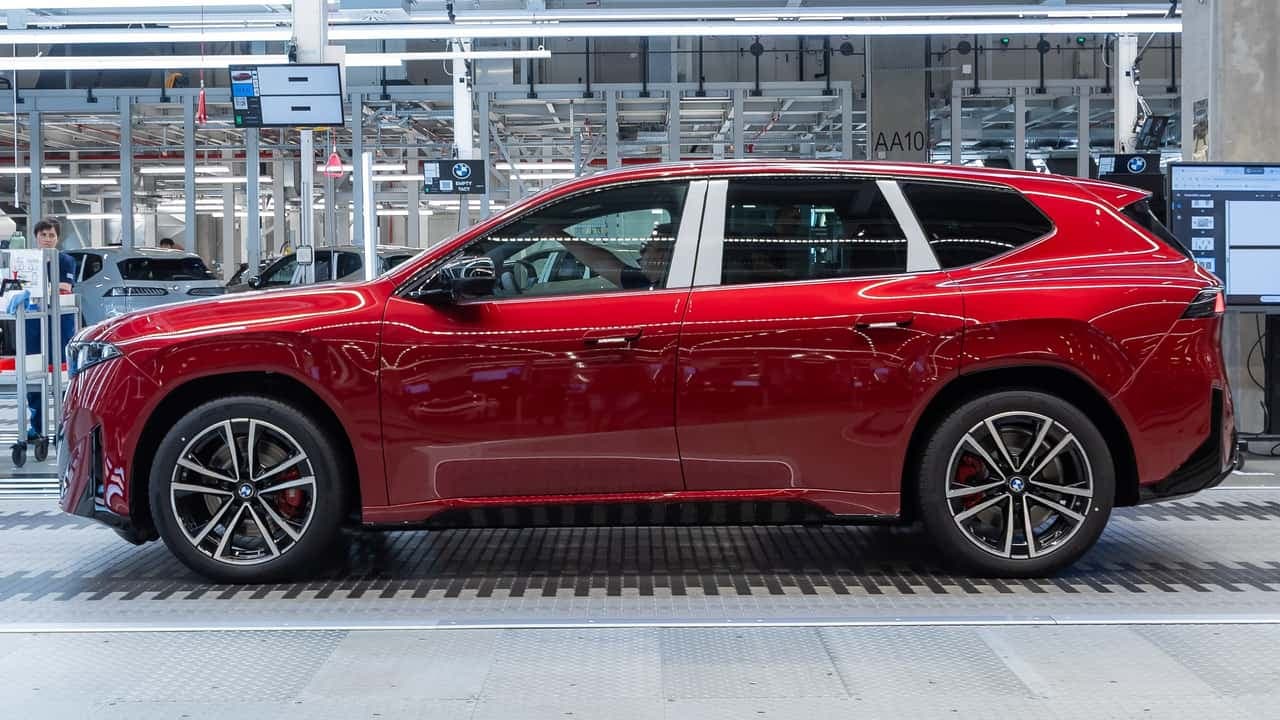
  • Future Growth Potential: The upcoming introduction of new models like the refreshed iX3 and i3 in the U.S. market suggests that BMW is looking to narrow the gap. The success of these models will likely determine whether the group can sustain its current global momentum despite recent year-over-year volume dips.

Ultimately, the BMW Group is at a pivotal moment. The data suggests that while the transition to electrification is well underway, it is unfolding at vastly different speeds across the globe. As the industry grapples with shifting consumer sentiment and varying levels of support for green technology, the company’s ability to standardize its electric offerings while catering to local market demands will be the defining factor for its success in the coming years.

SPONSORED
The 5 Best Over-Ear ANC Headphones of 2026, Tested & Ranked
Editor's Pick Guide
92/100
Tech & Gadgets•12 min read

The 5 Best Over-Ear ANC Headphones of 2026, Tested & Ranked

We locked five over-ear ANC picks for 2026 — Sony WH-1000XM6, Bose QuietComfort Ultra 2, Soundcore Space One, Sennheiser Momentum 5, and Apple AirPods Max 2 — then stress-tested them on lab metrics, long-term owner truth, and live street prices.

Related Stories

Semantically matched articles, ranked by topic overlap and freshness.

Toyota Quietly Revolutionizes the 2027 RAV4 PHEV with NACS and Fast-Charging
Electric Vehicles

Toyota Quietly Revolutionizes the 2027 RAV4 PHEV with NACS and Fast-Charging

Toyota is shaking up the plug-in hybrid market by equipping every 2027 RAV4 PHEV trim with native NACS charging ports and high-speed DC charging capabilities.

Tesla’s Infrastructure Dominance Expands as EVgo Adopts Supercharger Tech
Electric Vehicles

Tesla’s Infrastructure Dominance Expands as EVgo Adopts Supercharger Tech

The charging landscape is shifting as EVgo begins installing official Tesla Supercharger hardware across its national network, blurring the lines between private and public infrastructure.

Volkswagen’s Xpeng Partnership Faces A Harsh Reality Check in China
Electric Vehicles

Volkswagen’s Xpeng Partnership Faces A Harsh Reality Check in China

Volkswagen’s ambitious strategy to regain market share in China via its Xpeng-backed ID. Unyx 08 is faltering, highlighting a growing disconnect between legacy engineering and modern consumer expectations.

Highway Range Showdown: BMW iX3 Outpaces Rivian, Tesla, and Lexus
Electric Vehicles

Highway Range Showdown: BMW iX3 Outpaces Rivian, Tesla, and Lexus

A recent high-speed range test reveals how battery capacity and platform architecture determine real-world endurance for four popular electric SUVs.

Range Anxiety Decimated: Mercedes-Benz EQS Shatters Expectations with 539-Mile Run
Electric Vehicles

Range Anxiety Decimated: Mercedes-Benz EQS Shatters Expectations with 539-Mile Run

In a landmark real-world test, the 2027 Mercedes-Benz EQS 450+ has clocked an astounding 539 miles on a single charge, signaling a new era for electric vehicle capability.

Mercedes-Benz Reimagines EV Battery Architecture with Micro-Converter Tech
Electric Vehicles

Mercedes-Benz Reimagines EV Battery Architecture with Micro-Converter Tech

Mercedes-Benz is developing a groundbreaking 'Power Converter' system that promises to transform EV efficiency by managing battery cells on an individual basis.

America's 2030 Roadmap: Rebuilding the Domestic Battery Supply Chain
Electric Vehicles

America's 2030 Roadmap: Rebuilding the Domestic Battery Supply Chain

The U.S. Department of Energy has unveiled a high-stakes, three-step plan to secure domestic battery independence, shifting the focus toward national security and the soaring power demands of AI.

The High-Mileage Myth: Ford Reveals Real-World Battery Health Data for the Mustang Mach-E
Electric Vehicles

The High-Mileage Myth: Ford Reveals Real-World Battery Health Data for the Mustang Mach-E

A comprehensive analysis of 36,000 Mustang Mach-E batteries reveals that long-term degradation is significantly lower than many drivers fear, even after exceeding 100,000 miles.