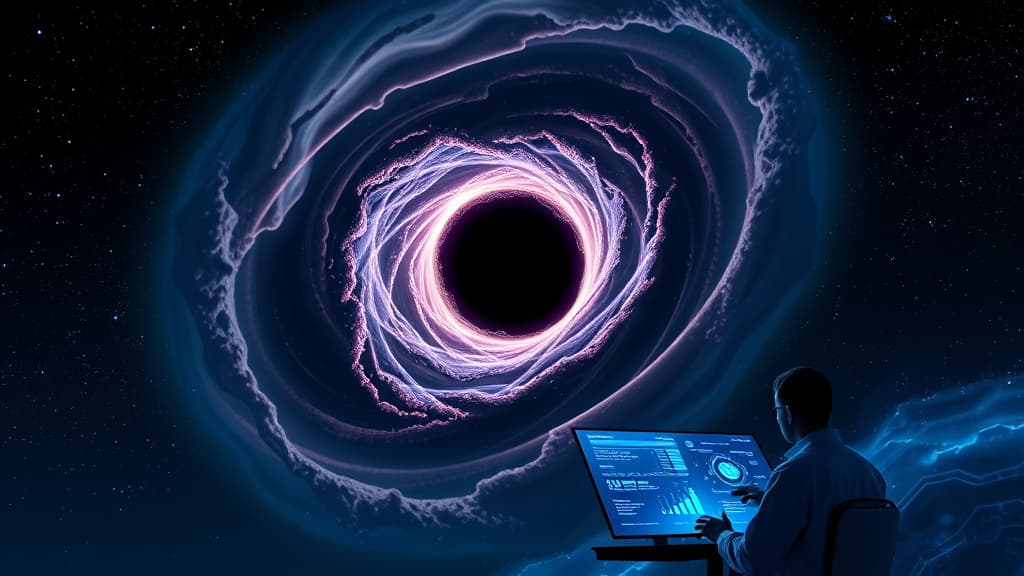
A groundbreaking theory has emerged, proposing that black holes older than the Big Bang could be the key to explaining dark matter and the early formation of massive galaxies. This concept, put forth by researchers from the University of Portsmouth, introduces a new cosmic 'bounce' model, which suggests that the Universe expanded from an earlier contracting phase, allowing ancient black holes to survive into the present day.
Key Insights
The 'bounce' model proposes that black holes from before the Big Bang may still exist today, and these ancient objects could explain dark matter and its role in shaping galaxies. If proven, this theory could help scientists understand several major unanswered questions in cosmology, including the nature of dark matter and the formation of massive galaxies in the early Universe.