ScienceTechnical Deep Dive

Unlocking a New Frontier in Cancer Treatment: Trapping Malignant DNA Rings

Published
EElectricBuzz Editorial Team
Unlocking a New Frontier in Cancer Treatment: Trapping Malignant DNA Rings
3 min read488 wordsElectricBuzz Editorial Team

The Gist

“A major scientific breakthrough reveals that isolating cancer-driving circular DNA into micronuclei effectively silences tumor growth, offering a promising new therapeutic strategy.”

The Challenge of Extrachromosomal DNA

For years, researchers have been perplexed by the rapid growth and metastatic nature of aggressive tumors. A key contributor to this malignancy is extrachromosomal DNA, or ecDNA—circular rings of genetic material that exist outside of the standard chromosomal structure. These rings frequently carry oncogenes, the specific sequences that drive cancer progression. Unlike standard chromosomes, these rings lack the necessary biological machinery to ensure orderly distribution during cell division, leading them to 'hitchhike' on existing chromosomes to gain entry into daughter cells, thereby perpetuating the cancer.

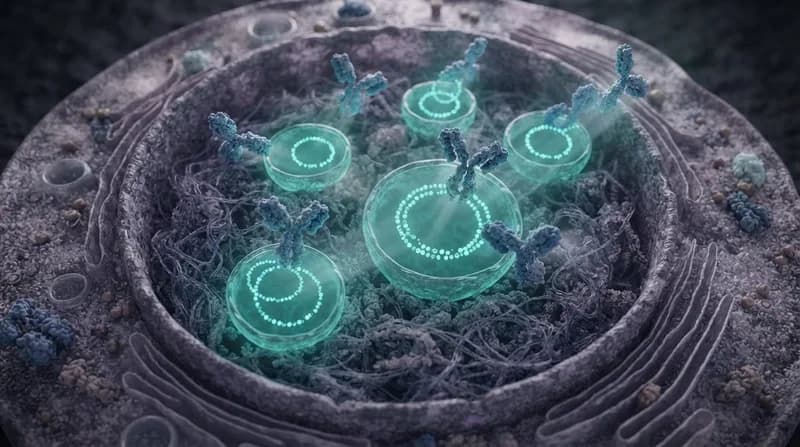
A recent collaborative study led by the Max Delbrück Center and Stanford University has identified a critical vulnerability in this process. By investigating the behavior of these rings, the international research team has discovered that when these DNA circles are sequestered into micronuclei—small, membrane-bound structures that sit outside the primary cell nucleus—they undergo a structural change that renders their oncogenic instructions unreadable. Essentially, the cell loses the ability to translate these dangerous sequences into the proteins that fuel tumor growth.

The Potential for Targeted Therapies

The implications of these findings are profound for oncology and cancer diagnostics. The research, published in Nature Genetics, highlights that the presence of micronuclei containing ecDNA correlates strongly with better survival outcomes in patients, particularly in cases of neuroblastoma. This suggests that the body’s own attempt to isolate these rings acts as a natural defense mechanism. The researchers are now shifting their focus toward therapeutic interventions that could artificially encourage this sequestration process.

By preventing the DNA rings from 'hitchhiking' onto chromosomes during cell division, scientists hope to force them into these cellular 'prisons'—the micronuclei—where they are silenced. Currently, teams are exploring drug candidates capable of blocking the specific proteins that allow ecDNA to attach to host chromosomes. Companies like Econic Bioscience are already in the process of identifying active ingredients that could accelerate this transport process and securely lock the harmful DNA away.

Why It Matters

  • Silencing Oncogenes: Moving ecDNA into micronuclei prevents the cell from accessing cancer-driving genetic code, effectively turning off the 'engine' of the tumor.
  • Diagnostic Breakthroughs: Because micronuclei are visible under standard light microscopy, they serve as a potential biomarker for estimating tumor fitness and predicting patient prognosis.
  • New Therapeutic Target: Instead of focusing solely on destroying DNA, this approach focuses on the spatial management of DNA, providing a novel framework for next-generation drug discovery.

Future Outlook

This study marks a significant pivot in cancer research, moving from broad-spectrum treatments to mechanisms that exploit the structural weaknesses of tumor cells. As clinical teams continue to identify the specific proteins used by ecDNA for transport, the development of targeted therapies that intentionally induce sequestration could become a cornerstone of future metastatic cancer care. While translating these laboratory findings into commercial pharmaceuticals is the next major hurdle, the clear association between micronuclear presence and improved patient outcomes offers a strong beacon of hope for treating previously resilient cancer types.

SPONSORED
The 5 Best Over-Ear ANC Headphones of 2026, Tested & Ranked
Editor's Pick Guide
92/100
Tech & Gadgets•12 min read

The 5 Best Over-Ear ANC Headphones of 2026, Tested & Ranked

We locked five over-ear ANC picks for 2026 — Sony WH-1000XM6, Bose QuietComfort Ultra 2, Soundcore Space One, Sennheiser Momentum 5, and Apple AirPods Max 2 — then stress-tested them on lab metrics, long-term owner truth, and live street prices.

Related Stories

Semantically matched articles, ranked by topic overlap and freshness.

Mapping the Mind: How Neurotech Could Revolutionize Mental Health Care
Science

Mapping the Mind: How Neurotech Could Revolutionize Mental Health Care

New advancements in non-invasive neurotechnology and brain imaging are paving the way for earlier detection and hyper-personalized treatment for mental health disorders.

Unlocking the Secrets of Mosquito Saliva: A New Frontier in Fighting Viral Outbreaks
Science

Unlocking the Secrets of Mosquito Saliva: A New Frontier in Fighting Viral Outbreaks

A groundbreaking study reveals how a specific viral compound in mosquito saliva enables diseases like Zika and dengue to bypass the human immune system.

Unearthing Vasuki: The 50-Foot Ancient Serpent That Ruled Eocene India
Science

Unearthing Vasuki: The 50-Foot Ancient Serpent That Ruled Eocene India

Paleontologists have identified a colossal prehistoric snake, Vasuki indicus, which prowled the tropical landscapes of India 47 million years ago, potentially rivaling the legendary Titanoboa in size.

Scientists Unmask 'Zombie Cells': New Protein Discovery Could Hold the Key to Healthy Aging
Science

Scientists Unmask 'Zombie Cells': New Protein Discovery Could Hold the Key to Healthy Aging

Researchers at Cedars-Sinai have identified a protein that allows aging 'zombie cells' to evade immune detection, opening a promising new frontier in anti-aging therapy.

The Hidden Culprit: Why Science Might Have Misunderstood Alzheimer’s for Decades
Science

The Hidden Culprit: Why Science Might Have Misunderstood Alzheimer’s for Decades

New research suggests that a long-dismissed peptide called P3 may play a pivotal role in Alzheimer's disease, potentially shifting the focus of future therapeutic development.

New Minimally Invasive Procedure Offers Hope for Chronic Knee Arthritis
Science

New Minimally Invasive Procedure Offers Hope for Chronic Knee Arthritis

A breakthrough study reveals that a non-surgical procedure using dissolvable particles can provide lasting pain relief for knee osteoarthritis patients.

Clinical Breakthrough: New Ebola Vaccine Trials Launch in DR Congo
Science

Clinical Breakthrough: New Ebola Vaccine Trials Launch in DR Congo

Health authorities are mobilizing to combat the Bundibugyo Ebola strain with an accelerated clinical trial framework targeting both existing and experimental vaccines.

The Consciousness Divide: Why We Trust AI’s Awareness But Deny Its Soul
Science

The Consciousness Divide: Why We Trust AI’s Awareness But Deny Its Soul

A new study from Ludwig Maximilian University reveals that while we readily grant AI the power of 'awareness,' we maintain a rigid mental barrier against attributing true consciousness to machines.