E-BUZZ ME Logo
ScienceTechnical Deep Dive

Astronomers Uncover Four Hidden White Dwarf Stars in Earth's Neighborhood

Published
Astronomers Uncover Four Hidden White Dwarf Stars in Earth's Neighborhood
1 min read153 words

The Gist

Hidden by the glare of brighter companions, four nearby white dwarf stars have been revealed through Hubble's ultraviolet observations.

Astronomers have successfully identified four white dwarf stars that were previously hidden in plain sight near our solar system. These stellar remnants were discovered orbiting alongside much brighter red dwarf companions, which had effectively masked their presence from traditional observation methods.

A Decades-Long Search

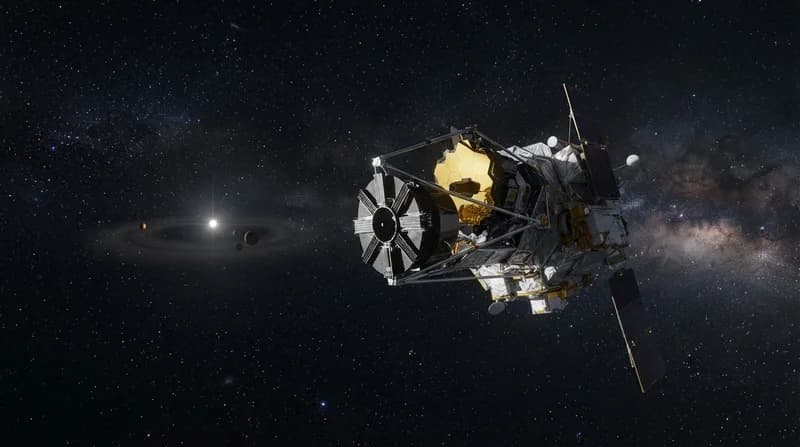
The discovery was made possible using the Hubble Space Telescope's ultraviolet capabilities, which allowed researchers to isolate the faint signature of the white dwarfs from the overwhelming light of their sister stars. One of the newly confirmed stars is located just 25 light-years away from Earth, a find that took nearly thirty years of observation to finally verify.

Implications for the Galaxy

The identification of these four stars aligns with long-standing theoretical predictions regarding the population of binary star systems. This breakthrough suggests that our immediate corner of the Milky Way may be home to many more undiscovered white dwarf binaries, waiting to be detected by advanced ultraviolet sensors.


Related Stories

Semantically matched articles, ranked by topic overlap and freshness.

Astronomers Detect Massive Wandering Black Hole via Stellar Destruction
Science71%

Astronomers Detect Massive Wandering Black Hole via Stellar Destruction

A supermassive black hole has been identified straying far from its galactic center after it was caught consuming a nearby star.

NASA Astronaut Chris Williams and Crew Return to Earth After Eight-Month Mission
Science65%

NASA Astronaut Chris Williams and Crew Return to Earth After Eight-Month Mission

NASA astronaut Chris Williams and two Roscosmos cosmonauts safely landed in Kazakhstan on Sunday, concluding a 240-day science mission aboard the International Space Station.

Ancient 500,000-Year-Old Elephant Bone Hammer Rewrites Early Human Toolmaking History
Science62%

Ancient 500,000-Year-Old Elephant Bone Hammer Rewrites Early Human Toolmaking History

A rare discovery in England reveals that ancient humans crafted reusable hammers from elephant bone to sharpen stone tools nearly half a million years ago.

Innovative Eye Implant and High-Tech Glasses Approved to Combat Vision Loss
Science60%

Innovative Eye Implant and High-Tech Glasses Approved to Combat Vision Loss

A breakthrough eye implant and smart glasses system has received European regulatory approval, offering hope to those suffering from severe age-related vision loss.

GE Aerospace Achieves Historic Hybrid-Electric Flight at 30,000 Feet
Electric Vehicles59%

GE Aerospace Achieves Historic Hybrid-Electric Flight at 30,000 Feet

GE Aerospace, in collaboration with NASA and Boeing, has successfully tested a hybrid aircraft at altitudes matching traditional commercial jets.

Working Memory Rapidly Re-Prioritizes After Distractions, New Study Reveals
Science59%

Working Memory Rapidly Re-Prioritizes After Distractions, New Study Reveals

A new study highlights the brain's remarkable ability to swiftly update working memory priorities to maintain focus on immediate tasks despite frequent interruptions.

Elon Musk Hints at Potential Tesla-SpaceX Merger During Q2 Call
Electric Vehicles59%

Elon Musk Hints at Potential Tesla-SpaceX Merger During Q2 Call

During Tesla's Q2 2026 earnings call, Elon Musk addressed growing speculation regarding a merger with SpaceX, citing increasing operational overlap between the two giants.

Genetic Factors Determine Cancer Outcomes Following DNA Damage
Science59%

Genetic Factors Determine Cancer Outcomes Following DNA Damage

New research suggests that inherited genetics play a critical role in whether DNA damage leads to cancer development.