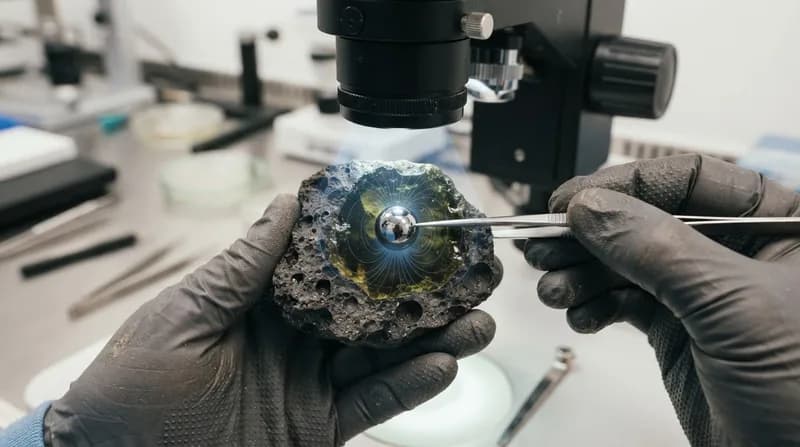
Unlocking the Moon's Magnetic Past
The Moon today is effectively a magnetic ghost; it lacks a global magnetic field, leaving behind only tantalizing clues about its once-active core. However, recent analysis of samples returned by the Chang’e-6 mission has provided a breakthrough in our ability to read these ancient records. A team of researchers led by Professor Haifeng Du of the Chinese Academy of Sciences has identified a specific, previously undocumented form of metallic iron—known as gamma-Fe—trapped within lunar impact glass. This discovery offers scientists a high-fidelity "magnetic fossil" that could fundamentally rewrite our understanding of how the lunar magnetic environment shifted over billions of years.
While iron is abundant in lunar soil, the specific face-centered cubic structure of gamma-Fe is notoriously elusive. Under standard conditions, this phase of iron is unstable at the lunar surface and typically reverts to the more common alpha-Fe form as it cools. The team’s research suggests that the unique, high-energy environment of lunar impacts—where meteorites strike the surface to create molten glass—provides the perfect pressure-cooker environment to "freeze" this rare iron structure in place, shielded by the surrounding glassy matrix.
The Science Behind the Magnetic Capsule
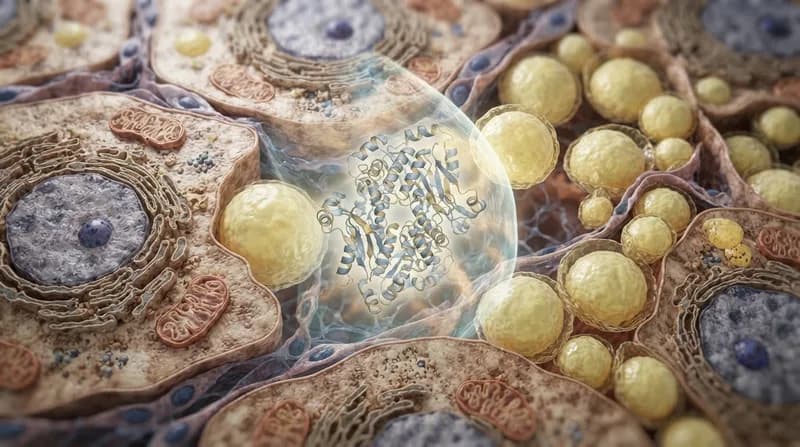
The research team employed high-resolution diagnostic tools, including focused ion beam preparation and transmission electron microscopy, to peer into the nanoscale structure of the lunar samples. These examinations revealed that gamma-Fe was the predominant iron phase within the impact glass, a surprising deviation from previously analyzed lunar materials. This suggests that the violent, rapid cooling associated with impact events is far more important for magnetic preservation than previously realized.
To test the utility of these particles as data storage, the researchers utilized off-axis electron holography. They discovered that these gamma-Fe nanoparticles exhibit a stable single-vortex magnetic state. This state allows the particles to maintain a consistent magnetic response even when subjected to external fields. Because this mineral configuration is distinct from other magnetic phases like alpha-Fe, it provides a separate, high-resolution "recording" of the lunar magnetic field that was active at the time of the specific impact event. In essence, these microscopic particles serve as a geological hard drive, storing magnetic data that has survived the harsh, airless environment of the lunar surface for eons.
Implications for Planetary Science
The discovery of these stable, magnetic-vortex-forming particles opens a new frontier for lunar geophysics. By isolating these gamma-Fe grains, future studies may be able to distinguish between different epochs of lunar magnetic intensity, helping researchers determine if the Moon’s internal dynamo faded gradually or through a series of sudden, chaotic shifts. This level of detail is critical for planetary scientists attempting to model the early thermal evolution of the Moon and the broader history of the solar system.
This study represents a significant leap forward in our analysis of extraterrestrial materials. By bridging the gap between impact physics and magnetic preservation, the Chang’e-6 findings provide a blueprint for how we might identify and interpret similar magnetic recorders on other airless bodies, such as asteroids or the moons of Mars. As lunar exploration accelerates, these microscopic magnetic time capsules will likely become a primary focus for deciphering the ancient secrets hidden in the regolith.