ScienceTechnical Deep Dive

Astronomers Oppose Approval of Private 'Space Mirror' Satellite Permit

Published
EElectricBuzz Editorial Team
Astronomers Oppose Approval of Private 'Space Mirror' Satellite Permit
1 min read142 wordsElectricBuzz Editorial Team

The Gist

“A controversial proposal to test sunlight reflection from orbit has sparked backlash from the scientific community over potential impacts on astronomical observations.”

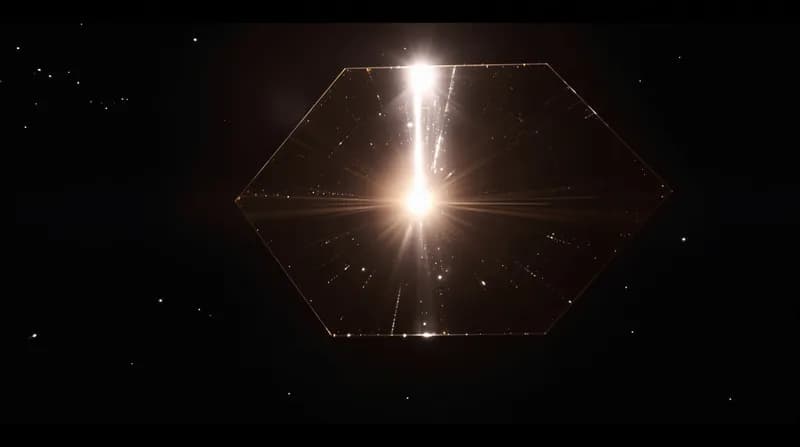
Astronomers and scientific regulators are at odds following the approval of a permit for a private satellite designed to act as a 'space mirror.' The project aims to test the feasibility of reflecting sunlight directly onto the Earth's surface from orbit, a move that critics argue could have significant consequences for the field of astronomy.

Concerns Over Light Pollution

The scientific community has expressed widespread outrage, citing concerns that such reflective objects will further clutter the night sky and interfere with sensitive telescopic observations. As private companies increasingly look toward orbital infrastructure for energy or illumination solutions, researchers warn that the loss of dark skies could impede critical space research and discovery.

The permit marks a pivotal moment in the regulation of private space ventures, highlighting a growing tension between commercial innovation and the preservation of the celestial environment for scientific study.


SPONSORED
The 5 Best Over-Ear ANC Headphones of 2026, Tested & Ranked
Editor's Pick Guide
92/100
Tech & Gadgets•12 min read

The 5 Best Over-Ear ANC Headphones of 2026, Tested & Ranked

We locked five over-ear ANC picks for 2026 — Sony WH-1000XM6, Bose QuietComfort Ultra 2, Soundcore Space One, Sennheiser Momentum 5, and Apple AirPods Max 2 — then stress-tested them on lab metrics, long-term owner truth, and live street prices.

Related Stories

Semantically matched articles, ranked by topic overlap and freshness.

Robotic Knee Surgery Trial Reveals Precision Doesn't Equal Faster Recovery
Science

Robotic Knee Surgery Trial Reveals Precision Doesn't Equal Faster Recovery

A landmark clinical study has found that while robot-assisted knee surgery offers superior technical precision, it fails to improve patient recovery outcomes compared to traditional methods.

Deep-Sea Discovery: Mysterious Brine Pools Found Beneath the Red Sea
Science

Deep-Sea Discovery: Mysterious Brine Pools Found Beneath the Red Sea

Researchers have uncovered rare, oxygen-free underwater lakes over a mile beneath the Red Sea, offering new insights into the limits of life on Earth and the search for extraterrestrial organisms.

BrainBots: Caltech’s Light-Activated Nanorobots Breach the Blood-Brain Barrier
Science

BrainBots: Caltech’s Light-Activated Nanorobots Breach the Blood-Brain Barrier

Researchers have engineered tiny, light-propelled nanobots capable of ferrying chemotherapy drugs directly across the body's most stubborn biological shield.

Euclid’s Cosmic Pivot: Dark Matter Telescope Spots Mysterious New Comet
Science

Euclid’s Cosmic Pivot: Dark Matter Telescope Spots Mysterious New Comet

Designed to map the dark universe, the European Space Agency’s Euclid telescope has defied its programming by identifying an icy wanderer from the outer solar system.

Quantum Breakthrough: Physicists Capture Antimatter to Solve Cosmic Mystery
Science

Quantum Breakthrough: Physicists Capture Antimatter to Solve Cosmic Mystery

Researchers at Northwestern University have successfully trapped a single positron in a 'quantum cyclotron,' opening a new door to understanding the universe's matter-antimatter imbalance.

Ancient Roman Shipwreck Reveals Sophisticated 2,200-Year-Old Waterproofing Tech
Science

Ancient Roman Shipwreck Reveals Sophisticated 2,200-Year-Old Waterproofing Tech

A study of a sunken Roman vessel has unveiled advanced maritime engineering, revealing how ancient builders utilized specialized organic coatings to survive the rigors of the Mediterranean.

Hidden Magnetism: Why Simple Europium Silicide Is Shaking Up Quantum Physics
Science

Hidden Magnetism: Why Simple Europium Silicide Is Shaking Up Quantum Physics

Researchers have uncovered a rare form of 'p-wave' magnetism in an unassuming metal, potentially unlocking the future of spintronics and quantum computing.

FDA Approves First New Hormone Therapy for Early-Stage Breast Cancer in Two Decades
Science

FDA Approves First New Hormone Therapy for Early-Stage Breast Cancer in Two Decades

A major breakthrough in oncology as the FDA clears giredestrant, a once-daily pill offering improved efficacy and fewer side effects for ER+ breast cancer patients.