A New Chapter for Deep-Space Pioneers
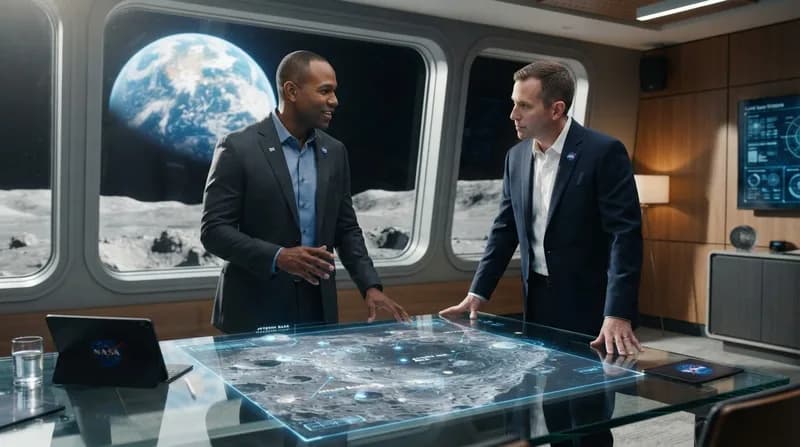
In a significant shift for the agency’s human spaceflight program, NASA has announced that Artemis II astronauts Victor Glover and Reid Wiseman are transitioning to emeritus status at the Johnson Space Center in Houston. This move follows their record-breaking journey earlier this year, where they—alongside crewmates Christina Koch and Jeremy Hansen—traveled farther into space than any humans in history. By adopting these new roles, the pair will step away from full-time active flight status to serve as specialized consultants, offering invaluable mentorship and technical guidance to the teams currently architecting the future of lunar exploration.
The emeritus program at NASA provides a unique pathway for highly experienced personnel to maintain a formal connection with the agency. This structure allows veterans to share their operational expertise while affording them the flexibility to pursue external leadership and public service opportunities. For NASA, the benefit is clear: having the firsthand experience of individuals who have navigated deep-space operations inside the Orion spacecraft is critical as the agency pivots toward the complexities of the Artemis III mission.
Mentorship for the Artemis Era
The transition is far from a departure. NASA leadership, including Administrator Jared Isaacman, has underscored that the institutional knowledge held by Glover and Wiseman remains a pillar for upcoming missions. With Artemis III—a mission aimed at testing complex rendezvous and docking maneuvers between the Orion spacecraft and commercial human landing systems—on the horizon for 2027, the input of the Artemis II crew is considered vital. Their ability to bridge the gap between theoretical training and the reality of deep-space flight will directly inform the preparation of flight controllers, engineers, and future flight crews.
Both astronauts have expressed a commitment to continue supporting the agency that defined their careers. Victor Glover, whose background as a naval aviator and test pilot provided a strong foundation for his role as the Artemis II pilot, plans to focus his efforts on helping teams refine Orion’s complex systems. Similarly, Reid Wiseman, who previously served as chief astronaut and commanded the Artemis II mission, remains deeply invested in the success of the broader lunar campaign. Their ongoing presence ensures that the technical and human-factors lessons learned during their 10-day trip around the Moon are integrated into the hardware and operational protocols of tomorrow.
Why it Matters
- Legacy Transfer: By moving into emeritus roles, these veterans prevent a 'knowledge drain,' ensuring that the specific operational nuances of the Orion spacecraft are passed down to the next generation of mission designers.
- Mission Continuity: As NASA shifts from simple flybys to complex docking and potential surface operations, the real-world perspective of those who have handled deep-space navigation is an irreplaceable asset for safety and mission success.
- Program Evolution: This transition highlights the maturation of the Artemis program, which is moving from an experimental phase to a steady-state operation, supported by a mix of active-duty astronauts and seasoned veteran advisors.
The Path Toward Artemis III and Beyond
The successful splashdown of Artemis II on April 10, 2026, closed a half-century gap in human lunar exploration, but it was viewed by NASA as only the beginning. As the agency prepares for the 2027 launch of Artemis III, the focus is shifting toward orbital rehearsals and the integration of commercial landers. The expertise of Glover and Wiseman will be instrumental in ensuring that the lessons regarding heat shield performance, communications, and navigation—all validated during their historic mission—are effectively scaled for the missions that will eventually place the next American astronauts on the lunar surface during the later Artemis IV campaign.