E-BUZZ ME Logo
ScienceTechnical Deep Dive

Ancient Magma Ocean Remnants Discovered in Indian Ocean Volcano Eruption

Published
Ancient Magma Ocean Remnants Discovered in Indian Ocean Volcano Eruption
2 min read297 words

The Gist

A newly formed underwater volcano near Madagascar has provided scientists with the first physical evidence of Earth's 4.5 billion-year-old primordial magma ocean.

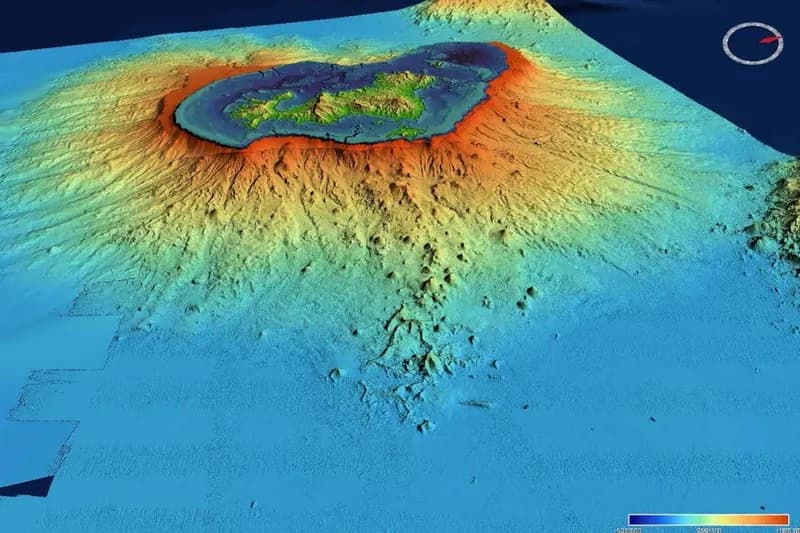
Geologists have made a landmark discovery off the coast of Mayotte in the Indian Ocean, identifying chemical traces of Earth’s primordial magma ocean within lava from a recently formed underwater volcano. The volcano, named Fani Maoré, emerged following a series of seismic events in 2018, providing researchers with a rare window into the planet's earliest history.

A 4.5 Billion-Year-Old Chemical Signature

According to a study published in the journal Nature, the lava erupted by Fani Maoré contains specific neodymium isotope ratios that date back to the Hadean eon. Scientists believe that shortly after Earth's formation, a massive collision with a Mars-sized object created a global magma ocean. As this molten rock cooled and crystallized over millions of years, it formed the planet's mantle and early crust.

Using ultra-precise analytical techniques, researchers from the French National Centre for Scientific Research (CNRS) and the University of Cambridge identified a higher ratio of neodymium-142 to neodymium-144 in the Fani Maoré samples compared to surrounding volcanic rock. This signature indicates the presence of bridgmanite, a mineral thought to be among the first to crystallize from the primordial melt.

Challenging Geological Assumptions

For decades, the prevailing scientific theory held that the steady churning of Earth’s mantle over 4 billion years had effectively erased the chemical signatures of the planet's infancy. However, the presence of these isotopes suggests that pockets of the ancient mantle have remained unmixed and preserved deep underground.

"This is going to change a lot of things in earth science," said Catherine Chauvel of the CNRS. "We now have proof that materials from the very beginning of Earth’s history still exist in sufficient quantities to be sampled." The discovery allows scientists to experimentally reconstruct how the primordial ocean solidified and created the chemical diversity seen in the mantle today.


Related Stories

Semantically matched articles, ranked by topic overlap and freshness.

Unprecedented Warming: Earth's Current Climate Shift Outpaces Geological History
Science65%

Unprecedented Warming: Earth's Current Climate Shift Outpaces Geological History

New analysis of Earth's climate history reveals that the current rate of global warming is faster than any previously recorded geological event.

New Giant Salamander Species Identified from 3.5-Million-Year-Old Japanese Fossils
Science65%

New Giant Salamander Species Identified from 3.5-Million-Year-Old Japanese Fossils

Researchers have identified a new genus and species of giant salamander, Limnospondylus ajimuensis, from fossils originally discovered over two decades ago.

Ancient Egyptian Ape Fossil Challenges Established Human Evolutionary Timeline
Science63%

Ancient Egyptian Ape Fossil Challenges Established Human Evolutionary Timeline

A newly discovered fossil in northern Egypt suggests the ancestors of modern apes and humans may have emerged in North Africa rather than East Africa.

Sweden Explores Rare Earth Deposits to Challenge Global Supply Dominance
Science62%

Sweden Explores Rare Earth Deposits to Challenge Global Supply Dominance

Researchers are mapping Sweden's mineral wealth to create magnets from natural element combinations, aiming to reduce reliance on Chinese exports.

China’s Tianwen-1 Orbiter Captures Rare Footage of Interstellar Comet 3I/ATLAS
Science62%

China’s Tianwen-1 Orbiter Captures Rare Footage of Interstellar Comet 3I/ATLAS

The Tianwen-1 Mars orbiter has successfully imaged the interstellar visitor 3I/ATLAS, providing a rare look at material originating from outside our solar system.

New Class of Magnons Exhibits Hundred-Fold Increase in Lifespan
Science61%

New Class of Magnons Exhibits Hundred-Fold Increase in Lifespan

A breakthrough discovery of long-lived magnons could pave the way for scalable, nanoscale quantum information technologies on-chip.

GPS Satellite Network Provides Two Decades of Space Radiation Data
Science60%

GPS Satellite Network Provides Two Decades of Space Radiation Data

A massive cross-calibration effort involving 25 GPS satellites has unlocked twenty years of continuous space radiation tracking.

Longevity-Linked APOE2 Gene Found to Shield Brain from Aging and Alzheimer’s
Science60%

Longevity-Linked APOE2 Gene Found to Shield Brain from Aging and Alzheimer’s

Researchers have discovered that the APOE2 gene variant protects neurons by reducing DNA damage and enhancing stress recovery, offering a potential blueprint for new Alzheimer’s therapies.