Scaling Fleet Electrification
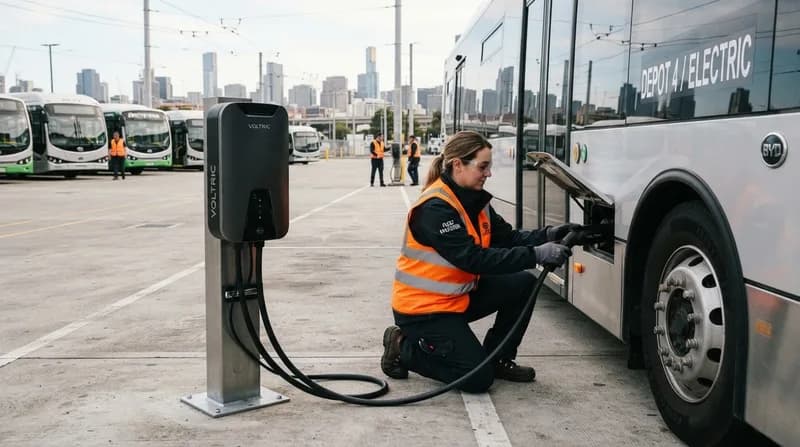
As the transition to electric heavy-duty transport accelerates, the infrastructure requirements for logistics hubs are shifting from high-speed en-route charging to efficient, scalable depot management. Alpitronic, a leader in high-power charging solutions, is addressing this pivot by expanding its HYC1000 megawatt charging system with the introduction of a new, highly compact 'Depot Dispenser.' By decoupling the power electronics from the delivery point, this latest addition allows fleet operators to optimize their infrastructure footprint while maintaining the ability to provide substantial charging power to buses and trucks.
The HYC1000 system itself utilizes a centralized 'Power Cabinet' architecture, which hosts eight 125 kW power stacks. This configuration enables a total output of one megawatt, dynamically distributed in 62.5 kW increments to up to eight output points. By moving the heavy hardware into a standalone cabinet, Alpitronic has enabled the new Depot Dispenser to achieve a significantly smaller physical profile, offering unprecedented flexibility in how operators lay out their charging bays.
Design and Versatility
Unlike the 2.32-meter-tall charging columns typically associated with Alpitronic’s public-facing hardware, the new Depot Dispenser is a marvel of miniaturization. Measuring just 600 x 400 x 250 mm and weighing roughly 35 kg, it is designed for environments where space is at a premium. The unit’s versatility is a primary design feature; it can be mounted on walls, integrated into pedestals, or suspended from overhead traverses or ceilings. This flexibility is essential for depots where floor space must remain clear for vehicle maneuvering.
The dispenser is built to handle the rigors of industrial environments, boasting an IP55 protection rating and an operating temperature range of -30 °C to +55 °C. For overhead installations, Alpitronic provides cable lengths up to 7.5 meters to ensure safe and easy reach to charging ports. Internally, the unit is incredibly efficient, consuming less than 25 watts in standby mode, which is a marked improvement over the 82-watt requirement of the larger, screen-equipped dispensers.
Smart Integration and User Experience
Alpitronic has taken a utilitarian approach to the interface of the Depot Dispenser by removing the standard touchscreen. Instead, the unit communicates status via an integrated LED indicator. Authentication is handled through RFID, with optional support for credit/debit card readers and QR code scanners. This design choice is intentional: by facilitating seamless authentication and adhering to EU AFIR regulations for ad-hoc payments, the system enables fleet owners to participate in 'depot sharing' models. These models allow for the monetization of idle charging infrastructure by offering access to guest vehicles during off-peak hours.
Why it Matters
- Operational Efficiency: By aligning power distribution with dwell times rather than peak-burst speed, operators can right-size their energy usage.
- Scalability: The modular nature of the Power Cabinet allows fleet operators to scale their infrastructure incrementally as they add more electric vehicles to their fleet.
- Space Optimization: The compact, mountable form factor solves the common problem of limited space in tight logistics corridors and bus parking zones.
- Compliance and Security: Integrated support for legal-compliant DC metering and card payments ensures readiness for public-access requirements and regulatory standards.
The Depot Dispenser will be showcased at the upcoming IAA Transportation event, marking its debut as a cornerstone for future-proof logistics and public transit charging strategies.