The Fracturing of a Global Climate Engine
For centuries, the Indian and Pacific Oceans have functioned as a tightly coupled engine, dictating the rhythmic flow of rainfall, temperature, and atmospheric circulation across the tropics. This climate partnership has been a cornerstone of Earth’s weather stability, ensuring that shifts in the Pacific were mirrored by predictable responses in the Indian Ocean. However, recent findings from the Woods Hole Oceanographic Institution (WHOI) indicate that this 400-year-old link is now breaking down in ways that suggest we are entering uncharted territory.
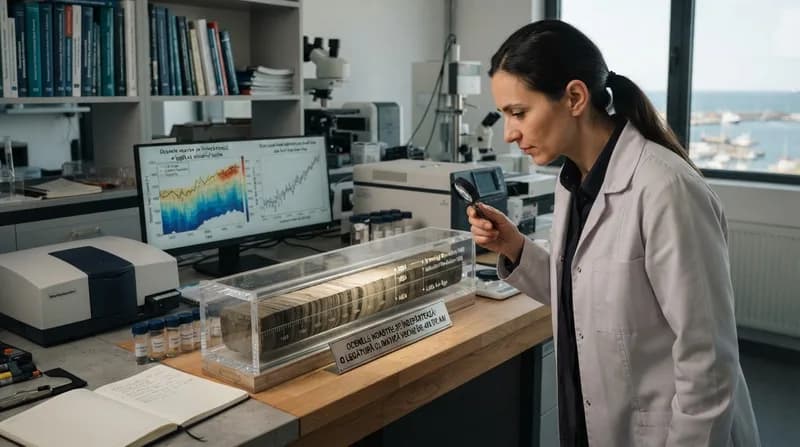
By combining modern climate observations with paleoclimate data extracted from tree rings, corals, and stalagmites, researchers have reconstructed a climate timeline stretching back to the early 1600s. While the two basins have remained remarkably well-synchronized for the vast majority of this period, the study highlights that today's decoupling is qualitatively different from anything seen in the last four centuries. While historical disruptions were tied to temporary natural phenomena, the current shift appears to be permanent and driven by anthropogenic forcing.
Volcanic Precedents in the 19th Century
To understand whether current trends were part of a long-term natural cycle, the WHOI team analyzed the impact of 19th-century volcanic eruptions. The paleoclimate record clearly shows a significant disruption in the Indian-Pacific ocean link between 1810 and 1850. During this window, the massive cooling effects of volcanic activity weakened the Pacific's influence on the Indian Ocean's climate patterns.
Computer simulations covering the last millennium reinforced these findings, proving that volcanic eruptions can indeed force a temporary wedge between the two ocean basins. However, this historical precedent serves as a cautionary tale. While the volcanic shifts of the 1800s were significant, they were transient events dictated by atmospheric particulate matter. In contrast, the modern breakdown represents a shift in the baseline state of the global climate system, rather than a brief deviation caused by geological activity.
Why This Matters: The Reliability of Climate Forecasting
The implications of this decoupling are profound for meteorology and climate science. Predictive models for rainfall and extreme weather events rely heavily on the assumption that ocean basins behave in concert. As the Indian Ocean begins to demonstrate more independent behavior—acting as its own heat reservoir decoupled from the Pacific—traditional climate forecasting models may lose their predictive power.
- Increased Unpredictability: If the Indian and Pacific Oceans no longer move in step, regional climate patterns may become more erratic and difficult to forecast.
- Shift in Heat Distribution: The Indian Ocean acts as a massive thermal reservoir; its independent behavior could alter how global heat is stored and redistributed around the planet.
- Model Calibration: Climate scientists must now account for this breakdown, as historical relationships that were considered 'constants' are proving to be variables in a warming world.
The Human-Driven Shift
The research, published in Nature Communications, concludes that modern climate change is now overwhelming the natural signals that once maintained the connection between the two oceans. According to the study authors, the shift observed since the 1980s is "exceptional" and indicates that greenhouse gas emissions have superseded the natural cycles that governed these waters for centuries.
As the Indian Ocean continues to diverge from the Pacific's influence, the research emphasizes that we are seeing the direct impact of human activity on the fundamental mechanisms of the planet. By decoupling these massive water bodies, we are fundamentally altering the atmospheric circulation patterns that sustain life in the tropics. This work underscores the urgency of addressing global warming not just as a temperature increase, but as a systematic disruption of the Earth's long-established climate synchronization.