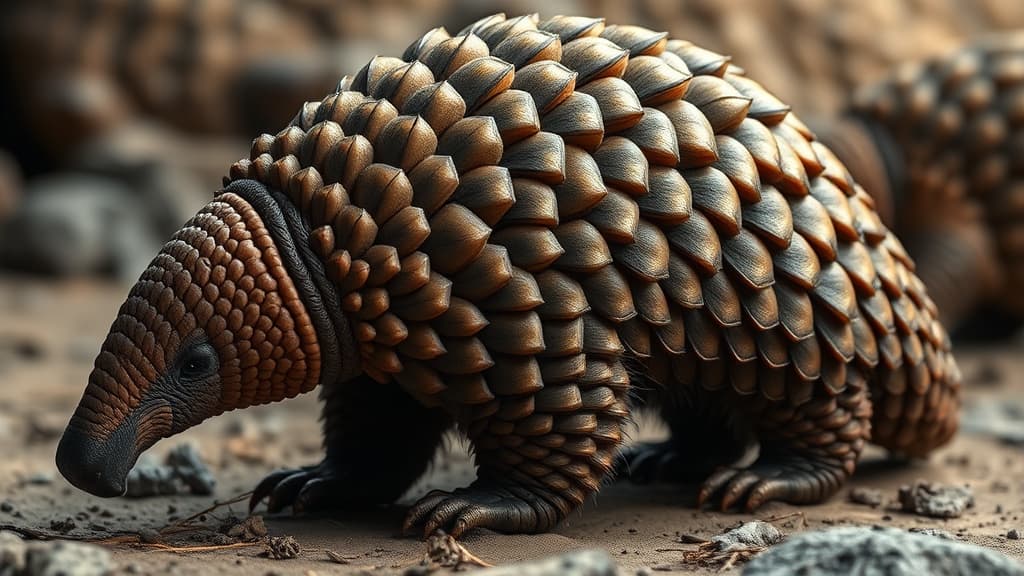
In a groundbreaking discovery, scientists have unveiled a new species of pangolin, named Manis aurita, using DNA extracted from a nearly 190-year-old specimen housed in the Field Museum. This finding is significant not only for taxonomy but also for conservation efforts targeting one of the world's most trafficked mammals.
Background
Pangolins, unique mammals covered in protective scales reminiscent of pinecones, are heavily sought after in illegal wildlife trafficking. They are often considered the most trafficked mammals globally, primarily due to the high demand for their scales in traditional medicines.
The researchers' findings, published in Communications Biology, mainly focus on the Himalayan pangolin, which has been confirmed to inhabit areas of Nepal and northern India. The DNA analysis could provide conservationists with critical information to combat poaching by tracing illegally traded pangolin scales back to their source species and regions.
Key Findings
- Discovery of the species Manis aurita provides a new avenue for tracking poached pangolins.
- Confirmation came from DNA sequencing conducted on a specimen collected in 1836.
- Previously classified as a subspecies of the Chinese pangolin, M. aurita is now recognized as distinct due to genetic evidence.
- The Himalayan pangolin exhibits differences from its Chinese counterpart, including larger body size and distinct ear shapes.
- New classification aids in conservation planning and wildlife forensics, essential for protecting endangered species.
Importance of the Discovery
This research not only clarifies the taxonomy surrounding Himalayan pangolins but also emphasizes the necessity for targeted conservation strategies. According to Anderson Feijó, a co-author from the Field Museum, “We can't protect what we do not know,” highlighting the need for accurate species identification in conservation efforts.
The distinction between Manis aurita and the previously named M. indoburmanica underscores the pivotal role of long-term research and museum collections. Scientists were able to clarify the relationship between the species through an interdisciplinary approach combining genetic analysis and historical specimen examination.
Impact on Conservation Strategies
The new methods developed from this research allow authorities to analyze confiscated pangolin scales to determine their origin. As scales are the primary evidence encountered during trafficking busts, being able to tag them to specific species and regions can significantly enhance conservation efforts.
Conservationists can more effectively prioritize areas experiencing high poaching pressure and fine-tune reintroduction programs. For instance, knowing which pangolin species belongs in certain areas prevents misplacement of species, thus ensuring more successful species recovery.
Contributions and Collaboration
The research was a collaborative effort involving institutions such as Guangzhou University, Nepal Engineering College, and the Smithsonian National Museum of Natural History, among others. Their collective expertise enabled a more thorough investigation into the evolutionary lineage of pangolins and drastically improved the understanding of these vulnerable mammals.
As we move forward, highlighting Manis aurita and its ecological needs may offer a critical edge in policy discussions and conservation initiatives. By efficiently utilizing historical specimens in conjunction with modern genetic analysis, scientists are paving the way for enhanced wildlife protection measures.