E-BUZZ ME Logo
ScienceTechnical Deep Dive

Supercharged 'Natural Killer' Cells Could Be a Powerful New Cancer Weapon

Published
EElectricBuzz Editorial Team
Supercharged 'Natural Killer' Cells Could Be a Powerful New Cancer Weapon
3 min read503 wordsElectricBuzz Editorial Team

The Gist

Researchers have developed supercharged natural killer (NK) cells that can penetrate solid tumors, promising an effective off-the-shelf cancer therapy.

Researchers at Stanford Medicine have made significant strides in cancer treatment with a new method to enhance natural killer (NK) cells, enabling them to infiltrate solid tumors more effectively. Published in Science Translational Medicine, this groundbreaking approach raises hopes for a more accessible and efficient cancer therapy.

Key Findings

  • The engineered NK cells successfully slowed tumor growth in mice, including melanoma and head and neck cancers.
  • When combined with cetuximab, an antibody treatment, the effectiveness of NK cells increased significantly.
  • This therapy could become an off-the-shelf solution since NK cells do not trigger major immune responses when transferred between individuals.
  • Researchers are preparing for a Phase I clinical trial targeting advanced squamous cell carcinoma.

The study's senior author, Dr. John Sunwoo, states, "We show that these tissue-resident natural killer cells infiltrate into the solid tumors much better than conventional natural killer cells." The findings suggest a promising shift in how solid tumors, often resistant to conventional immunotherapies, may be treated.

Research Background

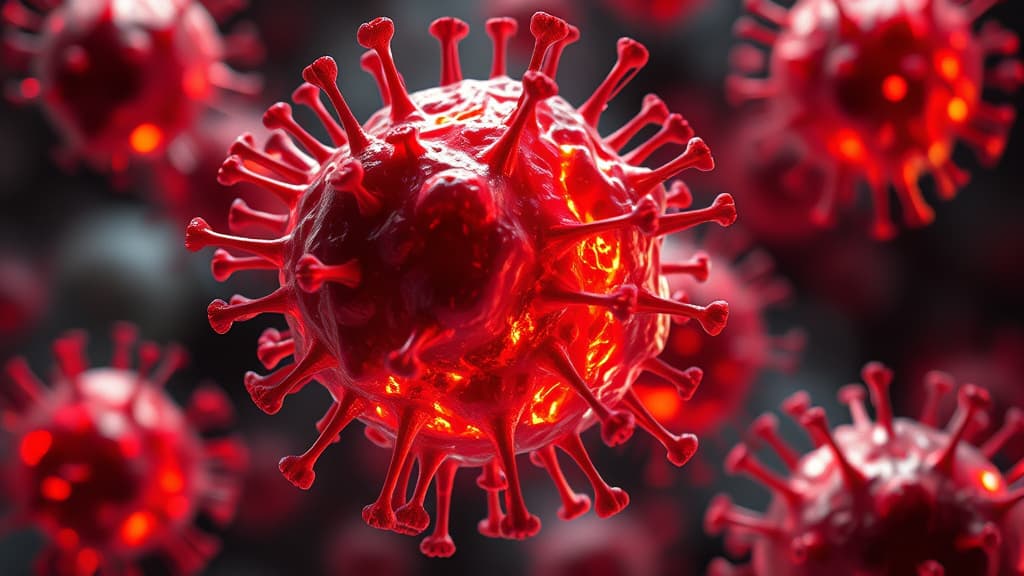
Natural killer cells are part of the immune response, capable of swiftly recognizing and attacking abnormal cells without prior exposure to specific targets. The difficulty in treating solid tumors arises from their ability to conceal themselves from immune detection and emit signals that weaken immune responses. To combat these challenges, researchers transformed NK cells into a specialized tissue-resident form that can navigate and thrive within solid tumors.

Methodology

The research team isolated circulating NK cells and exposed them to various cellular signals, including transforming growth factor beta (TGF-b). The balance of TGF-b was crucial; just the right amount turned NK cells into effective tumor attackers, while too much rendered them ineffective. The enhanced NK cells displayed surface markers indicating their ability to destroy tumor cells effectively, including the protein CD39, which was absent in less effective variants.

Clinical Implications

The preclinical results from mouse studies demonstrated that the combination of modified NK cells and cetuximab significantly suppressed tumor growth. "Even at day 30, when the other mice were sick, the mice that received the combination seemed very healthy," assessed Sunwoo. This indicates not only increased efficacy but also potential reduced side effects compared to conventional treatments.

As the team prepares to launch a Phase I trial, they expect the treatment to be scalable. Approximately 20 doses can be synthesized from NK cells obtained from one donor within a two-week timeframe, allowing for broad usage across patients. Dr. Sunwoo noted, "They'll be cryopreserved, so we can make a bunch of doses and give it to different patients. There would be no delay." This approach positions the therapy as a significant advancement in cancer treatment accessibility.

Conclusion

With ongoing research revealing more about the roles and capabilities of tissue-resident NK cells, this breakthrough holds the potential to transform cancer care. The findings pave the way for further investigations and clinical applications that may lead to effective, broadly available cancer therapies.

The research was supported by the National Institutes of Health and other funding sources, reflecting the collaborative efforts to innovate cancer treatments.

Related Stories

Semantically matched articles, ranked by topic overlap and freshness.

Ancient Fossil Sheds Light on Insect Evolution
Science

Ancient Fossil Sheds Light on Insect Evolution

A newly identified 324-million-year-old insect fossil, Chosha praecursor, reveals that insects transitioned from water to land through a prolonged amphibious phase. This discovery fills an 80 million-year gap in the fossil record, challenging previous notions of insect evolution.

Gravitational Waves May Reveal Secrets of Ancient Dark Stars
Science

Gravitational Waves May Reveal Secrets of Ancient Dark Stars

Recent research suggests a newly detected gravitational-wave background could be linked to supermassive black holes formed over 13 billion years ago by hypothetical Dark Stars.

AI Optimizes 3D Printing of NASA Alloy, Reducing Costs and Power
Science

AI Optimizes 3D Printing of NASA Alloy, Reducing Costs and Power

Researchers at Washington State University have harnessed AI to optimize the 3D printing of GRCop-42, a NASA alloy, cutting power requirements significantly.

Vitamin C and Cold Symptoms: What Recent Research Reveals
Science

Vitamin C and Cold Symptoms: What Recent Research Reveals

Recent studies indicate that while vitamin C cannot prevent colds, regular intake may reduce severe symptoms by approximately 10%. This challenges the long-held belief stemming from Linus Pauling's advocacy in the 1970s that large doses could ward off infections.

Ancient Evidence Reveals Longstanding Aversion to Eating Insects
Science

Ancient Evidence Reveals Longstanding Aversion to Eating Insects

Recent research indicates that modern Western aversion to entomophagy may have roots stretching back 9,000 years. Genetic analysis of 745 dental samples shows that while Neanderthals regularly consumed insects, early modern humans in Northern Eurasia largely did not.

Ancient Fossil Reveals Insect Evolution from Water to Land
Science

Ancient Fossil Reveals Insect Evolution from Water to Land

A 324-million-year-old fossil called Chosha praecursor has been identified, revealing insights into how insects transitioned from aquatic to terrestrial life. This discovery suggests a prolonged amphibious phase, with features retained from aquatic ancestors, rather than a sudden shift to land.

Gravitational Waves May Reveal Secrets of Early Black Hole Formation
Science

Gravitational Waves May Reveal Secrets of Early Black Hole Formation

Recent research from Colgate University suggests that a gravitational-wave hum detected could be linked to 13-billion-year-old dark stars, offering insights into the origin of the Universe's first supermassive black holes.

AI Revolutionizes 3D Printing of NASA's GRCop-42 Alloy
Science

AI Revolutionizes 3D Printing of NASA's GRCop-42 Alloy

Researchers at Washington State University have leveraged AI to sift through over 100 million configurations, discovering six viable settings to 3D print GRCop-42, a NASA-developed alloy, using only 500 watts of power. This breakthrough could democratize access to this high-performance material, traditionally difficult to print with standard commercial equipment.