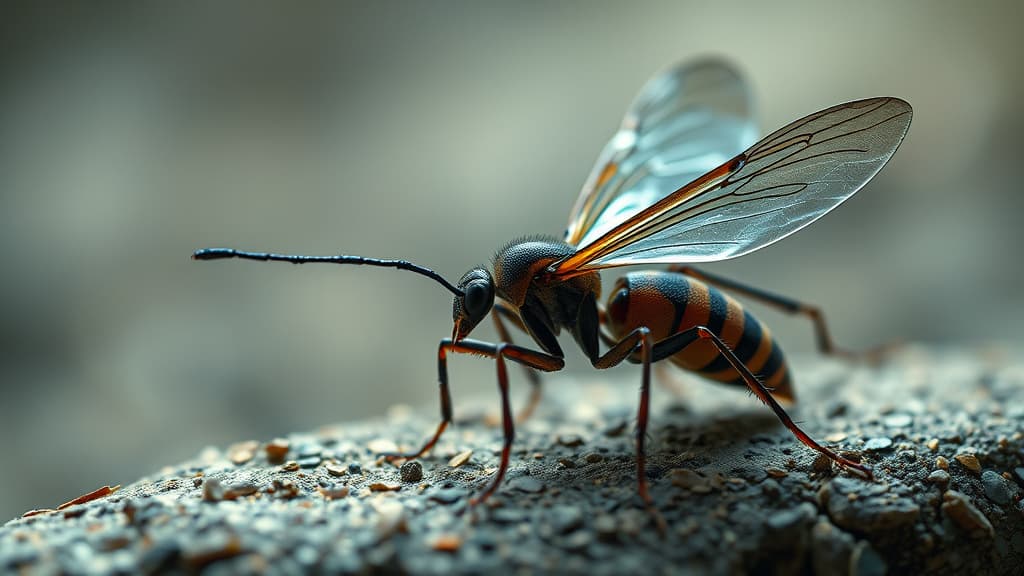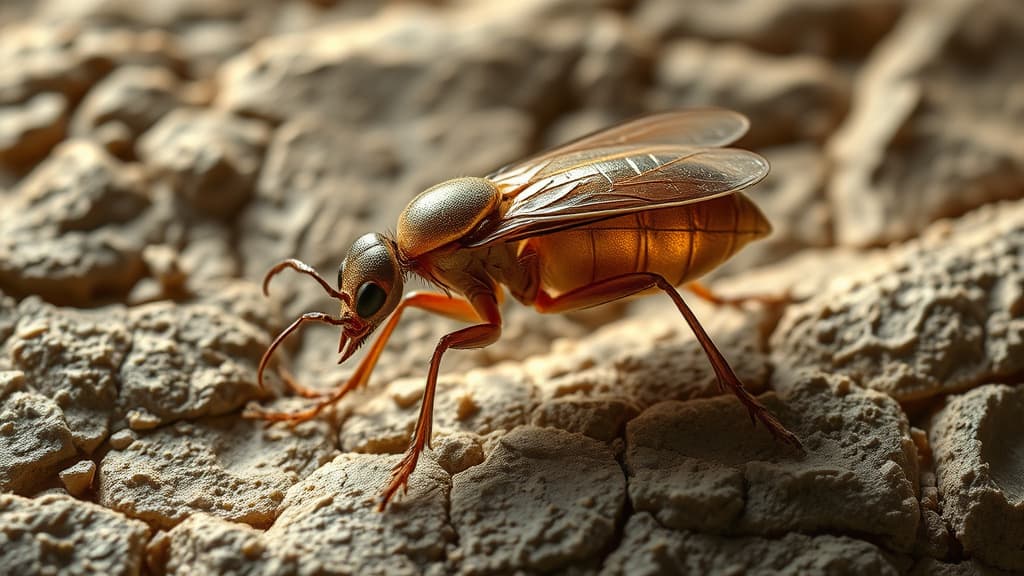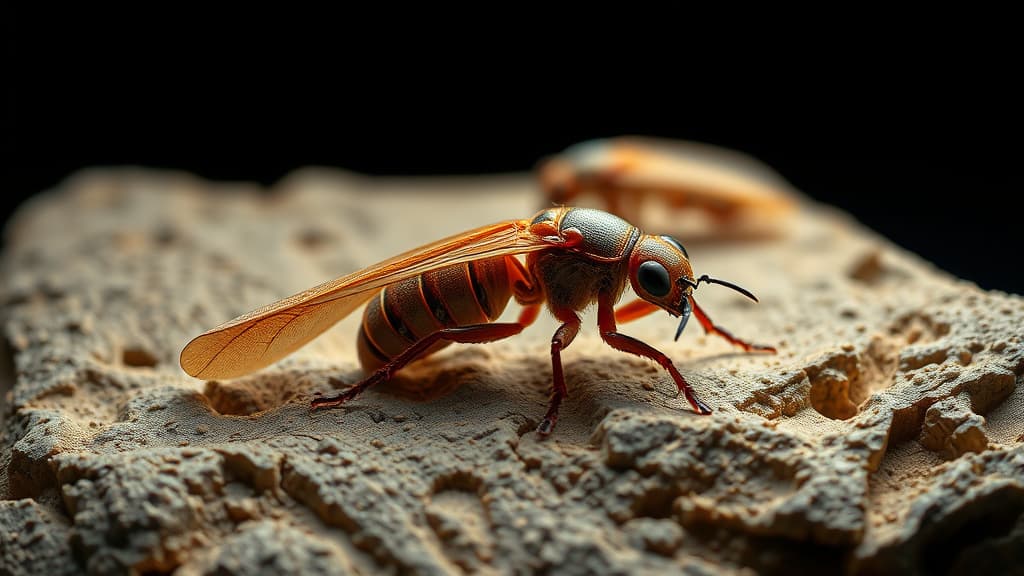
A newly discovered fossil named Chosha praecursor, dating back 324 million years, provides significant insights into the evolution of insects. Found in the Tesnus Formation in Texas, this fossil illustrates a critical phase in the transition of insects from aquatic to terrestrial environments.
The fossil measures 32.09 millimeters in body length, extending to 49.66 millimeters when including its appendages. Chosha praecursor possessed unique paddle-like abdominal limbs, suggesting a semi-aquatic lifestyle that serves as a vital evolutionary link between aquatic ancestors and modern insects.
Key Findings
- The transition from aquatic to terrestrial life for insects was gradual rather than abrupt, as indicated by this fossil.
- Key anatomical features, including a segmented trunk and ovipositor, suggest early adaptations for egg-laying, facilitating diverse ecological roles on land.
- The research team, comprised of scientists from the Chinese Academy of Sciences and the University of Cambridge, underscores the importance of Chosha praecursor in altering existing timelines regarding insect diversification.
- This fossil addresses a significant 80 million-year gap in the fossil record, reshaping our understanding of insect evolution.
By re-evaluating other fossils from earlier and later periods, researchers highlighted a primitive lineage of insects, emphasizing the evolutionary importance of Chosha praecursor. This discovery has implications for understanding the timeline of insect diversification, which may have occurred from the Late Carboniferous to the Early Devonian.
The findings enhance our comprehension of how insects evolved and adapted from water to land, marking a pivotal moment in their evolutionary history.