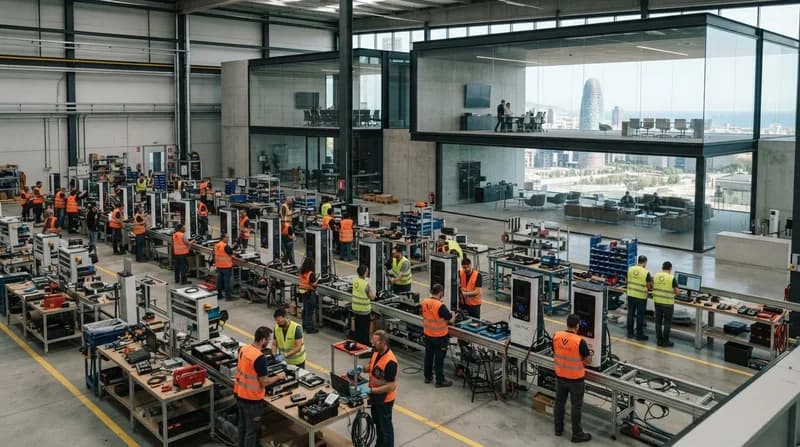
A Strategic Shift in Manufacturing
In a significant move toward operational streamlining, Barcelona-based EV charging specialist Wallbox Chargers has announced the closure of its manufacturing facility in Arlington, Texas. The decision marks a major pivot in the company's global strategy, effectively ending local production on American soil less than four years after the plant's high-profile debut. The company, which had once set an ambitious target of reaching a capacity of one million units per year by 2030, is now consolidating its entire production footprint at its main headquarters in Spain.
This transition follows a period of intense financial reorientation, reportedly tied to a restructuring of debts totaling approximately 170 million euros. By centralizing operations, Wallbox aims to improve efficiency and reduce the complexity of its supply chain. Despite the shuttering of the Texas plant, the company has clarified that this does not signify an exit from the North American market. Instead, Wallbox intends to continue serving its US and Canadian customers by importing units manufactured at its expanded Spanish facilities.
The Road to Consolidation
The writing has been on the wall for the Texas facility for some time. Recent months saw the company incrementally shift its logistics, beginning with the centralization of DC charger production for the US market in Barcelona. This was followed by a similar move for AC units destined for Canada. The latest announcement serves as the final step in this transition, as the manufacturing of AC home chargers—the last major category produced in Arlington—is now being integrated into the Spanish production lines.
Why It Matters
- Operational Efficiency: By consolidating manufacturing in Barcelona, Wallbox is looking to gain tighter control over its overhead and production costs during a critical financial restructuring phase.
- Supply Chain Dynamics: The move signals a shift away from regionalized manufacturing models in favor of a centralized global export hub, challenging current trends in local-for-local manufacturing.
- Financial Realignment: The closure is a direct consequence of the company's efforts to manage and mitigate its significant debt load through rigorous operational changes.
Reflecting on the Texas Ambition
When the Arlington plant launched in late 2022, it was touted as a cornerstone of Wallbox’s expansion into the burgeoning US electric vehicle infrastructure market. With an initial capacity designed for 250,000 units annually, the facility was intended to be the backbone of the company’s North American growth strategy. Its closure underscores the volatile nature of the EV infrastructure sector, where companies must frequently balance aggressive expansion plans against immediate financial realities and market pressures. As Wallbox looks to the future, it faces the challenge of maintaining its service levels and brand presence in the US while managing its logistics from across the Atlantic.