Scaling Up Sustainable Lithium Production
Vulcan Energy, the German-Australian firm pioneering sustainable lithium extraction, has officially unveiled the pre-feasibility study (PFS) for its second major initiative: the Ludwig project in the Upper Rhine Valley. Building upon the technical blueprint of its flagship Lionheart project, the Ludwig site is positioned as a critical expansion in Vulcan’s broader strategy to secure domestic battery raw materials for the European automotive industry. The company estimates that once operational, Ludwig could generate approximately 21,100 tons of lithium carbonate annually, further cementing the region's role in the global EV supply chain.
Project Highlights and Technical Synergy
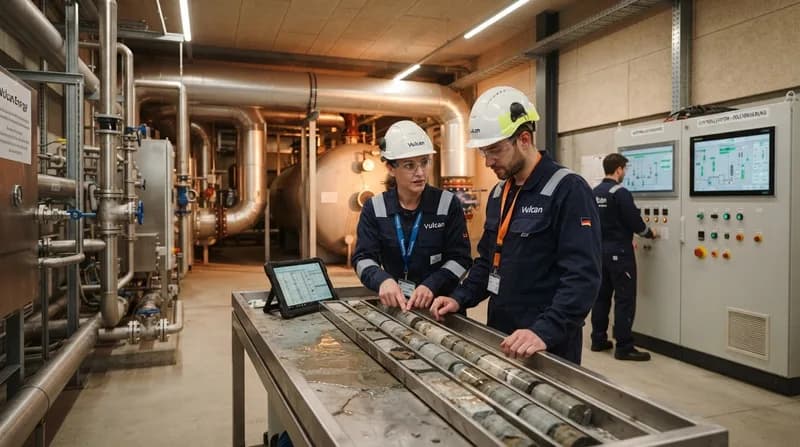
The core of the Ludwig project relies on the same dual-purpose technology that distinguishes Vulcan from traditional mining operations. By extracting lithium-rich geothermal brine from deep underground, the facility aims to produce lithium carbonate while simultaneously generating up to 3,125 GWh of renewable heat per year. This heat is earmarked both for internal processing needs and for distribution to local commercial and municipal customers, creating a circular energy economy that minimizes waste and carbon intensity.
Unlike the Lionheart project, which separates extraction and processing between different facilities in Landau and Frankfurt-Höchst, Ludwig is designed as a centralized hub. By integrating Direct Lithium Extraction (DLE) and on-site conversion to lithium carbonate, the company expects to gain significant operational efficiencies. This streamlined approach is a key factor in the estimated €1.26 billion investment requirement, a figure that sits about 15 percent lower than the capital expenditure required for the Lionheart development.
Why It Matters
- Supply Chain Sovereignty: With 50 to 60 percent of a battery's value tied to material processing, localizing these operations is vital for European energy security.
- Cost Efficiency: Vulcan projects operating costs of roughly €4,101 per tonne of lithium carbonate equivalent, placing the Ludwig site in the lowest quartile of the global cost curve.
- Scaling Renewables: The dual output of lithium and clean thermal energy provides a secondary revenue stream and local utility benefit.
Path to Commercialization
While the PFS provides an optimistic outlook, Vulcan is maintaining a measured pace. The project is currently in its early developmental stages, with essential next steps including comprehensive 3D seismic surveys and targeted exploration drilling. The company has explicitly stated that a final investment decision (FID) for Ludwig will only be considered following the successful commissioning of the Lionheart project, which is currently slated for production in 2028. This deliberate, phased approach ensures that the operational lessons and technical refinements gained from the first site are fully translated into the second.
As European automakers like Stellantis and partners like LG Energy Solution look to reduce reliance on overseas raw materials, Vulcan’s expanding footprint in the Upper Rhine Valley is increasingly significant. If the projected metrics hold true through more granular geological assessments, the Ludwig project will represent a massive step toward meeting the massive demand for battery-grade materials necessary to power the transition to a fully electric vehicle fleet in Europe.