Manufacturing Innovation in Navarra
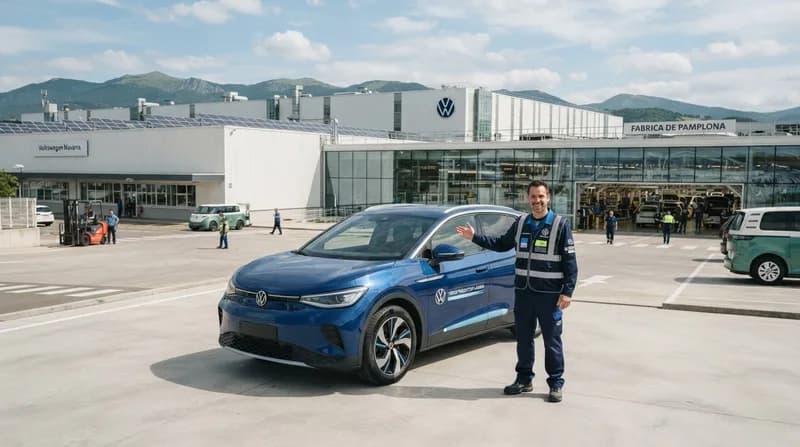
Volkswagen has reached a significant turning point in its electrification strategy with the official commencement of series production for the ID. Cross at its historic plant in Navarra, Spain. This facility, which has been an integral part of the automotive landscape since 1984, has undergone a massive transformation to accommodate a new generation of electric vehicles. By investing in over 290,000 hours of specialized employee training, Volkswagen has successfully retooled the plant to maintain high-volume production while seamlessly integrating assembly lines that handle both internal combustion engine models and new-age electric platforms.
The Navarra site now functions as a high-flexibility hub, producing the ID. Cross alongside the Škoda Epiq. This logistical achievement highlights Volkswagen’s commitment to Spain as a primary production pillar for the European market. With over 1,400 vehicles rolling off the line daily, the plant represents a masterful blend of heritage infrastructure and modern, high-tech manufacturing, ensuring that the company can meet the growing demand for reliable and accessible electric mobility.
The MEB+ Platform and Powertrain Dynamics
At the heart of the ID. Cross is the advanced MEB+ platform, a modular architecture specifically optimized for compact, front-wheel-drive electric vehicles. By leveraging this hardware, Volkswagen has introduced several technical innovations, most notably the 'Group Unified Cell' design. These cells are integrated into a structural Cell-to-Pack configuration that acts as a weight-bearing element of the vehicle's underbody, improving both space efficiency and structural integrity.
Efficiency is further bolstered by the in-house developed APP290 electric motor and a proprietary pulse inverter. This inverter module is a standout piece of engineering, meticulously designed to minimize energy consumption by optimizing power delivery. The ID. Cross offers a tiered range of performance options, catering to different driving needs:
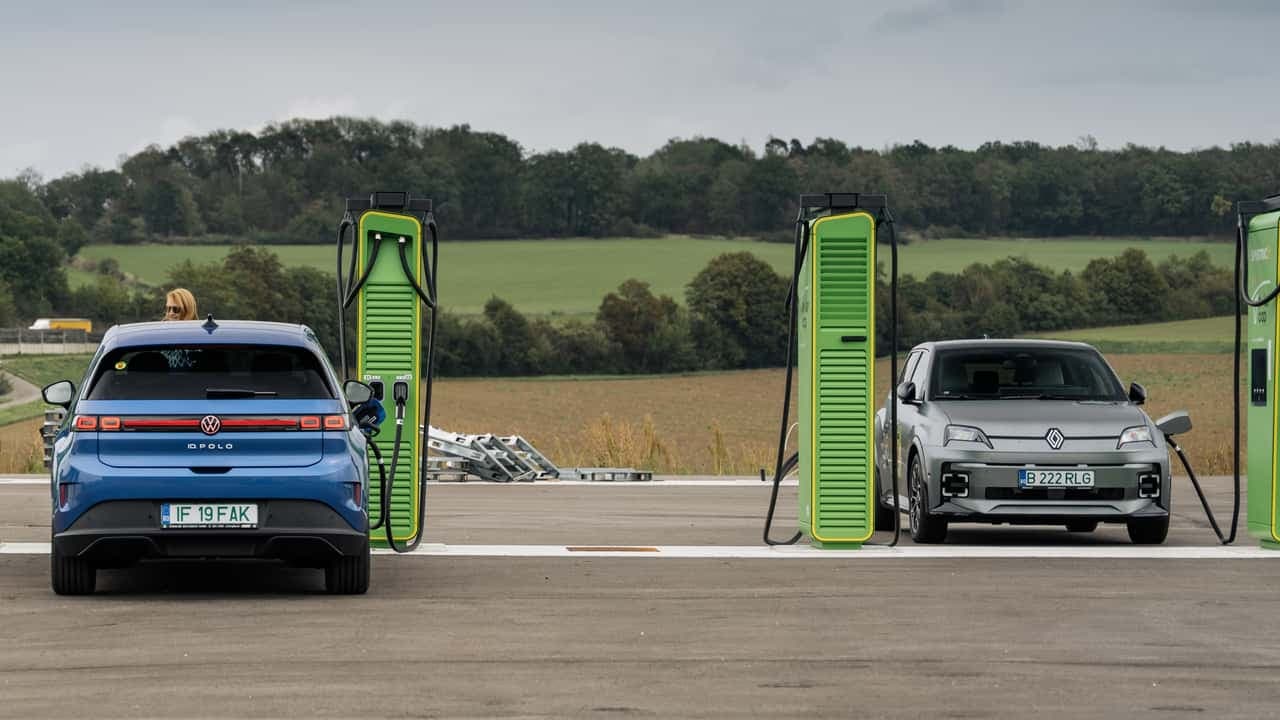
- 85 kW & 99 kW Variants: Both are paired with a 37 kWh LFP battery, providing a WLTP range of approximately 316 km. These models feature 90 kW DC fast-charging capabilities, reaching an 80% charge in about 27 minutes.
- 155 kW Performance Variant: Equipped with a larger 52 kWh NMC battery, this version pushes the range to 427 km. It supports faster DC charging at 105 kW, allowing for a 10% to 80% charge in just 24 minutes.
Strategic Outlook and Market Positioning
Positioned as an SUV-style entry within the brand’s compact electric portfolio, the ID. Cross sits slightly larger than the ID. Polo, measuring 4.15 meters in length. Its arrival is a critical component of Volkswagen’s promise to deliver affordable electric transport across 34 countries. With an entry-level price point of €27,995, the vehicle aims to lower the barrier for EV adoption, positioning it as a direct competitor in the growing segment of urban-friendly electric SUVs.
Beyond the technical specifications, the launch of the ID. Cross demonstrates Volkswagen’s capability to pivot its massive European industrial footprint toward a sustainable future. By consolidating production in the Iberian Peninsula, the company is not only optimizing supply chains but also bolstering the competitiveness of its regional manufacturing hubs. As orders for the higher-end Life and Style trims begin to ship, the market will soon see the full scale of this ambitious production rollout, setting a benchmark for how established automakers can transition to purely electric lineups without sacrificing their characteristic manufacturing scale.