1. The Sagunt Battery Cell Factory
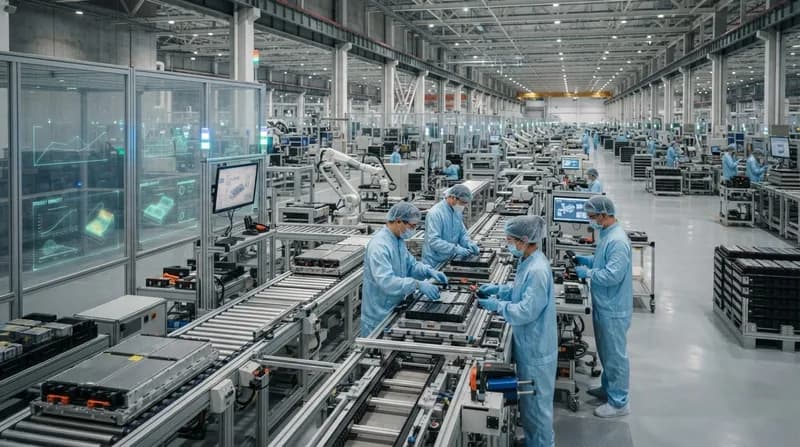
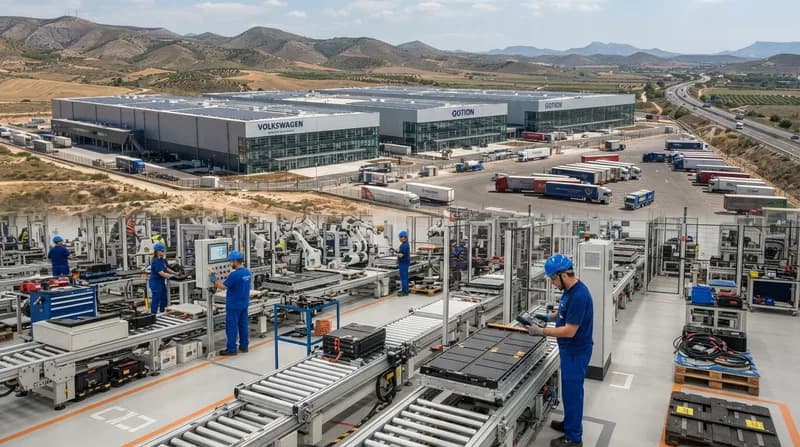
The centerpiece of this strategic collaboration is the battery cell facility currently under construction in Sagunt, Spain, managed by Volkswagen’s specialized battery subsidiary, PowerCo. Under the new agreement, this massive site will transition into a joint venture, with Volkswagen retaining a controlling 51% stake while Gotion holds 49%. This site is pivotal to Volkswagen’s roadmap, serving as a primary pillar for the automaker's internal battery supply chain alongside its sites in Salzgitter and North America.
While earlier projections suggested a 40 GWh capacity, current disclosures indicate a target of 29.1 GWh for this phase of the project. The facility is expected to serve as a cornerstone for Volkswagen's next-generation EV models, effectively localizing cell production and reducing dependence on third-party suppliers for the European market.
2. The Šurany Cell Production Site in Slovakia
Volkswagen is expanding its reach into Central Europe by entering into a joint venture for the Gotion InoBat Batteries (GIB) facility in Šurany, Slovakia. In this venture, the ownership structure is inverted compared to the Spanish project: Gotion maintains a 51% majority, while PowerCo holds a 49% stake. This partnership leverages the existing infrastructure in Slovakia to accelerate local cell manufacturing.
The facility is designed to support the broader Volkswagen group’s volume requirements. While initial industry reports once floated a capacity as high as 20 GWh, the current joint venture framework targets 8.4 GWh. As the site moves toward completion, it will play a crucial role in providing the unified cell architecture that powers Volkswagen’s most popular electric platforms, including models like the ID. series and Cupra offerings.
3. The Moroccan Cathode Material Plant
Vertical integration extends beyond battery cells to the essential raw materials required for their construction. The third joint venture involves a cathode material plant located in the Rabat-Salé-Kénitra free trade zone in Morocco. Mirroring the Slovakian ownership split, Gotion holds a 51% share and PowerCo holds 49%, ensuring Volkswagen a direct pipeline to critical battery components.
This facility is specifically tasked with producing LFP (Lithium Iron Phosphate) cathode materials, with an announced annual capacity of 100,000 tonnes. This output is strategically designed to supply the joint venture cell plants in Spain and Slovakia, creating a cohesive supply loop that improves cost efficiency and protects against supply chain volatility for Volkswagen’s global manufacturing operations.
Why it Matters
For Volkswagen, this €3.22 billion investment is more than just a capital expenditure—it is a survival tactic. As the automaker navigates a challenging economic environment, it is actively seeking ways to optimize the heavy capital requirements of PowerCo. By sharing the financial burden with Gotion, its largest shareholder, Volkswagen achieves deeper vertical integration while maintaining operational control. The deal underscores a critical shift in the automotive industry: major OEMs are no longer just buyers of batteries; they are becoming deeply embedded co-manufacturers within the chemical and material supply chain.