E-BUZZ ME Logo
ScienceTechnical Deep Dive

Unveiling the Secret Force Behind the Universe's Hottest Fluid

Published
Unveiling the Secret Force Behind the Universe's Hottest Fluid
1 min read101 words

The Gist

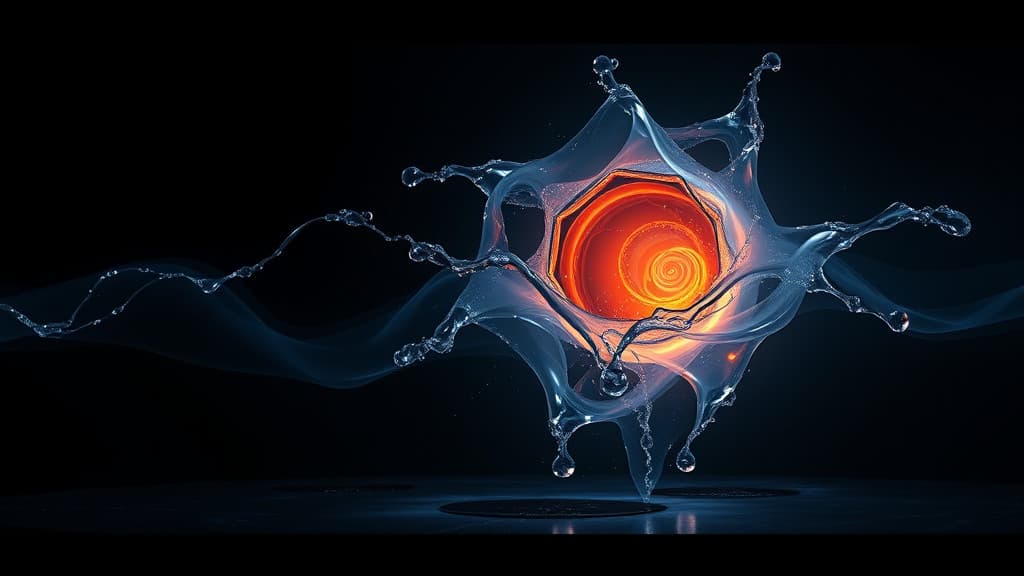
Scientists have made a groundbreaking discovery about the universe's hottest fluid, quark-gluon plasma, revealing a hidden force that drives its explosive expansion. This breakthrough, facilitated by new simulations, sheds light on the extreme acceleration along the plasma's edges and its potential impact on temperature, particle spins, and state transitions.

A team of scientists has made a significant breakthrough in understanding the universe's hottest fluid, quark-gluon plasma, which is formed when atomic nuclei collide at nearly the speed of light. The discovery of a previously overlooked force driving this plasma's behavior has far-reaching implications for our understanding of the universe's most extreme environments.

Key Insights

The research reveals that extreme acceleration builds up along the edges of the quark-gluon plasma, contributing to its explosive expansion. This acceleration may also influence the plasma's temperature, particle spins, and state transitions, providing new insights into the complex behavior of this exotic state of matter.

Related Stories

Semantically matched articles, ranked by topic overlap and freshness.

Arginine Supplement May Boost Immune System to Fight Cancer and Viruses
Science

Arginine Supplement May Boost Immune System to Fight Cancer and Viruses

Research suggests that low arginine levels may weaken the immune system, allowing cancer cells and viruses to evade detection. An arginine supplement could have significant therapeutic potential in enhancing immune function, particularly in reducing colon tumors and viral infections.

Arctic Permafrost Thaw Releases Ancient Carbon, Mostly Trapped by Seabed
Science

Arctic Permafrost Thaw Releases Ancient Carbon, Mostly Trapped by Seabed

The thawing of Arctic permafrost is releasing ancient carbon into the ocean, but the majority of it is being buried in the seafloor, mitigating the risk of accelerated climate change. Only a small fraction of the released carbon is converted into greenhouse gases, reducing the potential impact on global warming.

Scientists Discover Molecular Switch Linked to Brain Disease and Aging
Science

Scientists Discover Molecular Switch Linked to Brain Disease and Aging

Researchers have identified a molecular switch, the protein EPS8, which accumulates with age and may contribute to the development of brain diseases such as ALS and Huntington's. By reducing EPS8 activity, scientists were able to prevent harmful protein aggregates and preserve nerve function, potentially shedding light on a key factor in aging-related brain vulnerability.

Vanderbilt Researchers Discover Compounds to Investigate Alzheimer's Disease Mechanisms
Science

Vanderbilt Researchers Discover Compounds to Investigate Alzheimer's Disease Mechanisms

Vanderbilt researchers have created two new compounds that could help reveal hidden drivers of Alzheimer's disease. These compounds may uncover new disease mechanisms and lead to the development of novel treatment strategies for Alzheimer's disease.

Stratolaunch Hits New Heights with Talon-A Hypersonic Vehicle
Science

Stratolaunch Hits New Heights with Talon-A Hypersonic Vehicle

Stratolaunch has successfully completed over 10 flights of its Talon-A hypersonic vehicle, marking a significant milestone in its development. The autonomous air-launched craft has the potential for various applications, traveling at five times the speed of sound.

Mathematicians Prove Perfectly Fair Elections Are Impossible
Science

Mathematicians Prove Perfectly Fair Elections Are Impossible

Mathematicians have made a groundbreaking discovery that no electoral system can perfectly balance local representation, proportional national results, and a fixed-size parliament when multiple parties compete. A new voting method has been proposed to mitigate these trade-offs and produce more fair outcomes, offering a potential solution to this longstanding problem.

Cancer Cells May Be Breaking Their Own DNA to Keep Growing
Science

Cancer Cells May Be Breaking Their Own DNA to Keep Growing

Cancer cells rely on powerful genetic switches to sustain growth, but this intense activity can damage their own DNA, leading to repeated repairs and potential mutations. Researchers believe this self-inflicted damage may aid tumor evolution and create a target for new treatments.

Eating Less Protein May Slow Aging, Study Finds
Science

Eating Less Protein May Slow Aging, Study Finds

A major review of over 350 studies suggests that consuming less protein can improve metabolism, reduce inflammation, and promote healthier aging. The findings indicate that the current protein boom may be exceeding the actual needs of many individuals, with potential benefits to reducing the signs of aging and increasing lifespan.