ScienceTechnical Deep Dive

Nature’s Aerial Hack: How the Nightjar Rewrote the Rules of Flight

Published
EElectricBuzz Editorial Team
Nature’s Aerial Hack: How the Nightjar Rewrote the Rules of Flight
3 min read494 wordsElectricBuzz Editorial Team

The Gist

“New research into the European nightjar reveals a surprising aerodynamic trade-off that defies conventional flight wisdom and could redefine future drone design.”

The Evolutionary Compromise

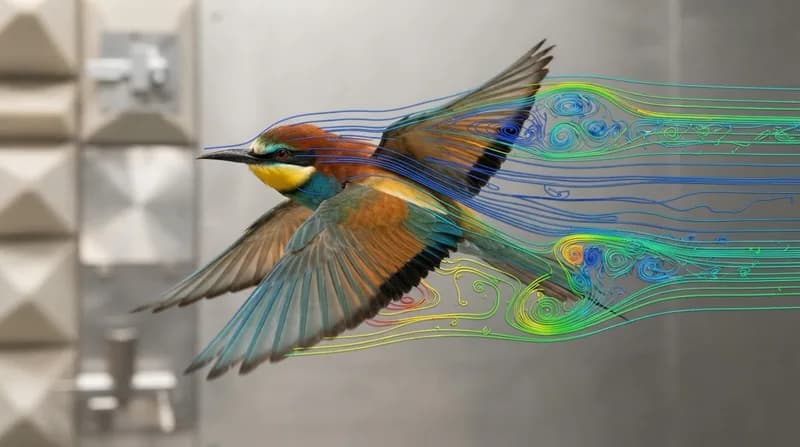
For years, biologists assumed that animals capable of extraordinary long-distance migration were the pinnacle of aerodynamic efficiency, featuring wings perfectly tuned for sustained, energy-sipping flight. However, a new study from Lund University on the European nightjar (Caprimulgus europaeus) has shattered this assumption. While these birds undertake massive annual migrations between Europe and Africa, their wings are surprisingly suboptimal for high-speed cruising. Instead, they have evolved a design that prioritizes agility and low-speed maneuverability, essential for their nighttime insect-hunting habits.

By conducting rigorous wind-tunnel testing and analyzing the airflow patterns generated by the birds, researchers discovered that the nightjar’s broad wing tips—perfect for executing sharp turns while hunting—actually create aerodynamic drag at higher flight speeds. This revelation demonstrates that the nightjar is not a specialized machine built for one purpose, but rather a master of compromise, balancing the physical demands of transcontinental travel with the high-stakes requirements of mid-air predation.

An Unexpected Upstroke Mechanic

Perhaps the most startling find in the study is the nightjar’s method of generating thrust. In most avian flight, the upward portion of the wingbeat, or upstroke, is largely passive or used primarily for lift. However, scientists observed that the nightjar actively utilizes the upstroke to generate forward propulsion. This technique, characterized by active wing movement rather than a passive repositioning, has rarely been documented in birds and was previously considered a hallmark of bats and insects.

This suggests a fascinating instance of convergent evolution, where distinct species develop identical solutions to similar physical challenges. The nightjar’s ability to generate thrust during the upstroke appears to be a direct adaptation to the mechanical constraints of its wing structure, which cannot fold as tightly as those of other species. By engaging the muscles during the upstroke, the nightjar maintains momentum even when the geometry of its wings limits traditional flapping efficiency.

Why it Matters: Implications for Robotics

The discovery that the nightjar uses its upstroke for thrust offers more than just biological insight; it serves as a blueprint for the future of aviation technology. Engineers currently working on micro-aerial vehicles (MAVs) and biomimetic robots frequently encounter the same physical limitations regarding wing-folding and mechanical structure that nature has already solved in the nightjar.

  • Enhanced Maneuverability: Integrating active upstroke thrust could allow drones to perform tighter turns in confined environments.
  • Energy Optimization: Understanding how the nightjar mitigates efficiency losses at high speeds could help engineers refine wing profiles for long-range autonomous flight.
  • Robotic Versatility: The nightjar’s ability to switch between long-range travel and low-speed hunting demonstrates that multi-modal flight is achievable through clever, active wing-control strategies rather than just increasing battery capacity.

As researchers continue to study whether this flight mechanic is widespread across other species, the findings provide a clear path forward for designing the next generation of flapping-wing aircraft. By looking toward the nightjar, the aviation industry may soon find that the secret to the perfect drone doesn't lie in more power, but in more refined, nature-inspired movement.


SPONSORED
The 5 Best Over-Ear ANC Headphones of 2026, Tested & Ranked
Editor's Pick Guide
92/100
Tech & Gadgets•12 min read

The 5 Best Over-Ear ANC Headphones of 2026, Tested & Ranked

We locked five over-ear ANC picks for 2026 — Sony WH-1000XM6, Bose QuietComfort Ultra 2, Soundcore Space One, Sennheiser Momentum 5, and Apple AirPods Max 2 — then stress-tested them on lab metrics, long-term owner truth, and live street prices.

Related Stories

Semantically matched articles, ranked by topic overlap and freshness.

A New Standard of Care: Addressing Traumatic Brain Injuries Among First Responders
Science

A New Standard of Care: Addressing Traumatic Brain Injuries Among First Responders

A landmark consensus from over 50 global experts provides the first formal guidelines for the diagnosis and treatment of traumatic brain injuries (TBI) in emergency personnel.

The Brain's Internal Clock: How Deep Sleep Orchestrates Physical Recovery
Science

The Brain's Internal Clock: How Deep Sleep Orchestrates Physical Recovery

New research from UC Berkeley has mapped the complex neural circuitry that links deep sleep to growth hormone production, revealing a vital feedback loop for human health.

Novel Synthetic Peptide Offers New Hope in Alzheimer’s Research
Science

Novel Synthetic Peptide Offers New Hope in Alzheimer’s Research

Researchers have engineered a groundbreaking synthetic molecule that successfully slows down amyloid beta production in mice without the side effects seen in previous therapeutic attempts.

NASA's Roman Space Telescope Hits a Massive Milestone With Precision Tuning
Science

NASA's Roman Space Telescope Hits a Massive Milestone With Precision Tuning

Engineers have successfully fine-tuned the Nancy Grace Roman Space Telescope, resulting in imaging performance nearly 30% sharper than originally planned.

SpaceX Dragon Delivers Cutting-Edge Biological Cargo to the ISS
Science

SpaceX Dragon Delivers Cutting-Edge Biological Cargo to the ISS

A SpaceX resupply mission has reached the International Space Station, carrying an array of experimental cargo ranging from 3D-printed heart tissue to artificial retinal technology.

Daytime Napping: A Potential Early Warning Sign for Cognitive Decline
Science

Daytime Napping: A Potential Early Warning Sign for Cognitive Decline

A decade-long longitudinal study suggests that frequent or unintentional daytime napping could serve as a non-invasive clinical marker for dementia risk in older adults.

Rising Crisis: The Looming Burden of Alcohol-Related Cirrhosis and Heart Failure by 2050
Science

Rising Crisis: The Looming Burden of Alcohol-Related Cirrhosis and Heart Failure by 2050

New research presented at UEG Week 2026 highlights a troubling surge in the disability burden linked to combined liver and heart complications, particularly among older men in the US and Central Europe.

NASA Satellites Uncover Mysterious Atmospheric Ripples Above Hurricane Simon
Science

NASA Satellites Uncover Mysterious Atmospheric Ripples Above Hurricane Simon

While Hurricane Simon brought chaos to Mexico’s coast, NASA satellites observed a rare and mesmerizing phenomenon: invisible atmospheric gravity waves rippling through the stratosphere.