Sharpening the View of the Cosmos
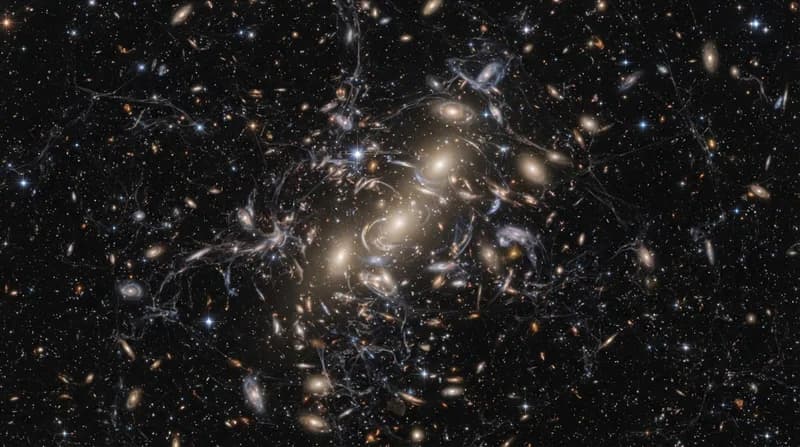
NASA's Nancy Grace Roman Space Telescope has officially surpassed its performance benchmarks, proving that even the most complex space-based observatories can be optimized post-launch with surgical precision. Following a comprehensive commissioning phase, engineering teams at NASA's Goddard Space Flight Center have successfully calibrated the telescope's onboard instruments, leading to an image quality improvement of nearly 30% beyond initial predictions. This leap in optical clarity represents a significant win for the upcoming mission, which aims to unravel the mysteries of dark matter and dark energy.
The calibration process was akin to a high-stakes musical performance, where every component—from the 18 sticky-note-sized detectors to the complex element wheels—had to be tuned to operate in perfect harmony. By utilizing internal LED calibration systems, the team mapped the sensitivity of the detectors and established a baseline for the telescope's operations, ensuring that the observatory can produce consistently high-quality scientific data throughout its mission lifespan.
A Mirror Shift for Maximum Clarity
The most impressive feat of the campaign involved an adjustment so subtle it defies everyday intuition. To achieve peak optical performance, engineers needed to move the telescope's secondary mirror, effectively nudging it by roughly one-sixteenth the width of a human hair. To put this into perspective, if the telescope’s mirrors were scaled up to the height of the Empire State Building, this adjustment would be equivalent to placing a single U.S. penny atop the building's spire.
This microscopic tweak corrected the path of incoming light, ensuring that it focuses perfectly on the telescope's scientific instruments. The impact of this adjustment is substantial, bringing the Wide Field Instrument’s optical error down from a projected 90 nanometers to just 63 nanometers RMS. By minimizing these distortions, the Roman Space Telescope is now equipped to provide the exceptionally sharp cosmic surveys required to map the expansion of the universe and identify faint, distant celestial objects.
Why It Matters
- Enhanced Resolution: The 30% improvement in image quality allows for deeper, more detailed surveys of the early universe.
- Mission Success: Precision calibration secures the viability of critical studies regarding dark energy and dark matter, which require extremely clear, consistent data.
- Proven Engineering: The ability to conduct such delicate adjustments in orbit validates the rigorous ground-based modeling and pre-launch testing conducted by NASA and its contractors.
- Scientific Breadth: Beyond dark energy, the sharpened focus empowers the telescope's coronagraph to better isolate light from dim exoplanets, potentially revealing new, previously invisible worlds.
An Outlook on Discovery
With the Coronagraph Instrument and the Wide Field Instrument both meeting or exceeding their high-performance requirements, the Roman Space Telescope is moving toward the next phase of its mission: routine scientific observation. As the team continues to refine settings for the deformable mirrors—which can actively change shape to correct for incoming wavefront distortions—the observatory will soon begin its historic scan of the heavens.
The success of these initial tests offers a promising outlook for the mission's long-term capabilities. By starting with an optical system that performs better than expected, NASA is well-positioned to collect data that could fundamentally reshape our understanding of the cosmos. As the telescope enters its operational phase, the scientific community anticipates that the Roman Space Telescope will not only fulfill its primary mission objectives but will likely provide unexpected insights into the evolution of galaxies and the hidden structures of our universe.