The Latest Scientific Frontier in Low Earth Orbit
The International Space Station (ISS) has received a significant infusion of advanced research equipment following the successful docking of a SpaceX Dragon spacecraft. As part of the 35th commercial resupply mission under NASA’s contract, the capsule delivered over 6,300 pounds of vital supplies and specialized scientific hardware. While the manifest included essential provisions for the Expedition 75 crew, the headline-grabbing cargo represents a bold leap forward in space-based medical and material science.
Bio-Engineering: Brain Organoids and Heart Tissue
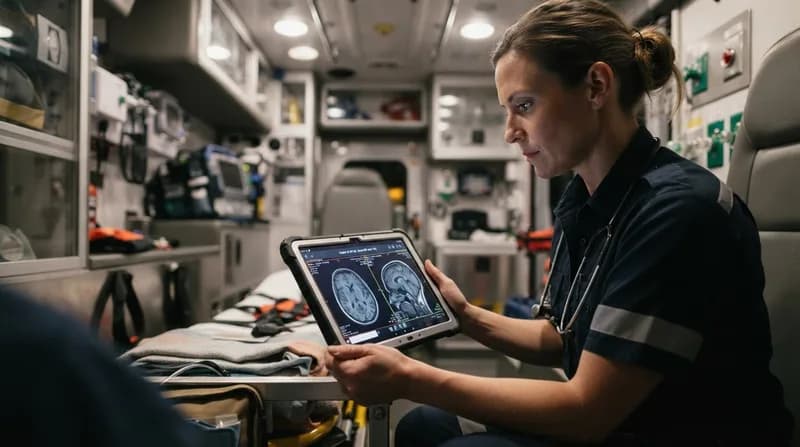
Among the most complex experiments are the three-dimensional brain organoids. These miniature, lab-grown models of brain tissue serve as a proxy for human biology, allowing researchers to observe neurological development and disease progression in a microgravity environment. Scientists are hopeful that these organoids will provide a clearer window into the mechanics of Alzheimer's, Parkinson's, and multiple sclerosis, potentially revealing new therapeutic targets that are unreachable through traditional terrestrial testing.
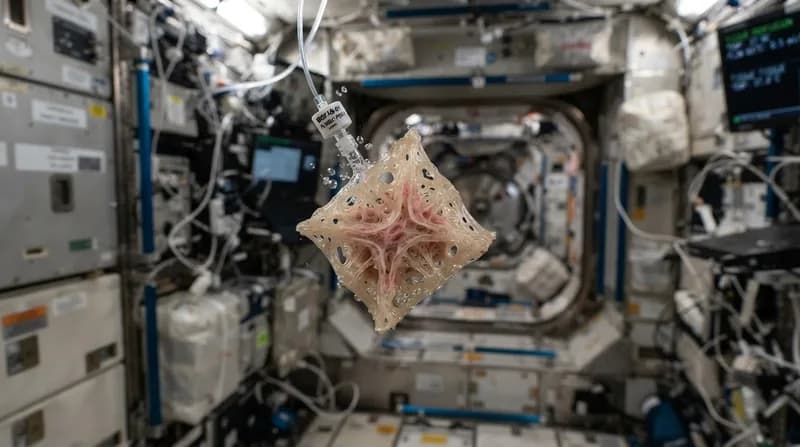
Complementing the neurological research is a suite of 3D heart tissue models. By recreating the intricate architecture of the human heart, researchers aim to establish a high-throughput platform for drug testing. The microgravity environment allows for the growth of tissue structures that more closely mimic natural human responses, providing a controlled environment to screen for drug efficacy and safety without the limitations imposed by Earth's gravity.
Vision Restoration and Advanced Material Science
One of the mission's most ambitious projects involves the development of artificial retinas. By leveraging the near-weightlessness of the ISS, researchers are exploring techniques for manufacturing complex ocular structures that are difficult to produce under Earth's constant gravitational pull. This technology, if successful, could eventually lead to ground-breaking medical interventions for patients suffering from degenerative vision loss.
Beyond biotechnology, the Dragon spacecraft carried specialized equipment meant for researching glass formation. By studying how materials solidify in microgravity, scientists hope to unlock new methods for creating high-performance glass with unique optical or physical properties that are impossible to replicate on the ground. This fundamental research could have wide-reaching implications for everything from aerospace windows to fiber optics.
Expanding Power and Future Outlook
The mission also delivered the final set of International Space Station Roll-Out Solar Arrays (iROSAs). These arrays are critical to the continued operation of the orbital laboratory, significantly boosting the station’s power generation capacity. This extra energy is necessary to support the station's increasingly power-hungry scientific payloads, including the advanced medical labs currently being installed.
- Cargo Weight: Over 6,300 pounds of supplies and research equipment.
- Key Scientific Focus: Neurodegenerative disease research, ocular restoration, and materials manufacturing.
- Infrastructure Upgrade: Final installation of iROSA solar arrays to bolster power.
- Logistics: Dragon will return to Earth in mid-November, bringing critical samples back for analysis.
As this mission progresses, the scientific community eagerly anticipates the data returning from these microgravity experiments. By utilizing the ISS as a unique laboratory, researchers are turning the void of space into an engine for solving some of medicine's most stubborn challenges on Earth.