E-BUZZ ME Logo
ScienceTechnical Deep Dive

Unlocking the Secrets of Static Electricity: New Research Challenges Old Assumptions

Published
Unlocking the Secrets of Static Electricity: New Research Challenges Old Assumptions
1 min read170 words

The Gist

Despite being an everyday phenomenon, static electricity remains a scientific mystery that researchers like Scott Waitukaitis are finally beginning to decode.

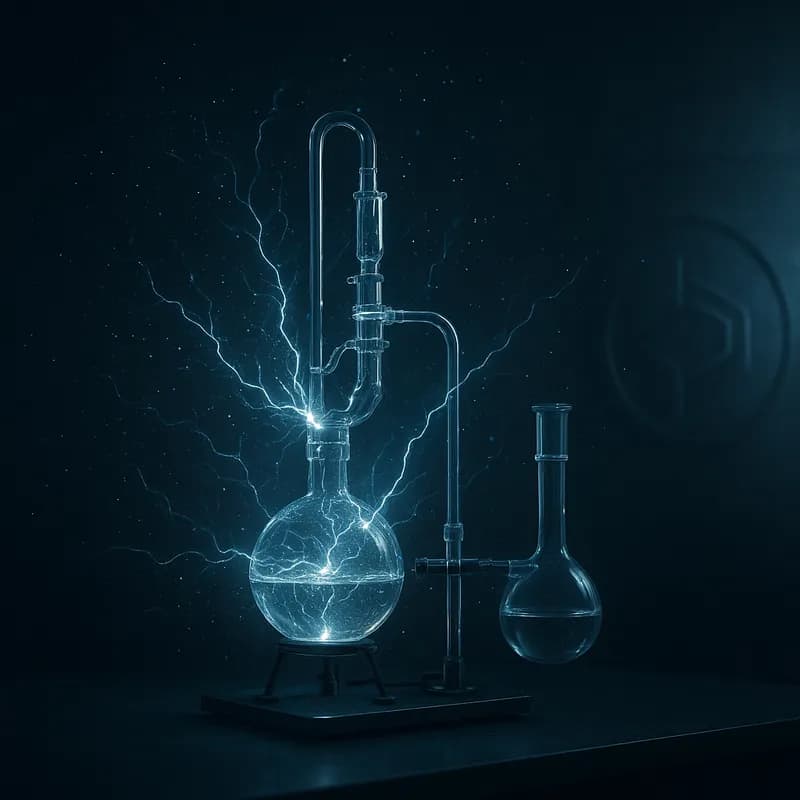
Static electricity is one of the most familiar physical phenomena, yet it remains surprisingly poorly understood by the scientific community. In a recent discussion, soft-matter expert Scott Waitukaitis delved into the complexities of contact electrification, revealing that the mechanisms behind how surfaces exchange charge are far more intricate than previously thought.

The Complexity of Contact Electrification

While the basic concept of rubbing two objects together to create a charge is taught in elementary physics, the actual physical process at the microscopic level involves a chaotic exchange of ions and electrons. Waitukaitis highlights that even similar materials can generate significant static charges, a fact that defies traditional models of electron affinity.

Why It Matters

Understanding the nuances of static electricity is not just a pursuit of pure science; it has massive implications for industrial safety, pharmaceutical manufacturing, and the development of new energy-harvesting technologies. As researchers peel back the layers of this everyday mystery, they are finding that the 'static' we take for granted is a gateway to complex soft-matter physics.

Related Stories

Semantically matched articles, ranked by topic overlap and freshness.

The Physics Behind the Snap: Understanding the Venus Flytrap
Science70%

The Physics Behind the Snap: Understanding the Venus Flytrap

New research delves into the complex physics that allows the Venus flytrap to snap shut with incredible speed to capture its prey.

John Bell and the Legacy of the Journal 'Physics'
Science68%

John Bell and the Legacy of the Journal 'Physics'

A look back at the short-lived journal where John Bell published his ground-breaking theorem, forever changing our understanding of quantum mechanics.

New Class of Magnons Exhibits Hundred-Fold Increase in Lifespan
Science67%

New Class of Magnons Exhibits Hundred-Fold Increase in Lifespan

A breakthrough discovery of long-lived magnons could pave the way for scalable, nanoscale quantum information technologies on-chip.

The Future of Open Access: Navigating Structural Challenges and AI Integration
Science67%

The Future of Open Access: Navigating Structural Challenges and AI Integration

As the scientific community pushes for an open-access future, experts warn that systemic issues and the rise of AI must be addressed to ensure sustainability.

GPS Satellite Network Provides Two Decades of Space Radiation Data
Science66%

GPS Satellite Network Provides Two Decades of Space Radiation Data

A massive cross-calibration effort involving 25 GPS satellites has unlocked twenty years of continuous space radiation tracking.

Sweden Explores Rare Earth Deposits to Challenge Global Supply Dominance
Science60%

Sweden Explores Rare Earth Deposits to Challenge Global Supply Dominance

Researchers are mapping Sweden's mineral wealth to create magnets from natural element combinations, aiming to reduce reliance on Chinese exports.

Unprecedented Warming: Earth's Current Climate Shift Outpaces Geological History
Science58%

Unprecedented Warming: Earth's Current Climate Shift Outpaces Geological History

New analysis of Earth's climate history reveals that the current rate of global warming is faster than any previously recorded geological event.

Self-Repairing Bio-Textiles: Scientists Create Clothing From Living Fungi
Science58%

Self-Repairing Bio-Textiles: Scientists Create Clothing From Living Fungi

Researchers have developed a revolutionary biodegradable textile using the parasitic fungus Cordyceps militaris that can clean and repair itself.